Sculpture of Sangameswara Temple
|
Sculpture of Sangameswara Temple dates back to 720 AD. However the temple building remains incomplete.
|
|
|
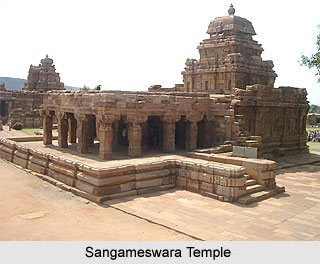 Sculpture of Sangameswara Temple reflects influence of the then contemporary styles of architecture. The structure of Sangameswara Temple has been built on a plinth with five mouldings. The walls of the temple have recesses or devekoshthas. A well carved out stone image of Nandi is present in the east side of the hall. Sculpture of Sangameswara Temple reflects influence of the then contemporary styles of architecture. The structure of Sangameswara Temple has been built on a plinth with five mouldings. The walls of the temple have recesses or devekoshthas. A well carved out stone image of Nandi is present in the east side of the hall.
The sculpture of the Sangameswara Temple includes the images of the Hindu deities that have been carved in the niches. The most recurring images here are that of Lord Shiva and Lord Vishnu. Apart from these there are friezes of ganas carved on the kapota. The kapotas (eave) lie under the three recesses where perforated windows have been etched out. These sculpted ganas have been represented with rounded figures and they seem to be struggling to carry the superstructure. These themes have been intricately transferred on stone.
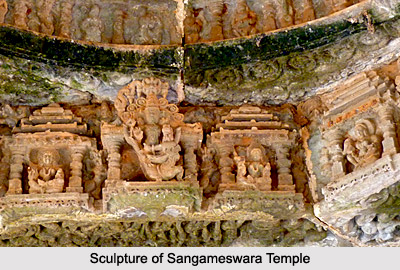 To add further the walls are also decorated with karnakutas (square) and salas (oblong) elements in correspondence to the relieved bays that lie below them. These, in turn, are decorated with kudus that have 'panjaras' or miniature temples in the interior. Ugranarasimha, Nataraja sculptures are seen on the outer wall.
This article is a stub. You can enrich by adding more information to it. Send your Write Up to content@indianetzone.com
|
|
|
|





