History of Indian Dances is quite inimitable as it unfurls the art form which existed in India. Indian dance has a rich historical tradition. Dance as an art form involves significant body movement with rhythm. It is presented as a social interaction or a spiritual performance. Dance constitutes social, cultural, aesthetic and artistic meaning. Elements of Indian classical dances have also been mentioned in the Natyasashtra. Lord Brahma created the Natyashastra in the beginning of Treta Yug. After he devised the Natyashastra Bharata Muni was the first man to present two stories through Natya. Lord Shiva expressed his view to incorporate Tandava in order to make the contribution of damsels really effective in a Natya. Brahma then incorporated Tandava in Natya.
Origin of Indian Dance
Brahma wrote a thesis on Natya Veda known as Natyashastra. It is detailed and covers all its aspects, such as stage-design, music, dance and makeup and implicitly every aspect of stagecraft. It also contains deliberations on the different kind of postures, the hand formations and their meanings, the kind of emotions and their classifications. Thus, all the forms of Indian classical dances owe faithfulness to Natyashastra which is often regarded as the fifth Veda.
Phases of Indian Dance
Since the primitive age there has been a rich and vital tradition of dance. The pre history and pro history of India proves this fact. For instance, the dancing girl of Mohenjodaro and the broken torso of the Harappan period suggest postures of a dance. Dance descriptions have been used for Indra, Asvins, Marut, and Apsaras. The History of Indian dance can be divided into two parts the first being 2nd century B.C. to the 9th Century A.D. and the other from 10th or 11th Century to the 18th Century A.D. During the first period, Sanskrit exercised a firm hold on all arts in the country. Natyashastra was inclined to drama, dance and music. The sculptures of Sanchi, Nagarjunakonda, Mathura, Amravati and Ellora caves do prove this fact. Minimum stylization was common during this period. There was development in the regional style during the second period.

Dance Elements in Temples
From the Sanskrit literature it has been deduced that poets and dramatists were equally knowledgeable in the technical details of dance. All the plays of Kalidasa have elements of prose and different types of acting like that of gestures, costumes and decor. Harsha and Bhavabhuti follow Kalidasa though apparently the tradition of Natyashastra was deteriorating as the dance terminologies used are not accurate. Temples built during the medieval age prove that the sculptors had considerable technical knowledge of dance. The Brihadesvara temple of Tanjore was built in the 11th Century. Karanas were first illustrated here. The temples of Rajarani, Vithal Deul and Paramesvara in Orissa were built between the ninth and the eleventh century. The movements and positions described in the Natyashastra are depicted in the sculptures on the outer walls of these temples. The Khajuraho temples of the Chandela kings were also built during this time. There is the whole range of medieval sculpture extending from Rajputana and Saurashtra to Orissa and from Kashmir to Thiruvananthapuram also dating from the 13th to the 16th Century.
Dance Elements in Indian Literature
A body of critical and creative writing which supports the view that the art was widely practiced and adored has also been found. The monumental treatise on music Sangitaratnakara had set the new tone in music practice. It has a chapter on the traditions of Dance and the way it was developed in different parts of India. The author follows the Natyashastra and points to the fact that the Natyashastra tradition was usually accepted, but there were changes and deviations. He had also introduced some new concepts like concept of style and movements. He also speaks of purely classical or the academic form under the label of suddha, and the regional variants under the label of desipaddhatis. The recognition of regional styles contributed further to the development of individual and classical styles of the various regions.
Influences on Indian Dance
Indian dance has been constantly been influenced by several factors. The native Classical dance patterns underwent changes with the coming of the Muslims. This led to the formation of separate gharanas as well. The British education system failed to recognize the "arts" as a subject of educational curriculum. The 19th century generation which went to the schools and colleges founded by the British in India was isolated from the traditional arts of the country. Temple dancing was not permitted but the devotees of dance continued to practice it in their homes. By the twentieth century the art had died apparently. One witnessed a diluted, degenerated form which was known as the naach in the North, and the sadir in the South. It was like a shadow of a long-gone reality.

Indian Folk Dances
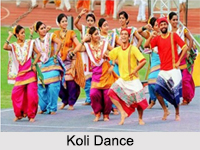
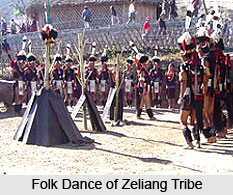
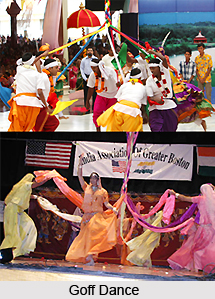
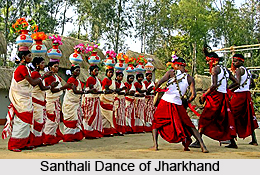
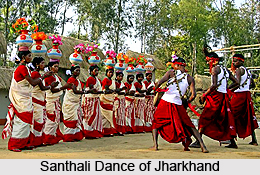
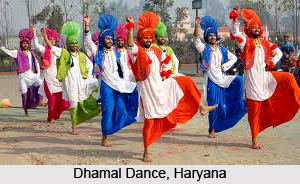
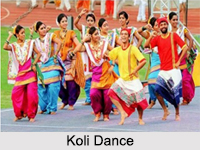
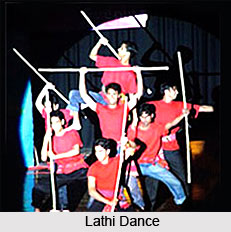
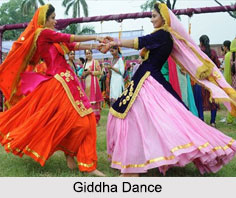
Folk dances of India are the native styles and are performed as an expression of joy. These dances are performed on every occasion like on weddings, child`s birth and so on. These dances have minimum movements but do not lack enthusiasm. Some are gender based performances and some are performed by both men and women. These folk dances are state or region specific. Specific costumes are used for folk dances. Some of the common folk dances are Garbha of Gujarat, Yakshagana of Karnataka, and Chau dance of West Bengal, Kummi of Tamil Nadu, Ghoomar of Rajasthan and many others to be mentioned.
Current Scenario of Indian Dance
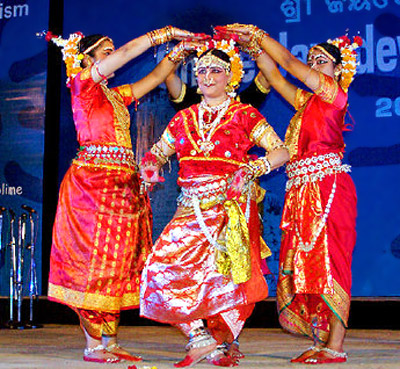
In modern India, dance underwent various changes. Fusion dance form evolved, which involved an amalgamated style of both Indian and western style. In the Hindu Dharma, each expression was achieved through music and dancing and also through acting. Thus different forms of opera, ballet and drama originated. All these forms had special diction, types of characters and appropriate costumes. Indian dance is identified by their make-up, intonation, the representation of sentiments, emotional, style and movements of every limb. The Indian Dance form is one of the most well established arts. It has been developing for nearly two thousand years now. The modern concept of dance form was introduced by Pandit Uday Shankar. He is the pioneer of modern ballet in India and also contributed to the oriental form.
The revival of interest in dance developed as a sign of national pride in the glories of indigenous art and culture. This helped the development and popularity of various Indian dances. The store-house was so rich and the layer of dust so weak that the sincere artist had only to dig a little to discover its essential luminosity. Many layers of past artistic glory have been uncovered. Each time one delves deeper, a greater treasure is discovered.