|
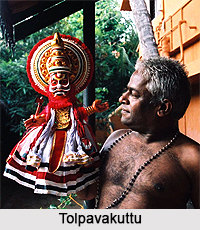 The literal meaning of Tolpavakuttu is the leather puppet play. This is an ancient form of shadow theatre that prevailed in Kerala. Only a few families of the Pulavar community of scholar-performers continue the tradition, usually staged in Kali temples during the annual festival of Bhagavati or Bhadrakali. The permanent puppet theatre attached to the shrine is called kuttumatam. The goddess is supposed to witness it, so the playhouse faces the temple. The measurements of an ideal kuttumatam, as in the Kavalapara temple, are 11 m 43 cm in length, 3 m 81 cm in depth, and 1 m 53 cm in height. A thin white cloth covers the front. Behind it is a wooden stand across the length of the stage for the backlights, usually twenty-one oil lamps. Torches also are used for special effects. The literal meaning of Tolpavakuttu is the leather puppet play. This is an ancient form of shadow theatre that prevailed in Kerala. Only a few families of the Pulavar community of scholar-performers continue the tradition, usually staged in Kali temples during the annual festival of Bhagavati or Bhadrakali. The permanent puppet theatre attached to the shrine is called kuttumatam. The goddess is supposed to witness it, so the playhouse faces the temple. The measurements of an ideal kuttumatam, as in the Kavalapara temple, are 11 m 43 cm in length, 3 m 81 cm in depth, and 1 m 53 cm in height. A thin white cloth covers the front. Behind it is a wooden stand across the length of the stage for the backlights, usually twenty-one oil lamps. Torches also are used for special effects.
Stories from the Ramayana are presented, commencing from Rama's birth and ending with his coronation. The text consists of twenty-one parts, so the ceremonial theatre season extends for twenty-one nights. The plays have verse and prose dialogue, in Tamil. Originally there was a script specially written for the form. Now it comes from the Kamba Ramayana, by the Tamil poet Kamban in twelfth century. The Pulavars add to it by improvising speeches and vaiteris to emphasize certain situations. They explain the verses and dialogues in a language mixing Tamil and Malayalam.
The opaque painted leather puppets, as in Ravana Chhaya, are made of deer skin. These are carefully shaped into different characters with one or both hands jointed. The tiny holes punched through to suggest costumes and highlight the shadows projected on the white screen from the row of lamps behind them. There are 130 puppets, portraying humans as well as animals and birds. Before the show begins it is announced by the keli ensemble, using drums. Around 9 p.m. the velichapad, or oracle representing the goddess, becomes possessed and as a gesture of giving sanction, blesses the artists. The Pulavars start by singing benedictory songs of Ganapati, Saraswati, and other deities. As in Sanskrit theatre, there is a prastavana or introduction called patta pava.
Five puppeteers do the manipulation. They hold the figures with anklets on their own hands, which make sounds when shaken. Sometimes they have to run to cross the screen, especially when battles take place. The puppets walk, take different postures, and engage in fighting. It requires utmost dexterity and skill to make their minute expressive movements match the musical rhythms. The master in this field is Krishnan Kutty Pulavar. Ezhupara is a percussion instrument of jackfruit wood with both ends covered with hide and cymbals provide the accompanying music. Chenda drums, pipe, conch, and gong highlight the dramatic situations.
|





