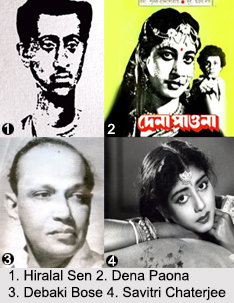
 Indian Cinema is the portrayal of the Indian socio-economic picture and the Indian life. "Film as dream, film as music. No form of art goes beyond ordinary consciousness as film does, straight to our emotions, deep into the twilight room of the soul." - Ingmar Bergman.
In India and the world over, cinema is the only visual medium that can actually reach out to every single individual. To term Indian cinema or for that matter cinema of any country merely as a source for entertainment will be an injustice. Indian cinema makes a strong statement about the country`s Diaspora.
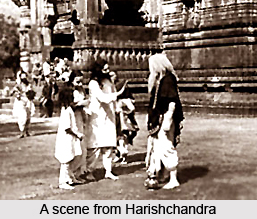
It is a way of reaching out to the masses to entertain them as well as educate them. A quick glance into the history of Indian cinema will lead one to the various eras of the Indian film industry. Cinema in India began its journey with the coming of the Lumiere Brothers (Pre historic era). The Silent Era ushered in during 1912 when for the time Indian cinema establishes its own identity with Raja Harishchandra.
Since mythology plays a considerable part in the cultural and religious history of the subcontinent, Indian cinema mirrored the tales from the myths of India. Several Indian folktales and legends from the pages of mythology were translated onscreen. These Indian films in the then contemporary society were loved by the audience to the extent that the actors in these movies were worshipped. However the tradition of the silent era came to a halt when Alam Ara hit the silver screen in 1931 and broke the silence in India cinema.
With the end of the Silent Era in Indian Cinema the Era of Talkies in India (1930) ushered in and came some of the best films in the history of Indian cinema. These films for the first time mirrored the prolific talent that India possessed in the form of directors, actors, musicians, cameramen, lyricists, choreographers, writers and other technicians. However there was a time when cinema was heavily influenced by Indian literature. Whether it was the Tamil films, Bollywood, Telugu films, Bengali movies or Kannada, literature clearly called the shots as far as the story was concerned in Indian cinema.
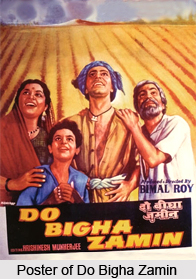 With time this trend faded out and the Golden Era of Indian Cinema introduced completely new genre of films. Gradually original scripts were written for the Indian cinema. Both the Indian directors and the audience were ready for experiments. Once again culture and tradition played an important part. Onscreen the rich Indian heritage of classical dances and music were employed to create a world of romance and music. The audience adored these kinds of films as well. Slowly the costume dramas arrived. This was the era when outstanding films like Do Bigha Zamin (Hindi language), Balayogini (Tamil language), Thyagabhoomi (Tamil), Mathrubhoomi (Tamil), Devdas (Bengali language, Hindi) and several others.
Irrespective of the fact to which genre a film belonged music and dance remained an integral part of the Indian movies. Similar to the navarasas in Indian drama there are certain elements that are dispensable to filmmaking. In India, movies are considered incomplete without melodrama, romance, music, dance, action, etc. In addition to these, Indian cinema also comprises a number of genres including mythological, horror, action, comedy, patriotic, devotional, social drama and others.
On the other hand Hindi being the national language, the Hindi film industry or Bollywood is often seen as mainstream in Indian cinema. But it is only a myth as far as Indian cinema is considered. The proper picture would depict the Indian Regional films as trend setters. Till date it is the Malayalam films, the Bengali films, the Oriya films, Kannada movies, etc that had inspired the Indian cinema. However, it is also true that Bollywood did give rise to filmmakers who were movie czars. They changed the way the world looked at Indian cinema. It is due to a talented lot of Indian movie makers that Indian cinema was reckoned globally. Satyajit Ray, Adoor Gopalakrishnan, Shaji N. Karun, Jahnu Barua and others like them made films that are still considered masterpieces. No matter how many times one watches these movies they never grow old. Probably this is the magic spell that Indian cinema can create on its audiences.
Amongst such maestros there were several masters who made films for their own sake. They were not making films so that people like them. They made films because they loved the medium. People like Ritwik Ghatak never compromised with their ideologies. They presented onscreen what they felt about man, society, cultures and customs. Today Indian cinema bows down to them and looks up at them with reverence.
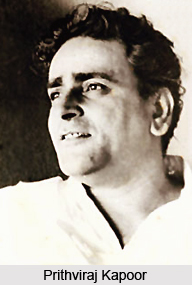 Talent in India is ubiquitous. The Indian cinema is, thus, well supported by Indian actors who put their heart and soul to films. Once again they were rewarded by the audiences. From Prithviraj Kapoor to Mohanlal and Smita Patil, from Rajanikath to Siddharth and Rani Mukherjee, both the masses and classes appreciate their works. The star system in Indian cinema has made the actors role models in the society. So whether it is Amitabh Bachchan or Shahrukh Khan or Katrina Kaif, movie actors are hero-worshipped in every nook and corner of the India. When these stars laugh onscreen the audience laughs with them; when they cry, the audiences` hearts go out to them.
To take Indian cinema higher the contemporary film personalities are making films that belong to different genres. While some of these films make the audiences break into peels of laughter, the others moisten their eyes. A different set of Indian movies will compel the audiences to sit up and think about their surroundings and the present situations.
However, there is cinema not only about actors, actresses, directors and producers. It also involves a number of other people that include musicians, cameramen, sound recordists, choreographers, make up artists and other technicians. In order to recognise the efforts of these film personalities every year several award ceremonies are held. Amongst these the Filmfare Awards stands out since it is the oldest award ceremony held in India.
In contemporary times India can be easily hailed as the largest movie-producing country in the world. Indian Movies, thus, are gaining popularity like never before. These are screened not only in Asia, but also in East Africa, Mauritius, the Caribbean, the Middle East, Britain, Canada, Australia, the United States and the countries associated with the former Soviet Union. The world of Indian movies is a very fascinating one that has mesmerized every person, on a global platform.
Indian cinema is changing faces with passing time. At one point of time multi-starrer films were in vogue. The contemporary socio political scenario has always found an important place in Indian movies and it is the same even today. Besides these animation films and comic films are hit with the cine goers too. Thus it is quite difficult to put Indian Cinema and its developments in a nutshell.