Pandavani
|
Pandavani is narrative ballad about the Pandavas.
|
|
|
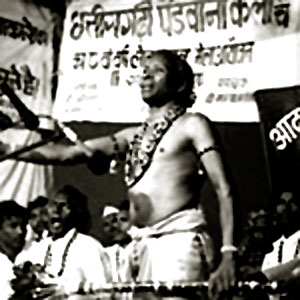 Pandavani is narrative ballad form of Chhatisgarh, sung primarily by the Pardhan and Devar castes. This is based essentially on stories from the Mahabharata. Since the epic was read by and accessible only to upper castes, a body of folk poetry developed around it that became popular in villages and among lower castes. This literature is the source for Pandavani. It has two varieties Kapalik and Vedamati. The kapalik variety literally comes from forehead whereas vadamati is based on the Vedas. The former uses the outline of the Mahabharata but has Bhim as its hero, and being highly improvisatory. This freely brings in local legends and myths that stored 'in the head' existing in the collective popular consciousness, whereas the latter bases itself strictly on the epic. The Kapalik performer stands and moves around, incorporating song, dance, and acting to create a solo theatrical show, while Vedamati consists of pure ballad-singing from a seated position. Pandavani is narrative ballad form of Chhatisgarh, sung primarily by the Pardhan and Devar castes. This is based essentially on stories from the Mahabharata. Since the epic was read by and accessible only to upper castes, a body of folk poetry developed around it that became popular in villages and among lower castes. This literature is the source for Pandavani. It has two varieties Kapalik and Vedamati. The kapalik variety literally comes from forehead whereas vadamati is based on the Vedas. The former uses the outline of the Mahabharata but has Bhim as its hero, and being highly improvisatory. This freely brings in local legends and myths that stored 'in the head' existing in the collective popular consciousness, whereas the latter bases itself strictly on the epic. The Kapalik performer stands and moves around, incorporating song, dance, and acting to create a solo theatrical show, while Vedamati consists of pure ballad-singing from a seated position.
The legendary Jhaduram Devangan and his family initiated Vedamati as a kind of protest against the Kapalik tradition, when he accidentally came across the Mahabharata rewritten by Sabal Singh Chauhan, faithful to the original and in verse. It features mostly a single performer who sings the couplets from the text, set to folk tunes. This is done using a rural three-stringed tambura with bells tied at one end and kartal i.e. hand cymbals also with bells at other hand. Both are used as accompaniment and as props, the actor-singer brings alive the characters, their traits, moods, and situations while sitting on his knees. Other instrumentalists usually play tablas and manjira or small cymbals. The performer also provides explanations of the couplets as he goes along. In some cases a companion, the ragi, facilitates relevance by asking questions related to the lives of the people as they connect with the story.
Pandavani is a riveting genre of storytelling in either of its varieties. Vedamati acquired recognition through imaginative and skilled rendering by Punaram Nishada, Chetan Ram, and their mentor Jhaduram Devangan, while the extremely energetic Kapalik form found its best representative in Teejan Bai. She was possibly its first woman practitioner and now a national celebrity.
|
|
|
|





