Introduction
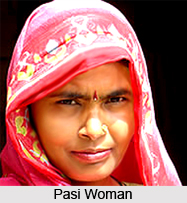 Dravidian occupational
caste mainly found in the northern region of the country. Their hereditary
employment is tapping of date, Palmyra
palm tree and other palm trees for their juice. They are mostly
distributed over Bihar, Delhi, Uttar
Pradesh and Haryana. A small number of Pasi people are distributed
over the Terai region of Nepal. Pasis are also called as Paswan and they are
scheduled caste under Government of India. Their name has been derived from the
Sanskrit term “Pashika,” which means “one who uses noose”. Interestingly, when
Pasis first entered Gujarat, they adopted the job of tapping palm trees.
This occupation became a generational livelihood for Pasi people.
Dravidian occupational
caste mainly found in the northern region of the country. Their hereditary
employment is tapping of date, Palmyra
palm tree and other palm trees for their juice. They are mostly
distributed over Bihar, Delhi, Uttar
Pradesh and Haryana. A small number of Pasi people are distributed
over the Terai region of Nepal. Pasis are also called as Paswan and they are
scheduled caste under Government of India. Their name has been derived from the
Sanskrit term “Pashika,” which means “one who uses noose”. Interestingly, when
Pasis first entered Gujarat, they adopted the job of tapping palm trees.
This occupation became a generational livelihood for Pasi people.Origin of Pasi Community
History of Pasi Community
The Pasi community is regarded by many as one of the ancient ruling groups of India and is often associated with the Nagvanshi or Naga Dynasty. Indian nationalist narratives have supported claims that a Pasi kingdom once ruled regions that now form parts of Uttar Pradesh and Bihar during the 11th and 12th centuries. Among the prominent rulers associated with this legacy were Maharaja Bijli Pasi, Maharaja Lakhan Pasi, and Maharaja Satan Pasi. Their influence is believed to have extended across areas such as Kheri, Hardoi, Sitapur, Lucknow, Sandila, and Unnao. Ramkot, presently located in Bangarmau in Unnao district, is considered one of their principal strongholds.
Historically, the Pasi caste is described as a ruling community of the Awadh region in North India until the 12th century. Over time, repeated invasions by Muslim rulers and Rajputs reportedly weakened their authority, leading many members of the community to retreat into forested regions where they established smaller forts and settlements. During this period, they came to be identified as rebels and warlords.
By the 17th and 18th centuries, many members of the Pasi community began serving in the armies of Indian rulers. The community also earned recognition for its participation in revolutionary activities, particularly during the Indian Rebellion of 1857 against British rule. Several notable figures emerged during this period, including Madari Pasi, a leader of the peasant Eka Movement; Makka Pasi, a soldier in the contingent of Awadh ruler Wajid Ali Shah; and Uda Devi Pasi, who is remembered for her role as a fighter and sniper at Sikandar Bagh during the uprising of 1857.
In 1871, the British administration introduced the Criminal
Tribes Act, which categorized nearly 200 communities under restrictive
provisions, including the Pasi caste. According to historical accounts, this
law led to the confiscation of property and the imprisonment of many young
members of the community, severely affecting their social and economic
condition. Amendments to the law were later introduced in 1924.
Sub-Groups in Pasi Community
 The composition of the Pasi caste is considered of a mixed nature. Like the other migratory castes, Pasis are also split into small numbers and their composition is not very definite. In the central province of the country, their principal sub-castes are the Rajpasis, Kaithwas or Kaithmas, Trisulia, Chiriyamar, Khatik, Hujar, Mangta and Ghudchadha. They have several exogamous clans namely Jamdagni, Parswa, Amlak, Bhargav, and Piplak.
Society of Pasi Community
Pasis generally avoid marriage with blood relations. In their society, widow marriage and divorce are freely allowed. They either burn or bury the dead and funeral rites are followed. Generally, for a deceased man mourning for ten days are observed and for a deceased woman nine days are observed. Pasi people are religious and they worship all the Hindu deities. Brahmins generally perform marriage and other auspicious ceremonies. Pasi community has a caste council that mainly deals with divorces and other criminal offences like disregard of any traditional social norm.
Religious Practice of Pasi Community
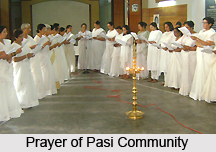
The Pasi community is predominantly Hindu, although some
members also follow Buddhism. Deeply rooted in religious traditions, the
community places great importance on the worship of their kul deity. The kul
deity is a Hindu deity believed to have been revered within families for
generations.
Occupational Evolution of Pasi Community
Apart from their traditional occupation of extraction of
juices of palm trees, some of them also go for hunting. Like the Pardhi
tribes, Pasis also mend grindstones and are engaged in agricultural
activities. In some of the villages Pasis are commonly employed as watchmen in
return for which they receive either a plot of land or some other
consideration.