Manipur Dramatic Union was the first proscenium-arch theatre in Imphal. This was usually for the native Meitei people. It grew in fortuitous circumstances to claim the core position in Manipuri theatre. Manipur Dramatic Union was situated in the strategic cultural area of Yaiskul Pana, whose inhabitants comprised ancient families of kings, nobles, and hereditary landowners.
Yaiskul had developed a self-centred cloistered universe, a kin-conscious, sophisticated lifestyle representing the etiquette, behaviour, and world view of the feudal nobility. Vibrancy, glitter, colour and refined textures, finesse, and grace characterized the palatial culture. But after Manipur`s defeat by the colonial British in 1891, the aristocrats refused to usher in democratic values, remaining conservative and orthodox. Their society could not retain the earlier traces of cultivation, nor could it modernize fully towards an egalitarian experience. The Manipur Dramatic Union inherited this contradiction as well.
The locality had a long history of traditional mandap or pavilion and courtyard theatre. After babus from Bengal arrived in the wake of the British, they started the first proscenium theatre in 1905. That was the Friends Dramatic Union. Ethnic Manipuris performed in the Bengali dramas, on equal footing with Bengali actors. Development of linguistic nationalism in the 1920s then set the pace for modern Manipuri drama. At the residence of Ngangbam Shyamkishore, who was the Maharajas brother-in-law, the first Manipuri proscenium stage was erected. He took the initiative along with the writer and court official Sorokhaibam Lalit, the actor Nongmaithem Thanil Singh, a socialite Chingakham Mayurdhwaja, and the famous social activist Hijam Irabot.
The great thespian Khomdram Dhanachandra, who in 1925 had acted as the patriot Nara Singh in L. Ibungohal`s play of the same name at the palace, was invited to join. The group was named the Meitei Dramatic Union after Lalit`s first drama Sati Khongnangvas put up in 1930. This tale of forcible burning of a Meitei widow on her husband`s funeral pyre began a naturalistic trend in Manipuri theatre, bidding farewell to the imitative, heightened rhetoric of the Bengali group. In 1931, the first experiment in ticketing was made for Lalit`s Areppa marup i.e. `Abiding Friend`. Irabot as the impoverished misfit became a household name. However, Maharani Dhanamanjuri expressed unhappiness about exacting money from the public in her home, and the playhouse was shifted to Mayurdhwaja`s nearby residence. The stage was built on top of a pond with bamboo and mud flooring, contiguous to the sangoi or traditional outhouse. This was the major designing work done by Irabot. Translated works from Bengali and occasional native writings continued on this makeshift stage until 1936, when a breakaway group led by Hijam Angahal formed the Chitrangada Natya Mandir. This returned to the Ngangbam family and renovated the former stage. Their production of Angahal`s Ibemma or `Maiden` in 1939 unleashed fresh energy. Two groups within 1 km of each other made an intriguing phenomenon later to become a trend. But Chitrangada died out in the post-War period, its playwrights and actors having switched loyalties to die newly established Rupmahal Theatre.
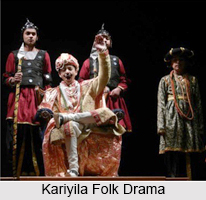
Meanwhile the Meitei Dramatic Union had shifted to a permanent site in 1937, and renamed itself the Manipur Dramatic Union or MDU. Its growth was marked by the increasing dominance of Lalit`s aesthetics after Irabot left for a political career in 1939. Lalit accented greater representation of Manipur`s cultural resources and attention to folk stories as a medium of dramatic literature. The rise of linguistic consciousness, the spread of Moirang Parva enacted by itinerant troupes in courtyards, the advent of folk-drama writers, and changing tastes among theatergoers perhaps accounted for the sudden emphasis on romantic subjects of the past. Lalit became a leader of the traditional form, utilizing the services of the Pena singer Chungkham Manik in developing the archaic diction and stylized falsetto speech trends of folk theatre. He added arrays of bright colours along with bold lines on the background scenery. Heavy wheeled platforms with actors, properties, and gorgeous decor were pushed onto the stage during dark interludes, which became standard usage in the 1960s.
The MDU entered Haorang Leishang Saphabi in the folk category of the all-India festival organized in Delhi by the Song and Drama Division of the Government of India in 1954. In this festival it won the first prize. This boosted the national image of Manipuri theatre, establishing its later typecast appeal of artistic, but somewhat exotic, costumes and design. The MDU`s plays, however, were constructed melodramatically, with sentimental heroism upgraded as vim or heroic rasa and projected as the acting system.
Other productions done with immaculate spectacle included translations from Bengali originals on religious and mythological themes. New social plays by S. Birendra and M. Ramcharan proved noteworthy in the 1960s and 1970s. MDU generated great followers in the Lalit tradition. Among them Ningthoujam Tombi Singh`s performances displayed tremendous presence.
Others like Elangbam Joychandra and Huirem Motilal broke away from the main unit. The former became a powerful purveyor of popular drama in rural areas, the latter a theatre teacher and director of polished social drama for the youtli. The MDU was the largest producer of actresses on the Manipuri proscenium stage. Its excellent women performers included Sairem Kanya (1899-1961), Chirom Gouramani (1914-82), Ningthemcha Ongbi Nungshitombi (1911-85), Aribam Ningol Manbi (1925-96), Kshetrimayum Randhoni (1932- ), and those who defected to Rupmahal, S. Tondon and Thambal Angoubi.
The passing away of the iconic thespians and elders of the aristocratic era, however, left their successors with a legacy of pride, lavishness, and stubborn conservatism. A mammoth but rustic grace and sensationalism continue to impress a large audience. Still, the MDU stands as a vital mirror of the forgotten glories of the feudal past.