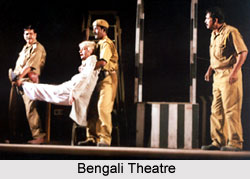
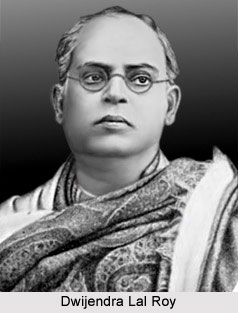
 Dwijendra Lal Roy was a renowned playwright of Bengali theatre. The naturalness and wit of farces attracted him, but their vulgarity put him off. Similarly, lack of poetic fervour in drama deterred him. In England he saw productions by Henry Irving and Ellen Terry, which, coupled with his intense reading of Shakespeare, Kalidasa, and Bhavabhuti, fired his dramatic imagination. He is a celebrated poet, playwright, and musician who have tremendously contributed to early modern Bengali literature.
Early Life of Dwijendra Lal Roy
He was the son of a Diwan in Krishnanagar in Nadia district. Born in 1863, he passed Bachelor of Arts from Hooghly College, and later obtained an MA in English in 1884 from Presidency College, Kolkata (now Presidency University, Kolkata) before studying agriculture in England. Back home in 1886, he joined the civil services, retiring in 1913. His love for theatre began in school.
Career of Dwijendra Lal Roy
Dwijendra Lal Roy, to begin with, concentrated on poetic plays, but gradually moved towards prose- particularly after Maharana Pratap Singh in 1905. Yet he admitted that though realistic dialogues were his ideal, his penchant for the poetic works often turned his prose into verse. The range of his nearly twenty plays is indeed amazing, from social farces to musical drama. His serious works cover mythological, historical, and social themes. The historical drama caught the fancy of theatregoers. The names can be mentioned as Rana Pratap, Nurjahan in 1908, Mewar-patan i.e. "Tall of Mewar" in 1908, Shah Jahan in 1909, Chandragupta in 1911. These not only coincided with the nationalist movement in Bengal, but also moulded it to a great extent. Mughal Dynasty in India, with its court intrigues, fascinated Roy. The high pitch of patriotic emotions found expression mostly through characters invented according to the probability of the historical situation.
Roy`s songs and music in particular lent his plays an extra edge. Sita in 1908 and Bhishma in 1914 stand out among his mythological drama. Ek ghare or "Ostracized" in 1889, Biraha or "Separation` in 1895, Tryahasparsha i.e. "Triple Lunar Conjunction" in 1900, Punarjanma i.e. "Rebirth" in 1911, and the infamous travesty of Rabindranath Tagore, Anandabiday i.e. "Farewell to Happiness" in 1912 are his major farces. He was not an insider to the performing world yet his scripts provided succour to Bengali theatre whenever the repertoire ran short of new works. If popularity is a yardstick, at least half a dozen of his plays belong to the living tradition of Bengali theatre.
Political Activism by Dwijendra Lal Roy
Roy came from a very wealthy family but was popular for his pro-peasant sentiments.
After the Partition of Bengal 1905, Dwijendra Lal Roy got associated with cultural movement to bring back together the two new Bengali provinces. During the same time he also wrote many patriotic songs that are hugely popular till today.
Dwijendra Lal Roy died on 17th May in the year 1913 due to sudden attack of epilepsy.