Katha Kalakshepam
|
Katha Kalakshepam is a south Indian monodrama involving solo narration and singing of mythological stories.
|
|
|
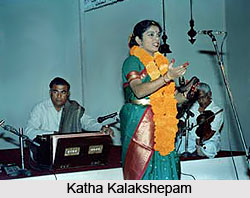 Katha Kalakshepam literally means 'passing time with stories'. This south Indian monodrama involves solo narration and singing of mythological stories, and acting out the characters' roles. Related to the folk Harikatha, it constitutes more formalized religious discourse to the accompaniment of string and percussion instruments, by artists who are talented singers, actors, and erudite scholars in Sanskrit and Tamil epics and the Puranas. The form probably came to Tamil Nadu from Maharashtra when the Marathas ruled Thanjavur during the seventeenth-eighteenth centuries. Katha Kalakshepam literally means 'passing time with stories'. This south Indian monodrama involves solo narration and singing of mythological stories, and acting out the characters' roles. Related to the folk Harikatha, it constitutes more formalized religious discourse to the accompaniment of string and percussion instruments, by artists who are talented singers, actors, and erudite scholars in Sanskrit and Tamil epics and the Puranas. The form probably came to Tamil Nadu from Maharashtra when the Marathas ruled Thanjavur during the seventeenth-eighteenth centuries.
The Tamil pandit Arunachala Kavirayar during 1711-88 reduced the whole Ramayana into Kirttanai for the purpose of Katha Kalakshepam recital. As opposed to standing and danced performances in the past, seated concerts generally take place now in Tamil Nadu and Karnataka on temple premises and common grounds. Thanjavur Krishna Bhagavatar during 1841-1903 and Harikesanallur Mutthiah Bhagavatar during 1877-1945 were legendary performers. Award-winning practitioners of recent times include T. S. Balakrishna Sastrigal during 1918- in Tamil, C. Honnappa Bhagavathar during 1914-92 in Kannada, C. Banni Bai during 1912-99 in the Marathi style, and Joseph Kaimaparamban during 1924- presenting Kathaprasangam in Malayalam. Kaimaparamban innovatively interpolated political messages inspiring audiences to fight for freedom.
This article is a stub. You can enrich by adding more information to it. Send your Write Up to content@indianetzone.com
|
|
|
|





