|
 Photography is the movement or job of taking photographs or filming. Photography is one of the best ways to preserve the memories, to cherish the long gone moments. Whether it is the class of the black and white photography or the glamour of colored photography or the romance of the sepia photography, it is the very tone, hue and luster of each type of photography that evokes curiosity and interest among the onlookers. Photography is the movement or job of taking photographs or filming. Photography is one of the best ways to preserve the memories, to cherish the long gone moments. Whether it is the class of the black and white photography or the glamour of colored photography or the romance of the sepia photography, it is the very tone, hue and luster of each type of photography that evokes curiosity and interest among the onlookers.
Types of Photography:
Landscape Photography: This type of photography which features the large areas of space, large lands, or of the world. These images are meant to attribute the grand scale of nature.
Fashion Photography: This type of photography features the fashion and clothing, frequently with professional female models and dedicated to fashion, which contains fashion magazines such as Elle, Vogue, or Vanity Fair.
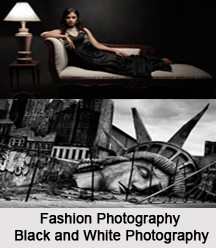 Black and White photography: It is also called 'Monochrome' photography. Even after color film was readily available, black and white photography continued to dominate for decades, due to its lower costs and its 'classic' photographic look. It is however important to note here that some monochromatic pictures are not always blacks and whites, but also contain other hues depending on the process. The Cyanotype process produces an image of blue and white for instance. The albumen process, which was used more than 150 years ago, had brown tones. Many photographers today continue to produce some monochrome images. Black and White photography: It is also called 'Monochrome' photography. Even after color film was readily available, black and white photography continued to dominate for decades, due to its lower costs and its 'classic' photographic look. It is however important to note here that some monochromatic pictures are not always blacks and whites, but also contain other hues depending on the process. The Cyanotype process produces an image of blue and white for instance. The albumen process, which was used more than 150 years ago, had brown tones. Many photographers today continue to produce some monochrome images.
Wildlife Photography: This type of photography depicts animals in their natural environment. It is very difficult to photograph animals because not only a photographer wants to be spot on with their technical skills but they also need to come within reach of animals without being detected.
Wedding Photography: Wedding photographers develop a mixture of photography styles to give wedding coverage. Entirely wedding coverage requires the photographer to be fine at macro, portrait, fine art, fashion, landscape, and action/sports photography.
Ariel Photography: Aerial photography is a kind of clicking technique where the snaps are taken from a prominent height such as from planes, from parachutes, from air balloons and from skyscrapers. These pictures show a larger sight of the subject and its setting.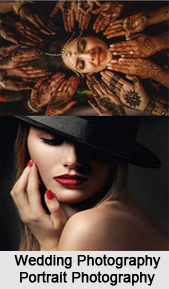
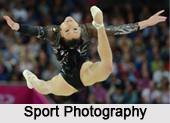
Action/Sport Photography: This type of photography is considered as one of the toughest photography technique and it requires huge practice along with an arrangement of high quality instruments. It captures the expressions, actions and moves of the players.
Color Photography: Colored photography evolved around the mid 1880s. Early experiments in color could not fix the photograph and prevent the color from fading. The first permanent color photo was taken in 1861 by the physicist James Clerk Maxwell. In the beginning, color photographs were taken with the help of three cameras. Each of the cameras had a color filter, which gave the photographer the three basic channels required to develop a colored image. Later, groundbreaking innovations eliminated this inapt method and the photographers started to capture colored images with the help of a single camera only. Colored photography is expensive when compared to monochrome photography. It required purchasing more advanced photography equipment. Thus, in the early days colored was not welcomed by everyone.
Portrait Photography: One of the oldest genres of clicking is portrait photography. It can differ from shooting friends to family members, pets, people and every creature around people.
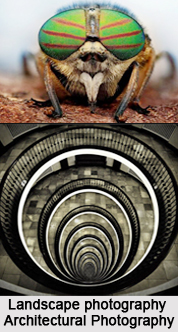 Macro Photography: Macro photography is a kind of photography where the shots are taken at a closer range to exhibit the minute details of the subject matter. The captivating and amazing subjects of macro photography are insects, flowers, textures clothes, baskets, etc. Macro Photography: Macro photography is a kind of photography where the shots are taken at a closer range to exhibit the minute details of the subject matter. The captivating and amazing subjects of macro photography are insects, flowers, textures clothes, baskets, etc.
Food photography: This type of photography is used by restaurants, websites or bloggers to attract customers to try and sell their products.
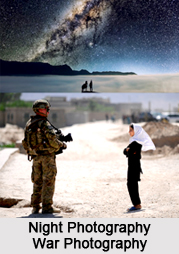
Night Photography: This type of photography requires a good acquaintance of the use of light, shutter speed and aperture. These types of photos are appealing as the spectator gets to see extraordinary aspects which cannot be seen by the naked eye.
War photography: Capturing images of conflicts in war-torn areas fall under this genre. War photographers generally put their life in danger to cover the event.
Architectural Photography: This type of photography asserts with taking pictures of houses, structures etc. from the different angles and with different of views. The main reason of architectural photography is to create a positive impact on forthcoming real estate buyers. It is mainly used in the business sector.
 Astrophotography: It is a kind of Photography where images can be captured through a telescope, portraying outer space. Astrophotography: It is a kind of Photography where images can be captured through a telescope, portraying outer space.
Erotic/ Nude Photography: This kind of photography is sexually evocative in nature but claims aesthetic and artistic merit. Nude photography is not essentially suggestive, since the subject may not be in an erotic pose.
Travel Photography: This kind of photography involves documenting the landscape, culture, custom, people, and history of a destination spot.
Urban & Rural photography: This kind of photography emphasizes urban or rural environments, its people, culture etc.
Sepia photography: Sepia is a reddish brown pigment obtained from cuttlefish, once commonly used in water color painting and so on. Sepia tone in photography is a sort of simulated sepia effect. It refers to the dark-brown color of a specially prepared photographic print. Most digital photo editing programs offer a sepia tone option, along with a grayscale conversion and other photo filters to enhance the look and feel of the image. It is often associated with images from the late 19th century.
|





