


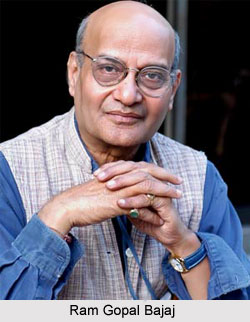
 Ram Gopal Bajaj is a famous theatre personality born in the year of 1940. He acted as an actor, director, academician, administrator, and also translator in Hindi theatre. He was born in Darbhanga district, in the Indian state of Bihar. Ram Gopal Bajaj was graduated from Bihar University in 1960 and joined the National School of Drama (NSD), from where he specialized in acting in 1965. Ram Gopal Bajaj is a famous theatre personality born in the year of 1940. He acted as an actor, director, academician, administrator, and also translator in Hindi theatre. He was born in Darbhanga district, in the Indian state of Bihar. Ram Gopal Bajaj was graduated from Bihar University in 1960 and joined the National School of Drama (NSD), from where he specialized in acting in 1965.
Career in Theatre for Ram Gopal Bajaj He started his career as an actor in its repertory company for two years and was a founder member of the theatre group Dishantar in 1967. He taught drama in a school from 1969 to 1973, producing around fifty plays with children. Then he taught theatre at Punjab University, Chandigarh, and Panjabi University, Patiala, where he headed the drama department, before joining NSD as professor of acting. He became NSD's Director in the year 1996-2001. During his tenure, he started a large-scale annual national theatre festival and boosted NSD's publication programme by launching the journals Rangprasang and Theatre India, in Hindi and English respectively. He also brought out books on theatre. As an actor, Bajaj has a diverse repertoire. He is remembered as Yuyutsu in Dharamvir Bharati's Andha yug i.e. "Blind Age" in 1963, Debu in Tarashankar Bandyopadhyay's Ganadebata i.e. "People, the God" in 1967, Devadatta in Girish Karnad's Hayavadan in 1972, and particularly for Vijay Tendulkar's Ghashiram Kotwal, in the lead in 1973 and as Nana Phadnavis in 1993 revival. Classical and historical material mark his directorial work, notably Mohan Rakesh's Ashadh ka ek din i.e. "One Day in Ashadha" in 1970, Surendra Vermas Surya ki antim kiran se surya ki pahli kiran tak i.e. "From the Sun's Last Ray to the Sun's First Ray' in 1974, Jaishankar Prasad's Dhruvswamini in 1975 and Skandgupta in 1977, and Verma's Qaid-e-hayat i.e. 'Imprisonment of Life' in 1989. He also performs on radio, television and in films, and is an esteemed elocutionist. Career in Film for Ram Gopal Bajaj Ram Gopal Bajaj has also been connected with the film industry for many years, first starting as an assistant director in art films like Utsav (1984) and Godhuli (1977). And later appearing in small character roles in films like, Masoom (1983), Mirch Masala (1985), closely followed by Chandni (1989). His most noted film role has been in Parzania and as the Guru, in Jackie Chan starrer, The Myth, both in 2005. He is presently a member of the academic council of National School of Drama, Delhi. Awards Received by Ram Gopal Bajaj He has been awarded the Padma Shri in 2003 and Sangeet Natak Akademi Award in 1996 for his contribution to theatre. |
| |||



Home > Movies & Entertainment > Indian Drama & Theatre > Personalities in Indian Theatre > Theatre Personalities of Bihar > Ram Gopal Bajaj
Ram Gopal Bajaj
| Ram Gopal Bajaj is an actor, director, academician, administrator, and translator in Hindi theatre. |
| ||||||||||||||||||||||||||||

