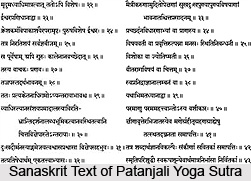
 The trayam antarahgam puroebhyah sutra describes about the differentiations between yogic practices in the power of three (dharana, dhyana and samadhi) and and the other aspects of external pursuit. The threefold aspect is rather internal quests of mind and soul. The previous sutras of yama, asana and pranayama have served as the external objects of purification.
trayam these three (dharana, dhyana and samadhi)
antarahgam interior parts, the mind and the heart
pitrvebhyah in relation to the preceding ones
These three aspects of yoga are internal, compared to the former five.
Compared to the former five aspects of yoga, it may he seen that dharana, dhyana and samadhi are more subtle, internal, intimate and subjective practices. The first five, which deal with the seen or cognisable sheaths, are called the external quest. Yama purifies the organs of action; niyama, the senses of perception; asana cleanses the physical and organic aspects of the body; pranayama stops wastage of energy and increases stamina; pratyahara cleanses the mind.
More intimately, dharana develops and sharpens intelligence, dhyana purifies consciousness and samadhi leads consciousness towards the soul. These three are directly involved in the subtle sheaths of mind, intelligence and consciousness, and are very close to the spiritual heart. They directly affect the spiritual path, and are therefore called the inner quest, or sabtja samadhi, because the sadhaka now has one-pointed consciousness.
In samadhi pada, Patanjali explained that truth-bearing wisdom (rtambhara prajna) is the threshold between sabtja and nirbija samadhis. Here he describes samyama as the penultimate step towards nirbija samadhi.
In the next sutra Patanjali explains that samyama is external to nirbija samadhi, and then proceeds, in 111.9-16, to interpenetrate the transformations in the very substance of the consciousness, leading one to experience its finest state, which appears to be subtler than samyama.