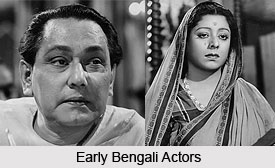
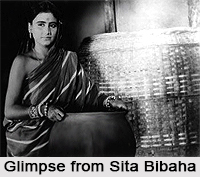
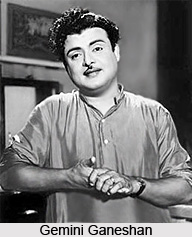
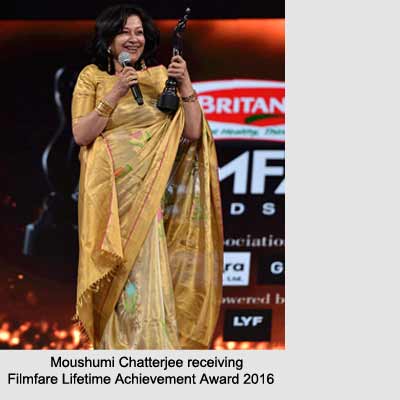
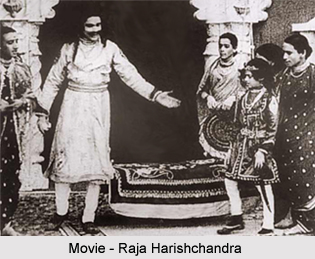
 Early films in Kolkata portray the essence of Bengal a region rich in culture and intellectual activity, the first Bengali Cinema was a remake of Dadasaheb Phalke`s Raja Harishchandra. It was titled Satyawadi Raja Harishchandra. It was directed by Rustomjee Dotiwala, a Parsi, and was produced by JF Madan. In 1918, producer, director, cameraman Nath Patankar made Ram Vanvas. The serialization kind of filming of this Indian epic is considered to have had an impact as the films of Phalke.
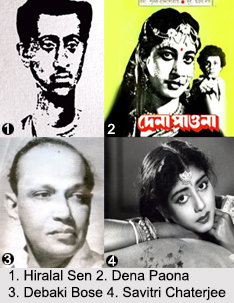
In 1897, films got initiated in the cultural field the first time in Kolkata. In 1898, the multinational Warwick Trading Co. commissioned `Panorama of Calcutta` newsreel. It was only some years down the line, Hiralal Sen from north Calcutta started making films at the Classic Theatres. In 1901, Hiralal Sen set up Royal Bioscope, produced scenes and dance sequences from popular Bengali plays. At Calcutta`s Star Theatre, Amritlal Bose screened a package of `actualities` and `fakes` along with plays and variety shows. Back in those days bioscope added a pinch of salt to the spiced up menu of popular theatres. In 1917, Raja Harishchandra, the first feature film in India, was made by Dadasaheb Phalke. Two years later, in 1919, the first Bengali movie "Billwamangal" was made. This was a silent movie. Several works of popular Bengali novelist Bankim Chandra Chatterjee were adapted into films, such as, Durgeshnandini, Krishnakanter Will etc. The first popular star in Bengali film was probably Pramathesh Chandra Barua, who was a director himself too. Debaki Bose, Pramathesh Barua contributed quite a lot to Indian cinema. Debaki Bose directed Chandidas in 1932; this film was noted for it`s breakthrough in sound recording. Sound recordist Mukul Bose found out a solution to the problem of spacing out dialogue and frequency modulation.
 Directed by Premankur Atarthi and produced by New Theatres, the first Bengali talkie Dena Paona was released in 1931; renowned musician Rai Chand Boral composed music for this movie. In 1935, P.C. Barua directed and acted in Saratchandra Chatterjee`s popular novel Devdas and this film became a phenomenon in the industry. Bimal Roy directed the Hindi version of the same in 1955. Kanan Devi was the first star actress in the domain of Bengali Cinema. The movie Rajat Jayanti, a popular Bengali comedy was probably the first of its kind. This film was directed by P.C. Barua starring himself and Pahari Sanyal. Another historical film was `Biyallis(42)` based on the Quit India Movement of 1942. The film was banned for political reason. Bikash Roy`s performance in this movie was memorable. Bengali cinema was glorified with the presence of a group of talented actors such as Chhabi Biswas, Bikash Roy, Pahari Sanyal, Basanta Choudhury. And, there never was any shortage of good stories, as Bengali literature in the 21st century was rich with elements all the time. This was accompanied by the musical talents of Bengal. Songs from Bengali films became extremely popular and was used to get aired in radio programs. Bengal film industry was blossomed with successful film directors; a few to mention is Devaki Basu, Nitin Basu, Ajay Kar, Rajen Tarafdar, Bimal Roy, Tapan Sinha, Saroj Dey, Tarun Mazumder - all of whom at times produced fine movies. Some of them moved to Mumbai (Bombay) and made remarkable contribution to Hindi films. The real stardom in Bengali films started when films starring Uttamkumar and Suchitra Sen gained extreme popularity. This romantic combination brought golden age of commercial Bengali cinema and the duo acted in a series of box office successes like, Sare Chuattor, Saptapadi, Sapmochan, Harano Sur, Pathe Holo Deri etc. Uttamkumar acted with many other actresses such as Supriya, Sabitri, Madhabi, Aparna Sen and others. Suchitra Sen received the best actress award in Moscow Film Festival for her role in Saat Paake Badha co-starring Soumitra Chatterjee.
Dhiren Nath Ganguly, considered as one of the founders of the Bengali film industry was passionate about photography and along with the several associates went on to create the Indo-British Film Company (1918). He was the product of Rabindranath Tagore`s Shantiniketan and a self-taught intellectual. He wrote and acted in the well known film, `Bilet Pherat.` It was directed by Nitish C Lahiri. It was one of the first social satires of Indian cinema that highlighted those Indians who blindly aped the attires and habits of the British rulers. Ganguly went on to establish in 1929, the British Dominon Film Studios along with Pramatesh Chandra Barua. In 1922 he made a film based on communal problems, Razia Begum.
Less prolific than Mumbai, around 122 feature films were made in Kolkata. The Madan family`s production company, the Elphinstone Bioscope, financed a certain number of films. These included the first Bengali silent feature film, Satyawadi Raja Harishchandra. The Madans owned the first cinema theatre in India to be equipped with a permanent sound system. This was the Elpnihstone Picture Palace in Calcutta in 1928. Within two years 30 of the 370 theatres in India were similarly equipped.
Bengali silent films were dependent on themes based on literary works, theatre and social subjects rather than religious tales or mythology. Another Bengali production unit was Aurora Cinema Company, which in 1931, made the last noteworthy silent Bengali silent film, Pujari. It was directed by Niranjan Pal. In the same also came Jamai Babu by Kalipada Das.