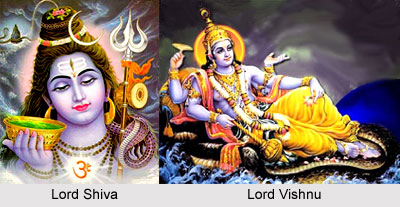
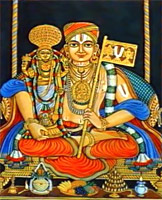
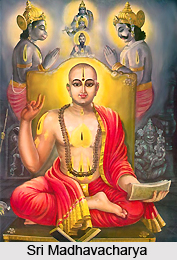
 Dvaita philosophy was advocated in reaction to the ultimately anti-theistic non-dualism of Advaita Vedanta and as a response to the Vishishta-advaita of Ramanuja. Dvaita simply means `dualism.` According to the Dvaita School there is a difference between the self and the Supreme power. Madhava advocated the belief that Lord Vishnu is the only "Brahman" in the universe and the absolute force. All other gods and goddesses are his subordinates. However, the philosophy does point out differences between Vishnu and the self; self and matter; Brahman and matter and several selves. Despite the differences there is a distinct relationship between all these, as the Lord desires it. Nothing on this earth can survive without Lord`s will.
Teachings of Dvaita Philosophy
Madhava departed from the tenets of mainstream Vedanta philosophy by denying that God is both the material and the efficient causes of the world. According to Madhava`s philosophy, matter and soul, time and space are all dependent realities, which exist by the will of God. The aim is to make one realize the profound significance of the distinction between what is independent and what is dependent. Dvaitins uphold the existence of a plurality of individual selves and the mind`s independence. Both are existentially dependent upon Lord Vishnu who is only truly independent and is a self sufficient reality that sustains everything. Devotion to a personal deity leads to release from rebirth. Madhava`s Dvaita principle forms a comprehensive philosophy of the Vedantic tradition. The second most important teaching of Madhava is that the Supreme Being cannot be a mere abstraction but is a perfect personality of infinite and auspicious attributes of perfection.
Madhvacharya advocated a Theology of Vaishnavism that understands God to be endowed with attributes. Madhva states that Lord Vishnu is not just any other deity, but rather the Supreme One. Five fundamental, eternal and real differences exist in his Dvaita philosophy.
Impact of Dvaita Philosophy
Madhvacharya`s philosophy forms some of the core Indian beliefs on the nature of reality. He is considered one of the influential theologians. He revitalized a Hindu monotheism. Great leaders of the Vaishnava Bhakti movement in Karnataka, Purandara Dasa and Kanaka Dasa were strong proponents of this philosophy. Raghavendra Swami was a leading advocator of this philosophy. Madhava`s theology influenced scholars such as Nimbarka, Vallabhacharya and Chaitanya Mahaprabhu. Madhava`s aim was to offer a new insight and analysis of the classical Hindu texts thereby resulting in the Dvaita tradition. He who built a convincing alternative system of Vedantic interpretation that took on Advaita fully. His doctrine of eternal damnation differs from Hinduism. Many of his doctrines resemble strict monotheism. He considered the role of Bhakti more important than any other schools of Vedanta. The third is the belief in the supremacy of Lord Vishnu over other deities. He differed from the traditional Hindu beliefs. For instance, souls are divided into three categories. One is that can be liberated, the other is that is subject to eternal rebirth and the third one is eventual sentence to hell. In contrast Hindus believe in universal salvation. Madhvacharya puts forth that Brahman and Atman are eternally different, with God always being the Superior one.
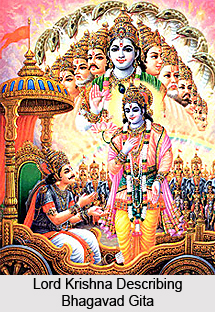
His basic teaching is that humanity should work hard for its salvation and that work should be treated as the worship of God and offered to him in prayerful dedication and is based on the teachings of the Bhagavad Gita and that Karma Yoga is the path for mortals.