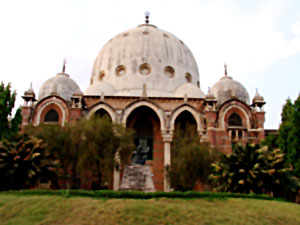
 University of Madras is one of the three oldest universities in India. The university was incorporated by an act of the Legislative Council of India. It is a collegiate university and has six campuses: Chepauk, Marina, Guindy, Taramani, Maduravoyal and Chetpet. It has more than 50 departments.
History of University of Madras
The model of London University was followed while organising the Charter for the Madras University. The establishment of Madras University was initiated by a Public Petition dated 11-11-1839. The University Board was formed in January, 1840 with Mr George Norton as its President. A systematic educational policy for India was formulated by the Government of India in 1854 after a drift of 14 years. And an Act was passed as a sequel to this on 5th September in 1857 by the Legislative Council of India.
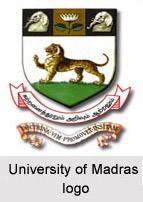
The Madras University is regarded as the mother of almost all the old universities of South India. The motto of this university is, "Learning promotes (one`s) natural (innate) talent." According to recent update, then the area of jurisdiction of the university has been confined to three districts of Tamil Nadu. It was done so because many universities were established in the state and the territories of the university was also demarcated. After that the university, has grown very fast and increased its teaching and research activities.
In the 19th century, the University of Madras progressed and expanded all through the South India. The University of Madras was bestowed with the "Five star status" by the National Assessment and Accreditation Council. It was also among the five universities in India, which were given the status of "University with Potential for Excellence" by the University Grants Commission (UGC). This title qualifies the university to receive special grants for creating islands of excellence in the emerging areas and for provision of superior education of merit and distinction. The Madras University got the permission to establish departments of Indian History, Archaeology, Comparative Philology and Indian Economics in 1912. There were total 17 university departments, 30 university teachers, 69 research scholars and 127 university publications in that year and the budget was Rs. ll lakhs.
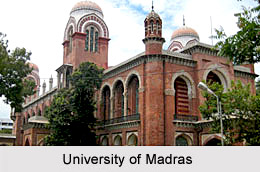 The Sadler Commission later encouraged the research and teaching functions of the university. The gains of the University were also combined by the enactment of Madras University Act of 1923. By this time, the Madras University encompassed Berhampur of Orissa in the north, Thiruvananthapuram of Kerala in the Southwest, Bangalore and Mangalore of Karnataka in the west and Hyderabad of Andhra Pradesh in the north.
After the independence in 1947, the UGC was set up in 1956 and with the change of socio-political scenario of the country; the University of Madras also went through many changes. The University of Madras Act of 1923 was passed to permit qualitative and quantitative changes in its jurisdictions and functions.
The University started providing leadership in higher education to its affiliated colleges and encouraged with the necessary support. It had taken holistic decisions and actions by bearing in mind its primary goal. The Madras University remained accountable to the students, teachers, employees, funding agencies and the society as a whole as well as the Government. It always remained responsive to the changes in the frontiers of knowledge, nationally and internationally.
Courses offered at University of Madras
The Madras University has at present total 68 departments of study and research which spread over four campuses at Chapeau, Marina, Guindy, and Taramani in Chennai. All these departments are kept under 18 schools and each school functions with a chairperson. The University offers postgraduate courses like, M.A., M.Sc, M.Com., M.C.A., M.B.A., besides P.G. Diploma/Certificate Programmes, Research Programmes like M.Phil., and Ph.D., and sponsored Research Programmes (from UGC, CSIR, DST, etc.).