Paper Industry in India
|
Paper industry in India is growing considerably with the passage of time. Its main raw material is soft wood. Machine-made paper was first manufactured in India in the year 1812.
|
|
|
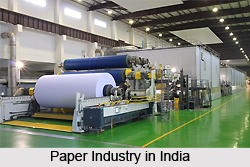 Machine-made paper was first manufactured in India in 1812. At that time, there were 15 mills with a total production of lakh tonnes. Soft wood is the principal raw material used for making paper in India especially newsprint and high class printing papers. With rising population and broadening of education, the demand for paper has been constantly escalating since. Owing to very narrow forest resources, wood pulp is in a shortage. As soft woods grow in temperate climate, India is in short supply of such woods. Thus, in such circumstances, Bamboo became the major raw materials for the manufacture of paper in the country as it grows very quickly even after cutting. Therefore, bamboo, sabai grass, cotton grass, cereal straws and sugarcane bagasses are being used more and more. Waste paper and rags are also recycled as raw materials. Machine-made paper was first manufactured in India in 1812. At that time, there were 15 mills with a total production of lakh tonnes. Soft wood is the principal raw material used for making paper in India especially newsprint and high class printing papers. With rising population and broadening of education, the demand for paper has been constantly escalating since. Owing to very narrow forest resources, wood pulp is in a shortage. As soft woods grow in temperate climate, India is in short supply of such woods. Thus, in such circumstances, Bamboo became the major raw materials for the manufacture of paper in the country as it grows very quickly even after cutting. Therefore, bamboo, sabai grass, cotton grass, cereal straws and sugarcane bagasses are being used more and more. Waste paper and rags are also recycled as raw materials.
Paper industry in India is mainly plantation based. Thus, it is essential that more land must be brought under plantations of eucalyptus and other trees apposite for the making of papers. Calcium bisulphate, caustic soda and sodium sulphate are the principal chemicals used for manufacturing. The paper industry also requires huge amount of soft water. The paper utilized for newspapers is called newsprint. Its requirement is bound to grow noticeably. The Nepanagar Newsprint plant in Madtiya was set up to meet these aforementioned demands. Its capacity has been raised to 75,000 tonnes a year. West Bengal and Maharashtra are the leaping states in this industry. But plants have come up in other parts of the country also. The total newsprint production has now reached well over 400,000 tonnes. However, imports of huge number of papers are still obligatory.
In India, all states except for a few have paper mills. These paper mills are situated at places that have advantages of easy access to the raw materials specifically bamboo. West Bengal has a several paper mills that use bamboo from the forests of neighbouring states. Assam has huge inexhaustible reserves of bamboo and other woods also, which are suitable for the production of paper and paperboard. Demand for paper as well as paper board has increased considerably after the independence of the country. And it resulted in the set up of few paper mills across the country.
|
|
|
|





