Food Articles for Different stages of life
|
There are different types of food article prescribed for different stages of life.
|
|
|
Ancient Indians were fully conscious of the fact that the same kind of food could not suit a man at different stages of life. They, therefore, prescribed different kinds of dishes starting from requirement for a pregnant mother to the old persons. For example it is stated that if the parents wished to have a son learned in two Vedas they should take boiled rice with curds and clarified butter. Rice boiled with sesame was prescribed for the parents who wished to have a learned daughter. Similarly in the religious ceremony of the first feeding of the child Paraskara prescribes the flesh of various birds for developing its different faculties, such as fluency of speech, nourishment, long life or holy luster or brilliancy.
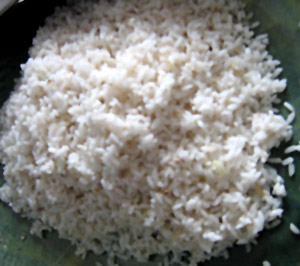 Sahkhayana prescribes that the child should be fed with a goat's meat if nourishment is required. Baby should be fed with the meat of a partridge, if holy lustre is desired. In case of swiftness requirement fish should be fed properly. If physical splendor is desired he or she should be fed with boiled rice mixed with ghee.
In the Sutras it is clearly stated that the food should suit the age of the individual. It is, therefore, prescribed that children should be fed on boiled rice mixed with curds, honey, clarified butter or water. Sometimes they were also given some meat preparations. In his first stage of life a student was expected to take simple but wholesome food and avoid meat preparations and spicy or exciting dishes. It is, therefore, laid down that a student should avoid food at a sacrifice probably because it consisted of meat preparations and exciting dishes of pungent condiments salt and honey. Generally the students were expected to go out begging alms because according to the authors of the Sutras it made the students humble. They could beg food at the houses of men of all varnas except of those who were considered unworthy i.e. apapatra and suspected of having committed great sins.
A newly married couple was not allowed to use pungent or saline food preparations for three days after marriage. After the expiry of three days the newly married couple could eat honey, meat preparations and salt and spiced food articles. When a householder performed a sacrifice he was expected to take only fast day food in which meat and other exciting foodstuffs were avoided. It is clearly stated that meat preparations should not be eaten on such occasions. A sacrament was performed in the fourth month of pregnancy of the wife. In this sacrament the rite of parting the hair was the chief feature. The Gobhils grhyasutra states, that the wife should eat krsara i.e. rice cooked in milk and mixed with sesamum mixed with ghee at the time of this sacrament. A sacrament was performed in the fourth month of pregnancy of the wife. In this sacrament the rite of parting the hair was the chief feature. The Gobhils grhyasutra states, that the wife should eat krsara i.e. rice cooked in milk and mixed with sesamum mixed with ghee at the time of this sacrament.
Saline and pungent food articles were also prohibited for widows because it was thought that they created unnecessary excitement and the widows should lead a life of simplicity in all its aspects including food.
Forest hermits were forbidden many things. They generally lived upon roots, fruits, leaves, straws or gleanings of corn. They could include clarified butter and curds in their diet but could not eat stale food, pungent condiments, saline or meat preparations. Many ascetics subsisted only on milk and barley gruel.
|
|
|
|





