


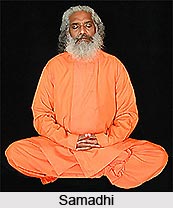
 Patanjali Yoga Sutra consists of 196 sutras which are divided into four chapters or padas. Samadhi Pada is the first chapter that defines yoga and the movement of the citta (loosely know as mind) and how to reach samadhi state. It is directed towards those who are already highly evolved to enable them to maintain their advanced state of cultured, mature intelligence and wisdom. The aim of Patanjali Yoga Sutra was to attract those rare souls who were already on the brisk of self-realisation. Patanjali Yoga Sutra consists of 196 sutras which are divided into four chapters or padas. Samadhi Pada is the first chapter that defines yoga and the movement of the citta (loosely know as mind) and how to reach samadhi state. It is directed towards those who are already highly evolved to enable them to maintain their advanced state of cultured, mature intelligence and wisdom. The aim of Patanjali Yoga Sutra was to attract those rare souls who were already on the brisk of self-realisation.
"Ishvara is the supreme Purusha, unaffected by any afflictions, actions, fruits of actions or by any inner impressions of desires. In Him is the complete manifestation of the seed of omniscience. Unconditioned by time, He is the teacher of even the most ancient teachers. The word expressive of Ishvara is the mystic sound OM." -- These words are inscribed in the first chapter of Yoga sutra, called the Samadhi pada. Samadhi pada clearly explains the significance of yoga as well as of Samadhi, both meaning deep meditation and supreme devotion. For aspirants gifted with perfect physical health, mental poise, discriminative intelligence and a spiritual bent, Patanjali Yoga Sutras provides guidance in the disciplines of practice and detachment to help them attain the spiritual zenith, the vision of the soul (atma-darsana). In Samadhi Pada, Patanjali defines the yoga as "Citta Vritti Nirodha", meaning to stop the movement of Citta or the mind. But if the individual is not able to stop fluctuation or movement of citta, since it is imbued by three qualities or the gunas, namely the Sattva, Rajas and Tamas. The soul is pure but mismatch in the qualities of citta that leads to joy and sorrow. In this chapter Patanjali explains that through abhyasa and vairagya, a person can experience Samadhi. Abhyasa means practice and Vairagya means detachment. Patanjali has elucidated that Citta has three components namely the mind (manas), intelligence (buddhi) and ego (ahamkara) which combine into one composite whole. The term 'self', represents a person as an individual entity. Its identity is separate from mind, intelligence and ego, depending upon the development of the individual. Self also stands for the subject, as contrasted with the object, of experience. The Samadhi Pada states that the eastern thought takes one through the layers of being, outwards from the core, the soul, towards the periphery, the body and inwards from the periphery towards the core. The purpose of this exploration is to discover experience and taste the nectar of the soul. Samadhi Pada further states that the mind permeates and engulfs the entire conscious and unconscious psychological process and the activities of the brain. All vital activities arise in the mind. According to Indian thought, though mind, intelligence and ego are parts of consciousness, mind acts as the outer cover of intelligence and ego and is considered to be the eleventh sense organ. In Samadhi Pada, Patanjali explains that the brain is a part of the mind. As such, it functions as the mind's instrument of action. The brain is part of organic structure of the central nervous system that is enclosed in the cranium. It makes mental activity possible. The brain controls and co-ordinates, mental and physical activities. When the brain is trained to be consciously quiet, the cognitive faculty comes into its own, making possible, through the intelligence, apprehension of the mind's various facets. Clarity of intelligence lifts the veil of obscurity and encourages quiet receptivity in the ego as well as in the consciousness, diffusing their energies evenly throughout the physical, physiological and spiritual sheaths of the soul. Samadhi Pada describes God, Paramatman or Purusa Visesan as the Universal soul, the seed of all. The individual soul, jivatman or purusa, is the seed of the individual self. The soul is therefore distinct from the self. Soul is formless, while self assumes a form. The soul is an entity, separate from the body and free from the self. Soul is the very essence part of the core of one's being. Like the mind, the soul has no actual location in the body. It is latent and exists everywhere. The moment the soul is brought to awareness of itself, it is felt anywhere and everywhere. Unlike the self, the soul is free from the influence of nature and is thus universal. As well nurtured seed causes a tree to grow, and to blossom with flowers and fruits, so the soul is the seed of man's evolution. From this source, asmita sprouts as the individual self. From consciousness, springs ego intelligence, mind and the senses of perception and organs of action. 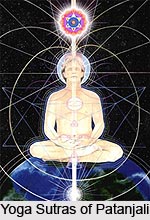
Before describing the principals of yoga in Samadhi Pada, Patanjali speaks about consciousness and the restraint of its movements. Yoga is defined as citta vrtti nirodhah meaning a perfect and divine one with the soul. Citta is the individual counterpart of mahat, the universal consciousness. It is the seat of the intelligence that sprouts from conscious, antahkarana, the organ of virtue and religious knowledge. If the soul is the seed of conscience, conscience is the source of consciousness, intelligence and mind. The thinking processes of consciousness embody mind, intelligence and ego. The mind has the power to imagine, think, attend to, aim, feel and will. The mind's continual swaying affects its inner sheaths, intelligence, ego, consciousness and the self. The culture of consciousness entails cultivation, observation and progressive refinement of consciousness by means of yogic disciplines. Explaining the causes of fluctuations in consciousness, Patanjali further shows how to overcome them, by means of practice, abhyasa and detachment or renunciation, vairagya. If abhyasa and vairagya are diligently observed, restraint of the mind becomes possible in much shorter span of time. Then, one may explore what is beyond the mind and taste the nectar of immorality or soul-realization. If practice is slowed down, then search for soul-realization becomes clogged and bound in the wheel of time. Ignorance is the mother of indecisiveness and affliction. In this Samadhi Pada, Patanjali also explains how one may gain knowledge by direct and correct perception, inference and testimony and that correct understanding comes when trail and error ends. Here, both practice and renunciation play an important role in gaining spiritual knowledge. Attachment is a relationship between man and matter and may be inherited or acquired. Practice of yoga and renunciation of sensual desires take one towards spiritual attainment. Practice demands four qualities from the aspirant; dedication, zeal, uninterrupted awareness and long duration. Renunciation also demands four qualities such as disengaging the senses from action, avoiding desire, stilling the mind and freeing oneself from cravings. Samadhi Pada says that intensity of practice and renunciation transform the uncultured, scattered consciousness, citta into a cultured consciousness, able to focus on the four states of awareness. The seeker develops philosophical curiosity, begins to analyze with sensitivity and learns to grasp the ideas and purposes of material objects in the right perspective (vitarka). Then meditates on them to know and understand fully the subtle aspects of matter (vicara). Thereafter he moves on to experience spiritual elation or the pure bliss of meditation and finally sights the Self. These four types of awareness are collectively termed samprajnata Samadhi or samprajnata samapatti. Samapatti is thought transformation or contemplation, the act of coming face to face with oneself. 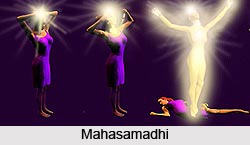 From these four states of awareness, the seeker moves to a new state, an alert but passive state of quietness known as manolaya. If the sadhaka's intensity of practice is great, the goal is closer. If he slackens his efforts, the goal recedes in proportion to his lack of willpower and intensity. From these four states of awareness, the seeker moves to a new state, an alert but passive state of quietness known as manolaya. If the sadhaka's intensity of practice is great, the goal is closer. If he slackens his efforts, the goal recedes in proportion to his lack of willpower and intensity.
The obstacles to Samadhi Pada and realisation to healthy life and Self-Realization are disease, indolence of body or mind, doubt or skepticism, laziness, carelessness, failing to evade desires and their gratification, delusion and missing the point, not being able to concentrate on what is undertaken and to gain ground and inability to maintain concentration and steadiness in practice once attained. They are further aggravated through sorrows, anxiety or frustration, unsteadiness of the body and laboured or irregular breathing. Ways of surmounting the obstacles and reaching the goal is also explained in Samadhi Pada. The remedies which minimize or eradicate these obstacles are; adherence to single-minded effort in sadhana, friendliness and goodwill towards all creation, compassion, joy, indifference and non-attachment to both pleasure and pain, virtue and vice. These diffuse the mind evenly within and without and make it serene. Patanjali also suggest the certain methods to be adopted by various types of practitioners to diminish the fluctuations of the mind; retaining the breath after each exhalation (the study of inhalation teaches how the self gradually becomes attached to the body; the study of exhalation teaches non-attachment as the self recedes from the contact of the body; retention after exhalation educates one towards detachment); involving oneself in an interesting topic or object; contemplating a luminous, effulgent and sorrow less light; treading the path followed by noble personalities; studying the nature of wakefulness, dream and sleep states, and maintaining a single state of awareness in all three; meditating on an object which is all-absorbing and conducive to a serene state of mind. The above mentioned methods of Samadhi Pada can be practiced on its own. If all are practiced together, the mind will diffuse evenly throughout the body, its abode, like the wind which moves and spreads in space. When they are judiciously, meticulously and religiously practiced, passions are controlled and single-mindedness develops. The sadhaka becomes highly sensitive, as flawless and transparent as crystal. The sadhaka realizes that the seer, the seeker and the instrument used to see or seek are nothing but himself, and he resolves all divisions within himself. This clarity brings about harmony between his words and their meanings, and a new light of wisdom dawns; his memory and mind to dissolve in the cosmic intelligence. There are 51 slokas in the Samadhi pada where Patanjali describes the enigma of human existence. The slokas of Samadhi pada are as follows |
| |||



Samadhi Pada
| Samadhi Pada is the first chapter of Patanjali Yoga Sutra and defines the association of Yoga and the human mind. |
| ||||||||||||||||||||||||||||

