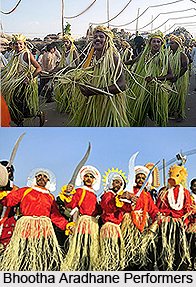
 Bhootha Aradhane or Bhuta Kola is a ritualistic folk dance popular in the Karnataka state of India. A procession is an important part of this dance form. The procession exhibits various idols representing `bhoothas` meaning ghosts. The sound of drums and bursting of firecrackers accompanies the procession. Every year, this dance form attracts huge number of tourists to the state.
Origin of Bhootha Aradhane
Bhootha Aradhane has originated from the coastal parts of Karnataka and Kerala as a way of Tulu worship. Tulu is a regional language in Karnataka. This form of dance is rarely seen. Bhootha means ghost and the reference to these creatures` dates back to myths. In mythology, Lord Shiva`s attendants are referred to as Bhuta Ganas. Their chief responsibilities were to serve the Lord and protect Dharma.
Forms of Bhootha Aradhane
This dance has different forms. Several kinds of ghosts are represented through this folk dance. Kallurti, Koraga Taniya, Shiradi Bhoota, Koratti, Punjurli, Kuppe Punjurli, Kalkuda, Ali Bhoota, and many others are revered in places like Bantwal, Puttur, Uppinangadi and Mangalore. Rajya daiva, Kuntikana Dhoomavathi, KinniMani, Guliga, Koraga, Poomani Ullakalu and Raktheswari are the bhootas worshipped in temples.
Performance of Bhootha Aradhane
Bhootha Aradhane is performed in a group. The performer will dance on a special music. The main idea behind this folk dance is to appease the devil and protect the environment. A procession with idols of `bhoothas` is taken out. Drums and firecrackers accompany the procession. At the end of the procession the idol is kept on a pedestal and the dancer begins his performance. He dances with swords and bells whirling round like a bhootha. He acts as if he is possessed and pretends like a prophet.
Costumes of Bhootha Aradhane
The costume plays a crucial role in the performance of Bhootha Aradhane. During the performance of this form of dance the dancer is required to make up his or her face in a specific way and wear certain costumes and jewelleries. The dancers decorate themselves to resemble ghosts.
Both as a tourist and as an art enthusiast, one will love Bhootha Aradhane. The dance is performed twice in year, once in the month of January and again after the annual festival.