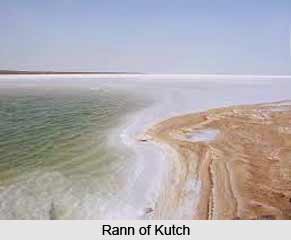
 Geography of Kutch District is dealing with the rugged geographical stature and the black soil prone zone. Notwithstanding the reasons, this district is really worth seeing. The beautiful land of Kutch with its amazing blend of desert occupying more then half of the area and fertile land bordering the sea coast is site to see. Kutch is geographical shaped like a tortoise. The district lies in the extreme west of India between 22` 44` 8` to 24` 41` 30` North latitude and 68` 7` 23` and 71` 46` 45` East longitude.
Location of Kutch District
Covering an area of 45,612 km, Kutch is the largest district in the state of Gujarat and the second largest district of India after Leh in Jammu and Kashmir. The administrative headquarter is in Bhuj which is geographically also in the centre of district. Other main towns are Gandhidham, Adipur, Anjar, Mandvi and Mundra.
Area of Kutch District
Kutch is well-nigh an island, surrounded. Apart from this, Rann of Kutch also shares the border with Pakistan. The series of villages situated on the blind thrust in the eastern part of the Kachchh Mainland Hill Range (viz. Jawaharnagar, Khirsara, Devisar, Amarsar and Bandhdi) was completely erased.
Regions of Kutch District
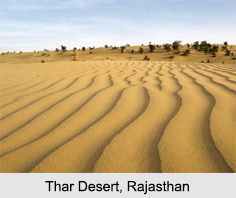
Topographically, Kutch is divided into 5 distinct regions: (i) The Great Rann, or uninhabited wasteland in the north, (ii) The Grasslands of Banni, (iii) Mainland, consisting of planes, hills and dry river beds, (iv) The Coastline along the Arabian Sea in the south, and (v) Creeks and mangroves in the west. More loosely, the southern portion of the Rann is considered an island, with seawater inundating the land for most of the year. The mainland is plane but has some hill ranges and isolated hills.
Demography of Kutch District
Kutch has approximately 965 villages inhabited by a diverse population. Hindus constitute 89% of the population, followed by Muslims who form 9% and Jains who make up 1% of the total population. The region is sparsely populated in comparison to the large area of land, but the settlements are fairly densely populated.
Climate of Kutch District
Kutch has a tropical monsoon climate with an average annual rainfall of approximately 14 inches. The temperature ranges from 2 degrees Celsius in the winter to 45 degrees Celsius in the summer. The three main seasons are: (i) Summer, from February to June, (ii) Monsoon season, from July to September, and (iii) Winter, from October to January.
Rivers of Kutch District
Kutch has many rivers, they are small and do not have much water. Those flowing in the north disappear in the desert, while those flowing in other directions join the sea. The Khari flowing by Bhuj meets the desert and the Magh and the Tara empty their waters in the Gulf of Cambay. Rudramata has been bounded for irrigation, providing the only irrigation project in Kutch.