Introduction
The Vedanta philosophy is important both for its philosophical views and its close connections with the existing Hinduism. Vedantists do not accept multiple Purusha. Reality is one as Brahman and the rest of the universe including mind and its modifications are but a superimposition upon this one Reality. The word Vedanta is a compound of Veda which means "knowledge" and anta means "end or conclusion". It is also called the Uttara Mimamsa. The man, who is revered as the head of the Vedantic school, was Badarayuna, or Vyas.
Vedanta can be put as:
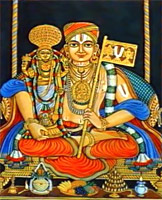 a) Absolute Monism of Shankara or Advaita: Shankara maintains that there exists but One Reality as Brahman whose nature is pure Consciousness. Shankara discusses the question of reality of individual soul, this world, and Ishvara from this point of view and labels them as illusory. Final Liberation comes when this knowledge of unity of individual soul and eternal Soul is established through meditation and Samadhi.
b) Vishishta Advaita or qualified monism of Ramanuja: Ramanuja is the founder of Vishishta-Advaita Vedanta. This is a philosophy of religion; and therefore it gives a synthetic view of the spiritual experiences of God or Brahman. It affirms the Upanishadic truth by realizing Brahman everything else is realized. Heavily depending upon theory of Karma, this philosophy applies the law of cause and effect to moral experiences.
History of Vedanta Philosophy
History of Vedanta Philosophy can be dated back to thousands of centuries ago. In the medieval period the word Vedanta meant the school of philosophy that interpreted the Upanishads. The traditional Vedanta considers scriptural evidence as the genuine means of knowledge. The philosophy of Vedanta was systematized into one rational treatise that was undertaken by Badarayana in the Vedanta Sutra. This was composed around 200 BCE. Several names have been assigned to Vedanta Sutra and they include Brahma sutra, Sariraka, Vyasa-sutra, Badarayana sutra, Uttara-mimamsa and Vedanta-darsana.
The enigmatic aphorisms of Vedanta Sutras have been interpreted in various ways by many saints. This has resulted in the formation of abundant Vedanta schools. Each of these schools has construed the texts in its own manner. This has led to various sub commentaries. All these school interpreted the texts in its own way thereby producing its own sub-commentaries. However an individual`s quest for truth through meditation has been consistent throughout Vedanta. All sects of Hinduism have been influenced by the thought systems that have been developed by Vedantic thinkers. The principles of Vedanta speak of unity of all existence and the universality of spiritual truth.
Source of Vedanta : The primary source of Vedanta is the Upanishad. However certain portions of Vedanta have been derived from some of the earlier aranyakas. The main principle of Vedanta is the absolute reality that has been termed as Brahman. Sage Vyasa was one of the major proponents of this philosophy. Most schools of Vedanta believe in the concept of Brahman - the eternal, self existent and inspiring Supreme and Ultimate Reality which is the divine ground of all Being.
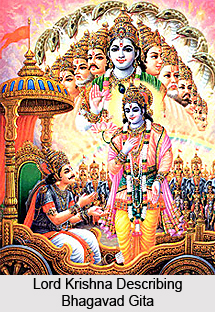
There are six interpretations of these source texts. Among these six three (Advaita, Vishishtadvaita and Dvaita) are well-known. These Vedanta schools of thought were founded by Shri Adi Shankara, Shri Ramanuja and Shri Madhvacharya. Bhagavad Gita has also played a major role in Vedantic thought. All teachers of Vedanta have completely attested to the importance of Gita to the development of Vedantic thought and practice. Vedanta is not restricted to one book, thus it has no single source.
Schools of Vedanta
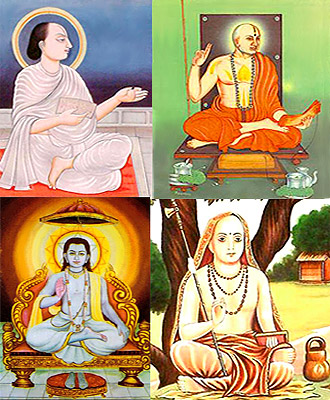 The schools of Vedanta are Advaita Vedanta, Vishishtadvaita, Dvaita, Dvaitadvaita and Shuddhadvaita. These were advocated by Adi Shankara, Ramanuja, Madhvacharya, Nimbarka and Vallabhacharya respectively.
Advaita Vedanta : Advaita Vedanta Absolute Monism of Shankara or Advaita was advocated by Adi Shankara. It is the most influential sub-school of the Vedanta. According Advaita Vedanta, Brahman is the only reality and the world is illusory. There is no difference between the individual soul jivatman and Brahman.
Shankara maintains that there exists but One Reality as Brahman whose nature is pure Consciousness. Shankara discusses the question of reality of individual soul, this world, and Ishvara from this point of view and labels them as illusory. Final Liberation comes when this knowledge of unity of individual soul and eternal Soul is established through meditation and Samadhi.
Visistadvaita : Visistadvaita Theory was propagated by Ramanuja. According to this philosophy jivatman is a part of Brahman. In Vishishtadvaita, the Brahman has attributes including the individual conscious souls and matter. This school advocates Bhakti or devotion to God visualized as Vishnu to be the path to liberation. The creative power of God is Maya.
This is a philosophy of religion; and therefore it gives a synthetic view of the spiritual experiences of God or Brahman. It affirms the Upanishad truth by realizing Brahman everything else is realized. Heavily depending upon theory of Karma, this philosophy applies the law of cause and effect to moral experiences.
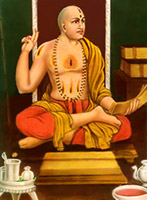 Dvaita: Dvaita philosophy was advocated by Madhvacharya. It is also known as Tattva Vada and Bheda-Vada. It was founded by Madhvacharya. It stresses on a strict distinction between God and the individual living beings. According to Madhva charya, souls depend on God for their existence. God is seen as the cause of this universe and not of the material world. The Dvaita doctrine was summarized by Vyasa Tirtha as comprising nine tenets or Prameyas. According to Madhva Charya, life in this entire universe can be divided into two groups Kshara and Akshara. Kshara has life with destructible bodies while Akshara have indestructible bodies. Laxmi is Akshara while others from Brahma and so on are Ksharas or Jeevas.
Dvaitadvaita: The originator of this philosophy was Nimbarka, a 13th Century Vaishnava Philosopher. He believed in three categories of existence which are similar to Vishisht Advaita. These are the Chit, Achit and Isvara. Boht Chit and Achit have attributes (Guna) and capacities (Swabhaava), which are different from those of Isvara, who is the God, is independent and exists all by himself. Chit and Achit, both depend on Isvara. Therefore Isvara has independent existence and Chit and Achit have a dependent existence.
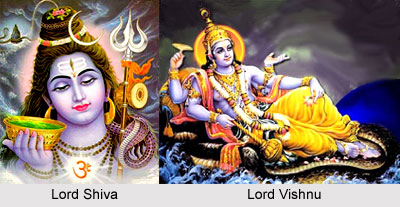
Vallabhacharya`s Shuddhadvaita: According to Vallabhacharya, the founder of the Vallabha sect in the Indian Philosophy, the glorious Krishna in his "Sacchidananda" form is the Absolute Brahman. Lord Krishna is believed to be permanently playing out his sport or Leela, from his seat. This is beyond the divine Vaikuntha, the abode of Lord Vishnu and Satya-loka, the abode of Lord Brahma the Creator, and Kailas, the abode of Lord Shiva.
Eight disciples of Vallabhacharya are called the ashta-chaap (eight reprints). Bhakti is the only path to obtain this bliss of Lord Krishna. Pushti Bhakti is recommended in this age and this path is called the `pushti maarg`.
Chaitanya Mahaprabhu`s Achintya Bheda Abheda: Chaitanya Mahaprabhu (1486-1534), was a devotee of Lord Krishna. He was an ascetic Vaishnava monk and social reformer in 16th century Bengal. He proposed a synthesis between the monist and dualist philosophies by stating that the soul is both distinct and non-distinct from God. He identified this soul with Lord Krishna. He said that this philosophy maybe experienced through a process of loving devotion. A Vedantist adopts the cosmogony of the Sankhyas in its main features.