Indianetzone.com - Web Portal on Indian Culture & LifestyleArt & Culture  •  Health  •  Movies & Entertainment  •   Society  •  Reference  •   Sports  •  Travel  

  Home >> Reference >> Indian Philosophy >> Sikh Philosophy
Forum
Forum on Indian Philosophy
Discuss Now
Free E-magazine
Subscribe to Free E-Magazine on Indian Culture & Lifestyle.
Learn More
Interesting Readings
  - Ashramas or Stages of Life
  - Classical Indian Philosophy
  - Jain Philosophy
  - Buddhist Philosophy
  - Vedanta Philosophy
  - Schools of Indian Philosophy
  - Indian Philosophy
Jimtrade.com : India Business to Business Directory
Business Directory of Indian Suppliers Manufacturers and Products from India.
India`s leading Yellow pages directory.
Sikh Philosophy

`The soul is on loan from God, who is ever merciful and the follower must dedicate their life to all good causes - to help make this life more worthwhile`.

The Sikh religion is monotheistic, believing in One Supreme God. Absolute yet All-pervading, the Eternal, the Creator, the Cause of Causes, without enmity, without hate, both Immanent in His creation and beyond it. It is no longer the God of one nation, but the GOD OF GRACE. That being so, He creates human not to punish them for their sins, but for the realization of their true purpose in the cosmos and to merge themselves into Him.

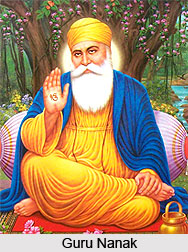
Guru Nanak (1469-1539) who was trying to unite Hinduism and Islam, founded the Sikh Sikh Philosophy  - Guru Nanakreligious order. Nanak gave up his job, took long journeys all over Asia to the holy places of the Hindus, Muslims, and others. Wherever he went, he preached, "Anyone who loves God, realizes Him, and achieves the mission of human life. Beyond this earth, there is no physical place called Heaven or Hell. When we love the Lord and sing His virtues, we enjoy Heavenly bliss. When we ignore Him and become prisoners of vices such as ego, lust, anger, and greed, we undergo the sufferings of Hell here on this very earth." Guru Nanak founded institutions, called Sangats or "a congregation of equals without discrimination" where all people, Hindus, Muslims, low caste, high caste, rich, poor, etc., were to sit together and recite God`s praises.

The Sikh religious philosophy is covered in great detail in the Sri Guru Granth Sahib, the Sikh holy text, which was compiled by the fifth Guru of the Sikhs, Guru Arjun Dev. Itcontained the hymns composed by five Gurus and more than two dozen other pious persons, Bhagats (devotees), born in different regions of India and in different faiths: Kabir  Sri Guru Granth Sahiband Nam Dev were low caste; Ravi Das (a shoemaker) was considered an untouchable; Rama Nand was a high caste Hindu; Farid and Bhikhan were Muslims; Dhanna was a farmer; and Peepa was the ruler of a small state. Detailed guidance is given to the follower on how to conduct his/her life so as to attain peace and salvation. The holy text outlines the positive actions that one must take to make progress in the evolution of the person. The tenth Nanak, who also conferred Guruship on the scripture, added the hymns of the ninth Nanak. There are some 5,800 hymns grouped into 31 ragas (musical measures). In addition, there is a preamble in the beginning of the scripture and some special hymns in the end. Being the revealed hymns spoken by the Gurus, the scripture is treated as the spirit of the Gurus and not just as a religious book. Guru Granth Sahib is installed on a throne (a small cot) under a canopy, the way any king would sit in his court. The hymns are written in the Gurmukhi script and the language used is Sant Bhasha, (spoken by Saints, religious preachers) which is very close to Punjabi.

The word `Sikh` derives from the Sanskrit word shishya or disciple or student. Sikh Sikh Philosophy - Ten Sikh Gurusphilosophy is a set of ideas developed by ten gurus or teachers and passed on to their shishyas or disciples. It conceives of God as nirakara or formless and also as one. It admits of no idols or superstitions, whether Hindu or Islamic. It recognizes all human beings to be equal. It does retain the Hindu ideas of immortality of the soul, of transmigration and karma. The sacred book of the Sikhs is the Adi Granth or Granth Sahib (completed in 1604), of which Guru Nanak himself wrote the Japji section.

The beliefs of Sikhism:

  • There is only one God

  • God is without form, or gender

  • Everyone has direct access to God

  • Everyone is equal before God

  • A good life is lived as part of a community, by living honestly and caring for others

  • Empty religious rituals and superstitions have no value.


  • The Sikhs do not recognize the caste system nor do they believe in Idol-worship, rituals or superstitions. The gods and goddesses are considered as nonentities. God is the Creator, Who evolves out of His Absolute Self (Formless) and becomes manifested in creation. God is neither an abstract idea nor a moral force, but One with who a personal relationship can be realized. None else but God Himself is the Generator (Creative Agency), the Operator (Nourishing Agency) and the Destroyer (Ending Agency). Apart from being immanent in the world, He is the Ocean of virtues, i.e., He is of Attributes. God is considered to be Love. Love is dynamic, the mother of all virtues and values, directive, or has a will and is benevolent towards life.

    Guru Nanak describes God as the "In-dweller of Nature." He does not exclude matter, but includes and transcends it. The universe, too, is not an illusion. Being rooted in God, Who is real, it is a reality; not a reality final and abiding, but a reality on account of God`s presence in it. God is the Highest Moral Being, Who has inscribed all humans with His Name or Moral Presence. He does not belong to any particular group or class of people. God does not differentiate. The Sikhs believe that the only way to worship Him is to sing His praise and to meditate on His Virtues.

    The Basic Postulate of SikhismThe basic postulate of Sikhism is that life is not sinful in its origin, but having emanated from a Pure Source, the True One abides in it. One must remember the Creator at all times. This religion consists of practical living, in rendering service to humanity and engendering tolerance and brotherly love towards all. The Sikh Gurus did not advocate retirement from the world in order to attaining salvation. Any one who earns an honest living and leads a normal life and shares his/her earnings with the needy can achieve it.

    Philosophers believe in one or two realities in the Sikh religion- God (Parmatma), Soul (Atma) and Matter (Prakriti). The soul (atma) in us is a reflection of the Super-soul, God (Parmatma). Only ONE (God), who was there before creation, is Reality or Truth. He alone is never born, nor will He grow old or vanish. There is none else but Him in visible or non-visible (absolute) form.

    Sikhism does not accept the ideology of pessimism. It advocates self-confidence, optimism and hope. It enjoins its followers to practice self-determination, self-respect, and self-defense.

    The Sikh value system:
    (I) Physico-economic values: A Sikh treats body as the sacred abode of the Spirit. There is no place for austerities and torturing of the body as a way of salvation.

    (2) Intellectual Values: truth is the highest value to be cherished. Knowledge and wisdom are the key -concepts.

    (3) Aesthetic Values: Loving devotion to the Lord, generating ecstatic state of bliss leading to the enjoyment of the grandeur and beauty of His creation.

    (4) Ethical Values: Virtue as reflected in valor, purity of conduct, and realization of the Divine presence in all the human beings and service of the mankind.

    (5) Spiritual Values: Mukti and Nirvana in Sikhism is emancipation in life through Divine Grace.

    Sikhism is a dutiful way of life for achieving peace by doing service to society. Some important principles or techniques of the Sikh faith for reaching that goal are:

  • Naam Japna or Meditation

  • Dharn Ki Kirt or Honest living

  • Vand ke Chhakna or Sharing with others

  • Puja Akal ki or Worshipping Eternal God

  • Paricha Shabad Ka or Understanding Gurbani

  • Didar Khalsa Ka or Appreciating the Sikh

  • Sarbat ka Bhala or Working for all Humanity

  • Sacha Achar or Maintaining ethical behavior

  • Bhana Mannana or Accepting the will of God


  • Naam Japna or Meditation: This basically means to Meditate on God`s name., i.e., Waheguru in the Sikh religion. The technique taught by the Guru Granth Sahib is "Urd Uhrd". This means to inhale with the "Wahe" syllable and exhale on the "Guru" syllable. Through this constant meditation, and not simply the repeating of a mantra, Sikhs develop a feeling of affection and love for humanity. Such a person does not merely talk about the brotherhood of humanity but actually tries to feel it continuously throughout their life. The thought of being a member of this human family becomes stronger and stronger and soon this fact is reflected in the daily behavior of the devotee.

    Dhan ki Kirt or earning with hard labor: Sometimes there is a temptation in all of us to earn a comfortable life and earn more money, maybe through illegal means. The Gurus want us to resist this desire by keeping in mind that such earnings pollute the mind.

    Kirat Karni is one of three primary pillars of Sikhism. The term means to earn a honest, pure and dedicated living by exercising ones God given skills, abilities, talents and hard labour for the benefit and improvement of the individual, their family and society at large. This means to work with determination and focus by the sweat of your brows and not to be lazy and to waste your life to time.

    Vand ke Chhakna or sharing with others: The recitation of Nam helps disciples realize that they are members of the human brotherhood. This thought creates in them feelings of kindness and love for those who need their help. As a consequence, they enjoy sharing their earnings with those less fortunate. The Guru advises them that it is their duty to share their earnings with the needy just as it is the duty of parents to supply their children with clothing and other necessities. And this is the main driving force to make free food or Langar as it is called in all the Guru Dwara`s or the place of worship of the Sikhs. Puja Akal ki or Worshipping Eternal God: The Guru advises us to worship only the one almighty God and not to worship forces of the universe or mythical beings. It is the Creator, and not the creation, that is important. God is accomplished by meditating on Him, His virtues and His grace.

    Paricha Shabad Ka or Understanding Gurbani: Sikhs are required to regularly read and understand the Gurbani written within the Guru Granth Sahib. Gurbani teaches God`s virtues and how they can be revealed to us. The daily recitation of hymns reminds us repeatedly of the pitfalls of egotism, anger, lust, attachment, and greed. The hymns encourage readers to develop good character .

    Didar Khalsa Ka or Appreciating the Sikh: Sikhs do not worship pictures or idols of God or the Gurus. Nor do they honor any living individual as their Guru. They respect the decision of the corporate body of the Singhs, the Khalsa, since the tenth Guru bestowed the authority of Guruship on this body.

    Sarbat ka Bhala or Working for all Humanity: Sikhs pray not only for themselves alone but also for all of humanity. This belief in the oneness of humanity, and the insistence on working for the welfare of all people, whether Sikhs or not, at the cost of sacrificing one`s life, is what sets Sikhism apart from other religions.

    Sacha Achar or Maintaining ethical behavior: faiths, lying, cheating, stealing etc. are forbidden. Sexual relations are restricted to married couples only. Recognizing that during the medieval ages, after battle women of the defeated side were often raped as an expression of power over the enemy, Guru Gobind Singh ordered that any person guilty of rape would be expelled from the Khalsa Panth.

    Bhana Mannana or Accepting the will of God: Sikhs believe that the benefits we gain from our labors are gifts from God and we are mere actors on stage. God rewards us and whether our efforts are successful is determined by His will. If we accept this philosophy, we will always be in peace with ourselves and with our environment and we will stop worrying about the `failure` of our efforts.

    Sikhism prohibits Superstitions, worship of idols, graves, pictures etc. It is against attachment to material wealth and comfort because Sikhs believe that man comes alone and will leave this world alone. Material wealth is just an obsession which man will not take with him after death. So attachment to wealth is not permitted. Like all religions Sikhism also denies lying and addiction to drugs and alcohol. For women Sikhism is against the compulsory wearing of veil and is also against Sati or burning of the widow on her husband`s funeral pyre. Sikhism is also against meat eating.

    Recently updated articles in Indian Philosophy
    Home | Sitemap | Contact Us