A common theme that runs in the Schools of Indian philosophy is that man is a spiritual being thereby trying to relate him to the metaphysical world. There are two broad divisions. The first being the orthodox or the Astika School of philosophy and the second is the heterodox or the Nastika School of philosophy. The orthodox philosophy has bestowed its religious authority on the Vedas whereas the heterodox school has denied the supremacy of the Vedas. All the schools of Indian thought have related the concept of Indian philosophy very closely with the practical world. They believe that philosophy is not merely an academic discipline but it is a guide to human life. The schools of Indian thought have also given adequate focus on the essence of good life on earth. The two classical schools of Indian Philosophy have further been classified into subdivisions. The orthodox school has been divided into six categories and the heterodox school has been classified into three sections.
Orthodox School of Indian Philosophy
The six schools of the orthodox or the Astika School include the school of Nyaya, the school of Samkhya, Vaiseshika, the school of Yoga, Purva Mimamsa and the school following the Upanishad tradition.
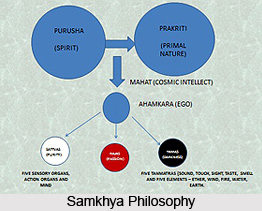
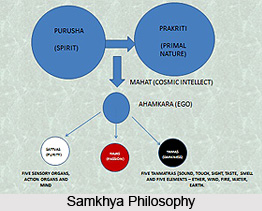
The school of logic or Nyaya was started by one of the early saints Gautama. It deals with the concepts of reasoning and logic. The Samkhya or the school of enumeration is the philosophy of manifestation. It includes the manifestation of all entities from the most subtle to the grossest. Vaiseshika deals with the physical sciences of the world. This school of thought was begun by Prashastapada and focuses on the physical sciences like Chemistry.
 It explores the five elements and also interprets the mind and soul of living beings. Yoga or the school of Patanjali explores all the state of human existence. The Purva Mimamsa Philosophy was started by Jaimini that focuses on the emancipation of the human soul with the help of actions. The Vedanta School of Indian Philosophy focuses on the concept of self-realisation which will enable man to find his true nature which is beyond any kind of decay, decomposition or death. The Mimamsa-Vedanta, Nyaya-Vaiseshika and Samkhya-Yoga are grouped together in the orthodox school of Indian philosophy. The Vedanta School on the other hand is categorized into another six subsystems. They are namely the Dvaita, Advaita, Dvaitadvaita, Visisthatdvaita, the Achintya Bheda Abheda Schools and the Suddhavaita.
Heterodox School of Indian Philosophy
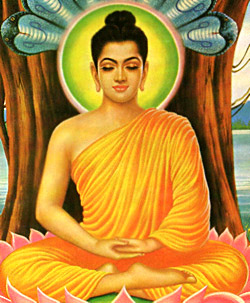
The heterodox or the Nastika School includes the philosophical tenets of Buddhism, Jainism and the Carvaka. The Buddhist Philosophy was founded by Lord Buddha in India. The Buddhist philosophy can be classified as a non-theistic philosophy. The philosophy does not give primacy to the existence of God but focuses on the concepts of Karma, reincarnation and Moksha. The main aim of the Buddhist philosophy is to bring an end to the cycle of births and attain salvation in the process.
Lord Mahavira had propounded the Jain philosophy in India. The basic component of the Jain philosophy was the emphasis on Anekanatavada. The Jain philosophy has largely been influenced by the concept of subjectivism which is an integral part of the Western Philosophy.
The Carvaka School of thought is based on the concepts of atheism and materialism. All the philosophies of them try to search for the truth through an inward introspection of the self. They believe that the inward self is of much importance than the physical world. Rather it can be said that the ways taken by the different schools may be different but the ultimate aim remains the same. The Arthashastra is one of the early Indian texts which is devoted to political philosophy and discusses the ways to run a state and economic policy.