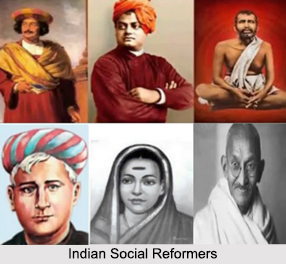
Savitribai Phule was a famous social reformer of India who was born in the family of an affluent farmer. She was the first woman teacher, the first woman educationist, the first poet and the foremost emancipator of women. Savitribai Phule worked enormously for social reform. Her husband encouraged her to get proper education and engage herself in the liberation of the female folk of Naigaum. In the year 1852, a school for untouchable girls was opened by her. Savitribai Phule was considered a pioneer of Marathi poetry.
Early Life of Savitribai Phule
She was born on 3rd January, 1831 in a small village in Naigaum of Satara district, Maharashtra, and was married at a very tender age of 9 years to Jyotirao Phule. Phule was the first female teacher of India`s foremost women`s school. Savitribai Phule was one of the most important personalities who contributed considerably in adding glory to the mission of modern Indian social scenario. Jyotirao Phule, her husband, needed some female teachers to join his bandwagon of his reform works. Thus, he taught and trained his wife as a teacher. Slowly through the news of his teaching Savitri reached his father who threatened to drive him out of his house, fearing attack from orthodox elements. When the choice before Savitribai was either going away with her husband or staying back with her orthodox in-laws, she preferred to be with her husband. After that her husband sent her to a training school. She passed out with flying colours. After completing her studies, Savitribai Phule opened a school in Pune for girls in the year 1848. Initially, nine girls enrolled themselves as students and they belonged to different castes. She used to leave for the school early in the morning. Orthodox society was not prepared for this `misadventure`, as woman`s education was frowned upon.
Education of Women
Savitribai Phule continued with teaching the girls despite all oppositions from the society. She was even abused by the orthodox society. She lost all courage after facing such ill treatments and even determined to give up but she continued only because her husband`s support. In spite of the entire ordeals, she continued with her teaching. Slowly and gradually, she established herself. Eventually, Savitribai Phule was honoured by the British government for her contribution to education. In 1852 Jyotiba and Savitribai were felicitated by the government for their commendable efforts in the field of education.
Other Social Reforms of Savitribai Phule
Savitribai Phule not only contributed in the educational activities, but also supported her husband in every social struggle that he launched. Once Jyotirao stopped a pregnant lady from committing suicide and promised her to give the child his name, after it was born. Savitribai and Jyotirao later on adopted the child. This particular incident brought new horizons and the couple took serious steps for the troubles of widows in the society.
The next step was equally revolutionary. During those days marriages were arranged between young girls and old men. Men used to die of old age or some sickness and their young widows lived a weary life. Savitribai Phule and Jyotirao were moved by the condition of the widows as well as by the condition of untouchables in the society. Thus, Savitribai Phule shared every activity in which her husband was engaged. She suffered alike with him but she maintained own distinctive personality. After his death, she took over the charge of Satya Shodhak Samaj.
Publications of Savitribai Phule
Savitribai`s poems and other writings are still an inspiration to others. Her two books of poems Kavya Phule was published in1934 and Bavan Kashi Subodh Ratnakar was published in1982.
Death of Savitribai Phule
Savitribai Phule suffered from severe illness and passed away on 10th of March, 1897.