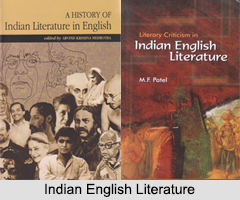
 Indian literature stands as the mirror of Indian culture, quintessential of its exceedingly rich prehistoric tradition. Regarded as one of the oldest body of literary works, Indian literature goes back to even those times, when copious written literature was still not in vogue and oral form was very much prevalent. And regional literature in India is an integral and inseparable body of writings, which was the precursor of this enriched past, laced with the potential orators (in case of oral literary tradition) and writers (in case of written literature). A strong characteristic of Indian regional literature is the sublime influence of regional kathas, fables, stories and myths, which later developed as a distinct genre and were termed as the `regional literature`. Indian literature, thus, as the cradle of the art of narration, gave birth to an important and independent genre of literature, the regional literature of India. However, besides the now mostly hypothecated past of such regional literary wonders, there does exist a solid ground for historical information regarding evolution.
The Indian language group is basically divided into two broad categories, comprising the Indo-Aryan languages and the Dravidian group of languages. The latter group can authentically be referred to as the most ancient indigenous cultural aboriginal cluster, which had been successful enough to underline their literary geniuses, in times even prior to Indus Valley Civilisation. The Dravidian language and, as such their literature, also goes back to times of oral literature. The Dravidian group of regional literature in India had just been enough to mirror their profundity, a routined thought process, excellent style of writing of the rural world, or of the `black man`, things which very much had identified this Oriental land during those pre-recorded years. However, Indian regional literature was to take its veering course towards the sudden yet perfectly-timed arrival of the Aryans, thus ushering in their tremendous cultural influence, so much so that the entire nation, its history, geography, political economy, including every moment of daily life was altered to the exactly opposite direction.
 The Aryans had brought with them their very own kind of literary manifests and literary pursuits, things that are still followed in the present-day Indian literature background. As such, the sections of Indians and its Indianness was greatly altered, in terms of regional literature and creations, making these two mentioned groups stand apart in their writing style from the very beginning and perhaps ending in the last word of any creational treatise.
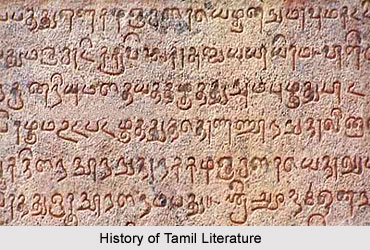
Regional literature in India belonging to the Dravidian group very much comprises the south Indian states and their distinctive cultural divergence comprising literature that was basically based upon the quintessential world of any village in the south by the sea. Tamil literature, Telugu literature, Kannada literature and Malayalam literature are the most primary and stellar instances of Dravidian literature, besides its various other counterparts, from the remaining of the 73 more inert languages. The Aryan invasion and its consequential influence and sway upon the Indian society, especially the north Indian section had mattered very much, weighing upon profoundly in the then Hindu religious background, with terrific amalgamation and unification being noticed from the previous civilisations, eventually leading to a serene beautification in the ancient languages and literatures. Regional literature in India from amongst these early Hindu cultures was first noticed in Sanskrit literature, still deemed as the most scholarly and well-researched under the literary masters. Hindi literature was soon to follow, in the blessed footsteps of these Sanskrit masters and legendary folks, almost elevated to the position of the Lord and still venerated. However, with the gradual waning of Hindu ruling and the rise of Brahmin society, medieval India was to witness major changes again in Indian literature from the regions.
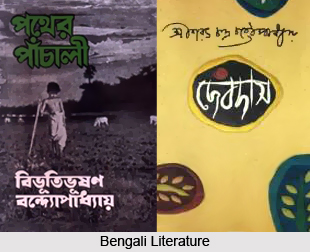
Bengali literature, Urdu literature, Marathi literature had followed in fast footsteps, in some instances also preceding the medieval Indian literary scenario, into the ancient age. However, it was Urdu literature that had proliferated and multiplied the most under the consequent Delhi Sultanate or the Mughal Empire. This was also the time, which had witnessed India and its various ruling sections had gradually been introduced to the terms of modernity and contemporaneity, with various regional clans rising forth, to challenge the central ruling force. As such, the likes of Marathi literature, Konkani literature, Gujarati literature, Punjabi literature or even, Sindhi literature began to make their mark each and every other day. The bulk of poetry, prose, drama, or any other form of essay, was laced with beauties of Indian wonders time and again, with the motleyed Indian enriched society being mirrored in such Indian regional literature and writings.
 The latter additions of Bhojpuri Literature, Kashmiri Literature, Nepali literature, Rajasthani Literature had very much espoused and embraced this very contouring and guiding tradition, wholly still tracing the ancient body of literary lines and the key to clandestine triumph.
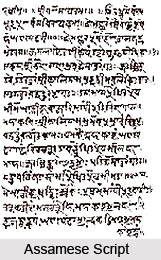
While the popular folk compositions of wisdom and light-hearted mirth like the Bihu songs, the cradle songs, or the pastoral ballads, characterised by spontaneity and simplicity of the Assamese literature, Oriya literature and Kannada literature offered that desired élan to the Indian literature; it was again the religious and philosophical poetry of the medieval period in the dialects like Awadhi and Brij, presenting a whole and novel facet of Indian literature, whilst making the regional literature of India a distinct form of creative writing. The linguistic and cultural fusion which marked the characteristic of the regional literature of India, also gave birth to an extremely popular form of `ghazal literature`, usually authored and scripted by Muslims in contexts ranging from romance and society to philosophy and devotion towards Allah.
The regional literature of India since the ancient times has travelled an extensive traversed path to gain the chic outline and shape that it possesses in present Indian panorama. The journey of regional literature of India is long, yet rich; it unveils the saga of the changing tradition of India, whilst murmuring evanescently about the exhaustively recognisable past of India.