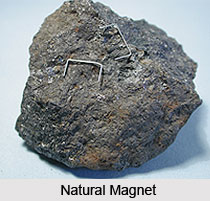
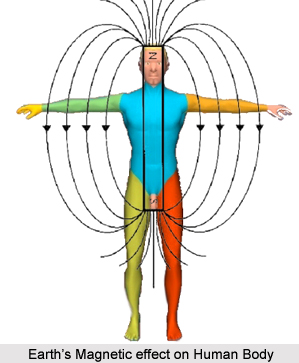
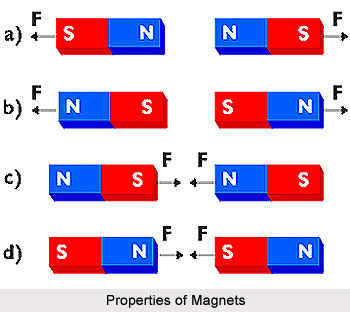
 There are several prominent and noteworthy properties of magnet. It is a known fact that magnet has two poles, namely, north and south, but these two poles have been assigned different properties, especially in case of healing. Since ages, magnet is considered an opulently therapeutic substance. Further, in order to avail its utility for the benefit of the ailing, researchers have conducted extensive experiments on magnetism, properties of magnets, magnetic materials, diverse sizes and shapes of magnets available and those of the healing magnets, method of locating the poles of magnets, measurement of the strength of magnets, etc. Generally, a magnet is seen as a hard piece of metal, which attracts pins, nails, iron filings and other objects prepared from iron having its own set electromagnetic field. Only bipolar magnets are found in nature. The energy surrounding each pole of the magnet is termed as the magnetic field, which varies in area and intensity, depending upon the strength of the magnet.
Composition of Magnets
The composition of Magnets varies in terms of strength required along with the specifications regarding the purpose of the magnet. Modern permanent magnets are prepared of an alloy of aluminium, nickel, iron and cobalt in varying proportions. Ferromagnetic materials, which are used in the magnetic alloys, can achieve a great degree of magnetisation, and are therefore highly useful for manufacturing high quality magnets specially designed for healing purposes. The ferromagnetic materials tend to preserve the magnetism for long.
Paramagnetic substances are the types of materials like chromium, manganese, palladium, potassium, copper and tungsten that are effectively attracted by magnets. Certain tissues of the body like blood, muscles, and nerves are also paramagnetic in nature, which suggest their susceptibility to magnetism. Magnets weakly repel diamagnetic substances such as zinc, bismuth and antimony. Synthetic materials like ceramic, ferrite or graphite are also utilized to manufacture magnets known as ceramic magnets. The advantage being that these types of magnets can be produced in numerous shapes and are highly useful in magnetic healing for application onto the body parts where curve is required.
Artificial magnets can be easily produced with the help of either of the two methods firstly by rubbing a magnet on a piece of magnetic material in a particular direction repeatedly in a specific manner and secondly by winding an insulated coil around a bar of magnetic material and passing a direct current through the coil with the help of electric cells. In this way, permanent magnets can be prepared if the material used is made up of hard magnetic material or with the aid of temporary magnets by using soft iron. Every magnet constitutes 2 poles-North Pole and South Pole. Even if a magnet is broken into 2 pieces, each portion will always possess 2 poles. Therefore, each broken piece of the magnet will behave like an independent magnet with all the properties of the mother magnet. The bar magnet will orient itself in a particular direction of North and South. The closing portion of the bar magnet which points to the geographic north should be taken to be the North Pole. Likewise, the closing portion pointing towards the geographic south should be considered as the South Pole. Another method of detecting the poles of any type of magnet is through a magnetic needle or by means of another magnet whose poles are already known and marked. The north pole of a magnet always attracts the south pole of another magnet and vice-versa. Similar poles always repel each other.
Main Properties of Magnets
The magnets consist of three main properties. Firstly, similar poles of two magnets always repel each other. These characteristics can easily be verified by holding the similar poles of two magnets in close contact with each other. The repelling force can be easily felt. Secondly, dissimilar poles of magnets always attract each other. And thirdly, the two poles of a magnet are indivisible. The broken magnets act as independent magnets and possess two poles each. It concludes that, magnets are always bipolar.
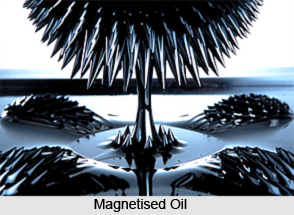
Certain magnets have strong magnetic fields, while others have weak magnetic fields around them. The magnetic fields, as force, are the strongest near the poles of a magnet. Lines of force are the lines that conjoin the North Pole to South Pole externally, and then internally pass from the North Pole to the South Pole. The strength or the intensity of the magnetic field at a point on the magnet is measured in Gauss. These units of magnetic power are named after the respective scientists. Gauss meter provides a direct reading when its semi-conductor probe is placed close to the point where the strength is to be measured. The value of the strength of the magnetic field can be read directly over the graduated scale provided on the instrument. A basic understanding of the properties of magnets is vital while using them for healing purpose.