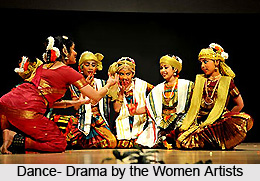
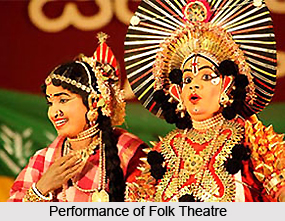
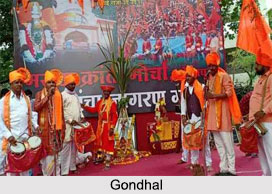
Marathi drama and theatre are active in form from the middle of the 19th century and it is continuing till date the folk arts of Maharashtra being the backbone of its cultural ethos Maharashtra thrives to be the melting pot of several poles apart contradictory yet harmonious identities. Medieval India witnessed overseas invasion, the silhouette of the same falling obliquely on Indian theatre chiefly Marathi theatre. Apart from the consolidation of a different territory Marathi glorious history can be traced back to several times, Maharashtra even indulging in the linguistic freedom.
After Bengali theatre in India, Marathi drama is indeed a pivotal break through, the Marathi culture oozing throughout. Marathi Theatre is an art form considered to be very rich aspect in Indian culture. Marathi theatre rose in full swing in Pune and Mumbai, with the inception of dramas by Vishnupath Bhave, who used amorous and tragic themes. Bhave specialized in light hearted farcical themes; comically slaughtering the contemporary social developments providing a conducive platform to the upcoming good work. Sangeet Shrada is rightly the pioneer of social Marathi drama, intoxicating with its artistic and progressive focal points.
Influenced by Yakshagana, the traditional dance drama of rural Karnataka, the Marathi drama achieved a clear regional form by the middle of the 19th century. Marathi theatre at first was more of an untried experimental theatre derived from the folk forms and the already breathing Shakespearean and Parsi dramas. `Natak Companies` were then floated, with an addition of the Hindustani classical music and dance in Marathi plays that were replete with mythological and social themes, which became popular instantly. Even historical plays about the famous Marathi heroes like Shivaji and others, began to be written and presented. As these were banned, the Marathi dramatists invented subtle stratagems to present their point of view in allegorical fantasies or in farcical comedies.
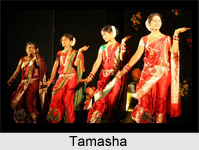
Humorous social plays came later which gradually became a speciality of Marathi stage. A leading contemporary dramatist, Mama Varerkar wrote social plays in a realistic style, attempting a synthesis between European convention and Indian content. He gave a tremendous lead to the younger groups, which have been re-creating the Maharashtra village theatre through the Powada and the Tamasha. Years between the time gap1885-1920 were productive enough in terms of quality and the quantity of the plays and a delight for theatre connoisseurs.
Under the influence of these vital actors a Marathi worker wrote a play called Dada. He portrayed the day-to-day life of the Bombay workers, their sufferings, hardships and frustrations with an authenticity born of grim experience and with a humanity; characteristic of his class. The audiences were thrilled to see their own everyday lives put before them so clearly and seemed to be deeply moved by the realization that they could alter the conditions of their lives through their own strength.
 Thus, the Marathi plays left a powerful influence on the masses in spite of the appearance of movies in the third decade of this century. Stage songs, based on Hindustani classical ragas, though yet, are famous, do not last for about 4-6 hours, the way, they used to as the old fashioned plays. Marathi drama is still very popular with the urban and rural masses, mainly due to nostalgia. People also feel that theatre today has comparatively fewer biases, prejudices and influences. Nobody imitates great mature playwrights or directors like Ghashiram Kotwal, Gochi, Uddhwasta Dharmashala, Begum Barwe, Mahanirwan, or even Holi and Atmakatha.
The first Marathi stage performance was the play Seeta Swamvar by Vishnudas Bhave in 1843. But the experimental form of this drama was derived from folk dramas and was already in presence in Shakespearian plays and Parsi dramas. The first sign of a fresh kind of theatre was seen in Shyam Manohar`s Yakrit (1984), followed by Hriday (1984), both directed by Satyadev Dubey, which were comic plays focusing on an individual. Vijay Tendulkar`s Ghashiram Kotwal (1972) and Alekar`s Mahanirwan (1974) can be viewed as pathfinders, where the use of folk form has, helped in articulating and expressing the content of the dramas. They both made use of various folk traditions of Maharashtra, such as the kirtans and marked the major turning point of contemporary Marathi drama.
However, Marathi parallel drama will remain incomplete without mention of two competitions. The full-length play competition organized by the state government in centres all over Maharashtra has given productions like Shantata! Court Chalu Ahe! Ghashiram Kotwal and Mahanirwan. Recently, however, non-competitive drama flourishes, at least in Mumbai and Pune, and the qualitative output of the state competitions has decreased considerably. However, it still provides a platform and about 500 plays are staged every year at Prithvi Theatre and Bhave Theatre with about 15,000 people participating. The second platform is the intercollegiate one-act competitions: Unmesh and INT in Mumbai and Purushottam Karandak in Pune. Even innumerable one-act competitions are conducted all over Maharashtra, the important ones at Kankavli and Wai.
Apart from many theatre groups managing the Marathi dramas, the Awishkar theatre group has consistently been doing Marathi experimental plays for the last forty-three years. Awishkar has also produced over a 150 plays. It has also provided a substantial platform for numerous directors, technicians as well as budding artists. Various workshops are conducted through out the year for amateur artists. The group comprises of Mr. Vijay Tendulkar, Ms. Sarojni Vaidya, Mr. Arun Kakde, Ms. Sulbha Deshpande and others. Alyque Padamsee is an Indian theatre personality from Mumbai, both as producer and actor. Influences of modern theatre and world theatre underwent a slump after world war thanks to the cacophonous effect of radio and television, and the oncoming influential vibes of the western theatrical scene, Marathi theatre boomed back with a bang. There was no looking back.
The Marathi theatre is seen to be the most happening in the whole India.