18 Parvas of Mahabharata are in the forms of a collection of 100,000 verses or shatasahasri samhita. In the 18 Parvas of Mahabharata there are one hundred sub-parvas. Most of the parvas are named after one of their constituent sub-parvas. The Harivamsa consists of the final two of the 100 sub-parvas, and was considered an appendix or a khila to the Mahabharata. The central theme of the great Hindu epic of Mahabharata deals with the family feud between the two families, the Kauravas and the Pandavas. The entire epic has been divided into eighteen parvas and the parvas are divided further into one hundred sub-parvas.
Adi Parva
This is the first of the eighteen parvas of Mahabharata. Adi Parva is the first book and it is regarded as the `Book of Beginning`. This book deals with the initiation of this great Indian epic. In this Parva, it is described how the Mahabharata was narrated by Sauti who was assembled by rishis at Naimisharanya. Moreover, the narration of the Mahabharata at the Sarpasatra of Janamejaya by Vaisampayana at Taxila has also gained much importance. The history of the race of Bharata has also been described in the Adi Parva in detail. The Adi Parva comprises of the first nineteen of the one hundred sub parvas in Mahabharata.
Sabha Parva
Sabha Parva is also known as the `Book of Assembly Hall`. This parva provides an account of Maya Danava who constructed the palace and court or sabha, at Indraprastha. Moreover, the courtly life has also been narrated in a very fascinating way in this parva. Other contents of the Sabha Parva are the Rajasuya Yajna of Yudhisthir, the game of dice, and lastly, the exile of the Pandavas to the forest. This Parva consists of nine sub parvas.
Aranyak Parva or Van Parva
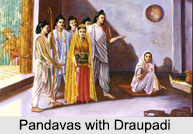
Aranyak Parva or Van Parva, which is also known as the Book of the Forest, is the third book in the sequel of the great epic of Mahabharata. This book narrates the tale of the twelve years of exile of the Pandavas in the forest. It also gives an account of the incident that how the Pandavas were deceitfully defeated in the game of dice by the sons of Dhritarashtra and their counsellors and in addition to that how the Kaurava`s cruel words brought about Kuru Clan`s two branches. This parva comprises of sixteen sub parvas.
Virata Parva
The Book of Virata or Virata Parva comprises of four sub-parvas. The prelude is regarding the thirteenth year of exiled life of the Pandavas in the forest. Living incognito was a part of the condition for the Pandavas as decreed. After they completed twelve years of exile, the Pandavas planned to proceed to the capital city of the King Virata. The Pandavas disguised themselves so that they are not identified.
Udyoga Parva
The Udyoga Parva or the `Book of Effort` gives a narrative of the period after the Pandavas successfully fulfilled all the conditions of banishment. After their exile came to an end, the Pandavas reached to a position of claiming the kingdom of Hastinapur. Duryodhana and Shakuni had no choice left but to offer Pandavas their due portion of kingdom. The Udyoga Parva also gives an account of the greed and hatred of the Kauravas towards the Pandavas. This parva in Mahabharata consists of eleven sub parvas.
Bhishma Parva
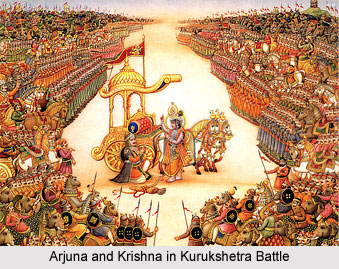
Bhishma Parva or the book of Bhishma starts with an overture of revelatory and unnatural omen. It is the sixth book of the chronology from among the eighteen Parvas of Mahabharata. This book possesses lucid presentations about Bhishma, the commander for the Kauravas and also about the first part of the great battle at Kurukshetra. It proceeds with the introduction of Bhishma and the battle at Kurukshetra. It comprises five sub parvas.
Drona Parva
The book of Drona or Drona Parva is the seventh Parva from among the eighteen Parvas of Mahabharata and contains eight sub-parvas. It is a narration on a major episode of Kurukshetra war and a majority of this Parva continues with the description of the battle of Kurukshetra. The narration is on most of the great warriors who served on respectively to the Kauravas and the Pandavas in the battle. Drona Parva portrays the strong condemnation for the wicked prince Duryodhana and his brothers. The Drona Parva consists of eight sub-parvas which ends with the ruin of all the great warriors who participated in the battle of Kurukshetra.

Karna Parva
The Karna Parva or the Book of Karna is an inseparable component of the eighteen Parvas of Mahabharata. This Parva flows with the introduction of Karna who was born to Kunti before her marriage. This Parva comprises of only one sub-parva and speaks of the battle of Kurukshetra in detail.
Shalya Parva
This Parva is another foremost section of the Great epic of Mahabharata. A major section of the battle of Kurukshetra has been narrated in this Parva. This ninth Parva comprises four sub parvas and it describes the last day of the battle with Shalya as commander of the army of the Kauravas. It also describes in detail about the pilgrimage of Balarama, the elder brother of Krishna, to the fords of the river Saraswati and the mace fight between Bhima and Duryodhana which ends the war.
Sauptika Parva
Sauptika Parva is also known as the `Book of the sleeping warriors` and it consists of three sub-parvas. This is the book of the three warriors who sided with the Kuaravas in the great war of Kurukshetra and they were Ashvattama, Kripa and Kritavarma. Sauptika Parva narrates the tale of these three warriors.
Stri Parva
Stri Parva is also known as the `Book of Women` and it is the eleventh Parva among the eighteen Parvas of Mahabharata. In this Parva, it has been widely described how the women of Mahabharata including Gandhari, Kunti and the other women of the Kurus and Pandavas lament the death of their kith and kin in the battle at Kurukshetra. This Prava consists of five sub-parvas.
Shanti Parva
The Shanti-Parva consists of three sub-parvas and it gives an account of the crowning of Yudhisthira as the King of Hastinapura. The instructions given by Bhishma to the newly anointed king is also described in this Parva. Bhishma spoke on society, economics and politics. This is, however, the longest book of the Mahabharata where Shanti or peace was attempted to restore.
Anushashana Parva
The Anushashana Parva comprises two sub-parvas and it is also called the `Book of Instructions` and contains the final instructions or anushasana from Bhishma. This is the thirteenth of the 18 Parvas of Mahabharata. The Anushasana Parva demonstrates Bhishma`s description of the nine duties which belong to all the four orders including suppression of anger, truthfulness, justice, and forgiveness, begetting children by one`s own wife, purity, avoidance of quarrel, simplicity, and maintenance of dependents. This Parva is a chronicle of the phase when Maharaja Yudhishtira began to rule the kingdom under the direction of the Brahmanas.

Ashvameghadik Parva
Ashvameghadik Parva or the `Book of Horse Sacrifice` is the fourteenth among the eighteen Parvas of the great Epic of Mahabharata and it consists of two sub-parvas. This Parva is an album of the royal ceremony of the Ashvamedha or the `Horse sacrifice` which was conducted by Yudhisthira. This book also gives an account of the world conquest of the great Pandava Arjuna and also the narration of Anugita to Arjuna by Lord Krishna.
Ashramvasik Parva
This is the fifteenth Parva from the epic Mahabharata which consists of eighteen Parvas. The Ashramvasik Parva consists of three sub-parvas. In this Parva a detailed account of Dhritarashtra, Gandhari and Kunti after the battle of Kurukshetra has been given along with their eventual deaths in a forest fire when they were living in a hermitage in the Himalayas. Vidura was described as a virtuous and meritorious person in this Parva and in the Ashramavasika parva, Yudhishthira came to know from Narada about the extinction of the race of Vrishnis.
Musala Parva
The Musala Parva or the `Book of the clubs` forms a part of the eighteen Parvas of Mahabharata. This Parva comprises of one sub-parva. It has been described in this Parva as to how the infighting between the Yadavas with maces or mausala eventually let to the destruction of the Yadavas.
Mahaprasthanika Parva
Mahaprasthanika Parva or the `Book of Great Journey` is the seventeenth Parva of Mahabharata. This Parva, consisting of a single sub-parva, narrates the moment of great journey of Yudhishtira and his brothers across the whole country and also elucidates their final ascent to the great Himalayas where each Pandava falls except for Yudhisthira.
Svargarohana-parva
Svargarohana-parva or the `Book of Ascent to Heaven` is the last of the eighteen Parvas of Mahabharata. This Parva consists of a sub-parva and it elaborates the period of the final test of Yudhisthira and the return of the Pandavas to the spiritual world. This Parva finds an extensive description of the God questioning him about his decision of not arranging proper cremations for his own brothers.
Harivamsa Parva
Harivamsa Parva or the Harivamsa Purana is also known as the `Book of the Genealogy of Hari`. This Parva also consists of two sub-parvas. It describes the life of Krishna which has not been covered in the 18 parvas of Mahabharata. It is also seen as a supplement of the great epic of Mahabharata. This Parva consists of 16,374 verses and was first recited by the great sage Vaisampayana to King Janamejaya.
Thus, the 18 Parvas of Mahabharata as well as the Harivamsa Parva together describe in detail the incidents before the birth of the Kurus and the Pandava princes and ends with the death of Lord Krishna. The great epic of Mahabharata ends with Krishna`s death and the end of his dynasty as well as the ascent of the Pandava brothers to heaven. The eighteen Parvas of Mahabharata also marks the start of the Hindu age of Kali or the Kali Yuga. The Kali Yuga is considered to be mankind`s fourth and final age in which famous values and good ideas crumble, and man heads toward a full dissolution of right action, virtue and morality.