Kannada literature refers to that corpus of written forms of the Kannada language, an integral member of the Dravidian family spoken, primarily in the Indian state of Karnataka and penned in the Kannada script. Testimonies in inscriptions bridge approximately one and a half millennia, with some unambiguous literary works outlasting in affluent manuscript traditions, covering the 9th century till the present. Kannada literature and language normally is classified into three distinctive linguistic phases: Old (850 - 1200 CE), Middle (1200 - 1700 CE) and Modern (1700 - present). The language`s literary characteristics are categorised into Jain, Veerashaiva and Vaishnava - acknowledging the distinction of these three faiths in giving form to, and nurturing classical idiom of the language, awaiting the arrival of the modern era. Although much of the Kannada literature prior to 18th century was religious in disposition, a few works were also devoted to writing secular in nature.
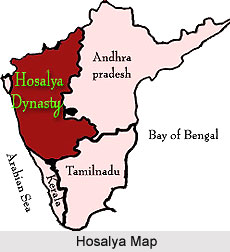
Kannada literature is almost as old as its Tamil counterpart, considered the truest of the Dravidian family of languages. Beginning with the Kavirajamarga (c. 850) and till the middle of 12th century, literature in Kannada was more or less entirely framed by the Jains, who bumped into enthusiastic patrons in the Chalukya, Ganga, Rashtrakuta and Hoysala kings. Although the Kavirajamarga, composed during the sovereignty of King Amoghavarsha, is the oldest surviving literary work in Kannada language, it has been asserted that prose, poetry and grammatical traditions must have survived rather earlier. However, a different set of scholars have faith that the literary tradition in Kannada had begun with Kavirajamarga itself, designating blatantly towards the non-existence of references in other early works (such as the Sabdamanidarpanam of Kesiraja) to any predating literature prior to the 9th century. Metrical passages in the form of inscriptions, dating back to as early as 5th century, have also been established. This earlier dating suggests the existence of a rather contemporaneous folk literary practice -"deshi, or local, popular literature"- in Kannada.
The Veerashaiva Movement of the 12th century had ushered in a new Kannada literature, which had begun to flourish together with the Jain works. With the declination of Jain influence during the 14th-century Vijayanagara Empire, yet another Vaishnava literature developed fast during the 15th century; the devotional movement of the wandering Haridasa saints indeed had marked the high point of this epoch. After the decline of the Vijayanagara Empire in the 16th century, Kannada literature was voraciously backed by the Wodeyar rulers of Mysore. Later, during the 19th century, the tremendous influence of English literature again began to create new literary forms in Kannada, such as the `prose narrative`, the `novel` and the `short story`. Modern Kannada literature is presently known in an all-encompassing manner and recognised. During the last half century, Kannada language authors have earned seven Jnanpith awards and 51 Sahitya Akademi awards in India.
During the early period and commencement of the medieval period in Kannada literature, precisely within the 9th and 13th centuries, writers principally belonged to the Jain and Veerashaiva faiths. In fact, Jains are acknowledged as the earliest known cultivators of Kannada literature, which they indeed overshadowed until the 12th century. However, only a few works by Veerashaivas from that period have outlasted to present times. Jain authors voraciously wrote on Jain Tirthankars and other expressions of the Jain religion. The Veerashaiva authors wrote of the Hindu God Shiva, his 25 manifestations, and the expositions of Shaivism. Veerashaiva poets belonging to the Vachana tradition, further had boosted the philosophy of Basavanna from the 12th century.
During the period within the 13th and 15th centuries, there was witnessed a declination in Jain writings and an increasing in the number of works from the Veerashaiva tradition; contributions from Vaishnava writers also began to be prevalent. Henceforth, Veerashaiva and Vaishnava writers absolutely over-mastered Kannada literature. Vaishnava writers primarily centred upon the Hindu epics, the Ramayana, the Mahabharata and the Bhagavata, as well as the Vedanta and other topics from the Hindu Puranic traditions. Devotional songs of the Haridasa poets, presented with music, were first noticed in the 15th century. Compositions on secular subjects in Kannada literature remained popular throughout this period.
A substantial alteration during the Bhakti (devotion) period in Kannada literature, beginning from the 12th century, was the sudden slump of court literature and the consequent climb in popularity of shorter genres like the vachana and kirthane, forms that were more available to the layman. Writings extolling kings, commanders and spiritual heroes slumped down, with a proportional amplification in the utilisation of local genres. Kannada literature began to be intimately linked to the spoken and folk forms , with `musicality` being its characteristic trademark. However, a group of poets continued to employ the ancient champu form of writing, as late as the 17th century.
The champu Sanskritic metre (poems in verses of various metres intermingled with paragraphs of prose, also acknowledged as champu-kavya) was the most favoured written form in Kannada literature from 9th century onwards, although it started to fall into a state of abandonment during the 12th century. Other Sanskritic metres employed were the saptapadi (seven line verse), the ashtaka (eight line verse) and the shataka (hundred-line verse). There could be witnessed several translations and adaptations of Sanskrit writings into Kannada and, to a lesser degree, from Kannada into Sanskrit. The medieval period witnessed the evolution of literary metres very native to the Kannada language. These comprised the tripadi (three-line verse, operational from 7th century), one of the oldest native metres; the shatpadi (six-line verse, first cited by Nagavarma I in Chhandombudhi of c. 984 and operational from 1165), of which six types exist to present times; the ragale (lyrical narrative authorships, operational from 1160); the sangatya (authorships intended to be sung accompanied by a musical instrument, operational from 1232) and the akkara, which came to be borrowed in a few Telugu compositions. Dollops of rarest interfaces with Tamil literature, as well could be witnessed in Kannada literature.
Although religious literature was high-flying in Kannada literature, literary genres comprising romance, fiction, erotica, satire, folk songs, fables and parables, musical writings and musical compositions were well favoured too. The essential topics of Kannada literature included grammar, philosophy, prosody, rhetoric, chronicles, biography, history, drama and cuisine, also fitting in dictionaries and encyclopaedias. According to various critics, more than 50 works on scientific subjects, including medicine, mathematics and astrology have been scripted in Kannada language.
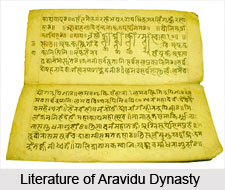
Kannada literature from this period onwards was primarily scripted on palm leaves. However, over 30,000 and even more long-lasting inscriptions on stone (recognised as shilashasana) and copper plates (known as tamrashasana) have outlived to update students of the incredible historical maturation of Kannada literature. The Kappe Arabhatta inscription (c. 700), and the Hummacha and Soraba inscriptions (c. 800) are classic instances of poetry in the tripadi metre. The Jura (present day Jabalpur) inscription of King Krishna III (964) is regarded as the epigraphical landmark of classical Kannada authorship, comprising poetic enunciation in kanda metre, a form consisting of a cluster of stanzas or chapters. Elegiac poetry on hundreds of veeragallu and maastigallu (hero stones), scripted by anonymous poets in the kanda and the vritta (commentary) metre, lament the death of heroes who had laid their lives and the courageousness of women who gone through sati.
The stride of change towards more modern literary styles had gained momentum in the early 19th century of Kannada literature. Kannada writers were in the beginning, influenced and charmed by the modern literature of other languages, particularly English. Modern English education and free-thinking democratic values urged in social changes, interlacing with the yearning to hold on to the best of traditional ways. New genres comprising short stories, novels, literary criticism and essays, were comprehended as Kannada prose moving towards modernisation.
Considering these above-mentioned elements and essential facets in mind, Kannada literature, besides being classed into the three basic periods of Old, Middle and Modern periods, can also be distinctly be separated into periods comprising: Classical period in Kannada literature, Hoysala period in Kannada literature, Vijayanagara period in Kannada literature, Mystic period in Kannada literature, Mysore and Keladi period in Kannada literature, Modern period in Kannada literature and, Post-modern trends in Kannada literature.