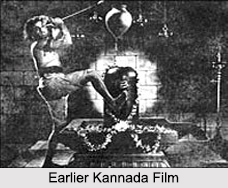
 Kannada cinema, also known as Sandalwood, Kannada Film Industry or Chandanavana, is the segment of Indian cinema dedicated to the production of motion pictures in the Kannada language widely spoken in the state of Karnataka. The 1934 film Sati Sulochana directed by Y. V. Rao was the first talkie film in the Kannada language. It was also the first film starring Subbaiah Naidu and Tripuramba, and was the first motion picture screened in the erstwhile Mysore Kingdom. The film was produced by Chamanlal Doongaji, who in 1932 founded South India Movietone in Bangalore.
History of Kannada Cinema
Mohan Bhavanami, the Chief Producer of the Film Division of the Government of India, made the first Kannada silent film, Mricchakatika in 1929. In 1932 came two talkies, Bhaktha Dhruva and Sati Sulochana. At first the theatre provided the inspiration and artistic resources for the filmmakers, but cinema evolved somewhat sporadically until the 1950s. There were several reasons for this, the absence of sponsorship, lack of adequate technical facilities and the contentment of the audiences with seeing Hindi, Tamil and Telugu films. However, by the 1960s, the State Government decided to introduce subsidies for film production and to recognize good filmmaking by instituting an award system.
The Navya literary tradition of the Kannada language had a tremendous influence on cinema. Opposition to Brahmanical control and rituals was the major aspect of this movement. It originated with Gopalakrishna Adiga`s volumes of poetry namely, Nadedu Banda Dari (1952) and Bhumigita (1959) and acknowledged its debt to Kafka, Freud, Camus and Sartre. The three films directly associated with it are Samskara (1970), Pallavi (1976), and Ghattashraddha (1977). Director duo Girish Kasaravelli and G. V. Iyer Kasaravalli have always made films that have been concerned with the stifling Brahminical orthodoxy that cloaks itself in `puritanical ritual` and explores this theme in Ghattashraddha. Iyer`s Adi Shankaracharya (1983), which won him the Golden Lotus, was the first feature film to be made in Sanskrit and is a tribute to the eighth century sage Shankara who, expounded the Advaita (non dualist) philosophy.
In the year 1934, Bhakta Dhruva was directed. The film starred Master Muthu, T. Dwarkanath, H.S. Krishnamurthy Iyengar and G. Ganesh. In honour of A.V. Varadachar - of Ratnavali Theatre Company, the film had his grandson in the title role and other company artistes as well. This was the first Kannada film but was released after Sati Sulochana. Sati Sulochana was directed by Y.V. Rao, the film starred R. Nagendra Rao, M.V. Subbaiah Naidu, Lakshmibai, and Y.V. Rao. The defeat of Ravana by Lord Rama, and the killing of Inderjit (Ravana`s son) are viewed through the eyes of Sulochana, Inderjit`s wife. The war scenes were filmed with 2 cameras.
In 1936 came Samsara Nauka, directed by H. L. Simha, the film starred B.R. Panthulu, M.V. Rajamma, Dikki Madhava Rao, S.K. Padmadevi, and M.S. Madhava Rao. The film was adapted from a play by the Chadrakala Natak Mandali, and remained true to the original reformist ideal.
Bedara Kannappa was directed by H.I.N. Simha, the film starred Rajkumar, G.V. Iyer, Pandharibai, and Narasimhraju. This was the first film of Kannada superstar Rajkumar. The theme itself is originally of the ragales (couplets) of the thirteenth century poet-saint Harihara.
 In 1954, C.V. Raju directed by the film Natashekhara which starred Kalyana Kumar, Sandhya, Vidya, and H.R. Sastry was a story about a young man running away from home to be a film star. This was the debut film of Kalyana Kumar who, too had run from his home with stars in his eyes. In 1968 came Hannele Chiguridaga directed by M.R. Vittal starred R. Nagendra Rao, Raj Kumar, Kalpana, Arun Kumar, and B.V. Radha. The social issues of widow remarriage and a suitable bride were tackled but the film was careful to not weaken patriarchal authority. The patriarch as played by R. Nagendra Rao remains a memorable character and is widely regarded as among the actor`s best performances.
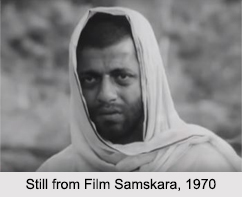
Gejje Pooje came in the year 1970 directed by S.R. Puttana Kanagal. The film starred Kalpana, Gangadhar, Leelavathi, Arathi, and Pandharibai. In the same year came Samskara, directed by Pattabhi Rama Reddy, the film starred Girish Karnad, Snehlata Reddy, P. Lankesh, B.R. Jayaram, Dasharathi Dixit, and Laxmi Krishnamurthy. Ananthamurthy`s story formed the basis for Girish Karnad`s screenplay of the triumph of humanitarian values over dogmatism
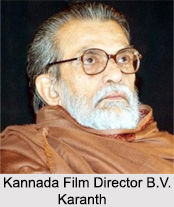
The following year 1971 came Vamsha Vriksha directed by B.V. Karanth and Girish Karnad. The film starred Venkata Rao Talegiri, L.V. Sharada Rao, B.V. Karanth, Girish Karnad, Chandrasekhar, and G.V. Iyer. A Brahmin patriarch permits the remarriage of his widowed daughter-in-law, but compels her to surrender custody of her child. The film was careful not to hurt prevalent attitudes, despite the strength of its theme. As in most films, the woman protagonist is vindicated after paying a heavy price - here, she is dying.
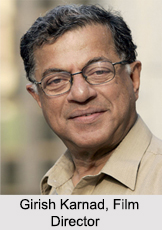
Girish Karnad, directed Kaadu in 1973 which starred Amrish Puri, Nandini, Lokesh, G.K. Govinda Rao, G.S. Nataraj and T.S. Nagabharana. This was Girish Karnad`s first independent direction, a surrealistic film that was gripping and thought-provoking.
Chomana Dudi released in the year 1975 was directed by B.V. Karanth. The film starred M.V. Vasudeva Rao, Jayaran, Honnaiah, Padma Kumtha, Nagaraja, and Sarojini. A masterpiece of a film for the intensity of its characterization and direction. It highlights the strengths of the artistic cinema in Karnataka. Nagarhole released the following year in 1976. It was directed by S.V. Rajendra Singh, the film starred Vishnuvardhan, Bharati, Shivaram, Ambarish, B.V. Radha, Uma Sivakumar, and Sundarkrishna Urs. In the same year released Pallavi. Directed by P. Lankesh, the film starred Vimala Naidu, T.S. Seetaram, P. Lankesh, Pandu, Shashidhar, Shankara Swamy, and Parvathavani.
 Modern Era of Kannada Cinema
Prakash Raj began his acting career with Doordarshan serials such as Bisilu Kudure (Kannada) and Guddada Bhootha. He later took up supporting roles in Kannada films such as Ramachari, Ranadheera, Nishkarsha and Lockup Death. Prakash re-entered Kannada films through Nagamandala in 1997, directed by T. S. Nagabharana. Veteran Kannada actor Shakti Prasad`s son Arjun Sarja is known for his work in South Indian cinema. He starred in movies such as Prasad; the film was screened at the Berlin Film Festival and Arjun received the Karnataka State Award for his performance in it.
Sanchari Vijay`s portrayal of a transgender won him the National Best Actor Award. With the award, Vijay became the third actor after M. V. Vasudeva Rao, and Charuhasan to win the National Award for Best Actor for a performance in a Kannada film.
Shiva Rajkumar is known for his work in Janumada Jodi, Anand, Ratha Sapthami, Nammoora Mandara Hoove, Om, Simhada Mari and Chigurida Kanasu. He acted in Sugreeva, which was shot in 18 hours. Rockline Venkatesh founded Rockline Entertainments which has produced over twenty five films as of 2012. New age actors Puneeth Rajkumar, Rakshith Shetty and Sudeep are some of the highest paid actors in Sandalwood. The Rakshith Shetty starrer Kirik Party went on to become one of the highest-grossing Kannada films by collecting 50 crores against a production budget of 4 crores and completed 150 days in the main cities of Karnataka.
In 2018, Yash starrer K.G.F: Chapter 1 became the first Kannada film to gross 100 crores and 200 crores at the box office. Its sequel, K.G.F: Chapter 2, slated to release in 2021, gained more than 153 million views on YouTube as of January 2021.
Awards in Kannada Film Industry
Kannada film industry has gained so many awards for its memorable and quality contributions. In 1995 Rajkumar received Dadasaheb Phalke Award.
The list of awards in Kannada Cinema is stated below:
 National Film Award for Best Feature Film
Year Film Director Producer
1970 Samskara Pattabhirama Reddy Pattabhirama Reddy
1975 Chomana Dudi B. V. Karanth Praja Films
1977 Ghatashraddha Girish Kasaravalli Sadanand Suvarna
1986 Tabarana Kathe Girish Kasaravalli Girish Kasaravalli
1997 Thaayi Saheba Girish Kasaravalli Jayamala
2001 Dweepa Girish Kasaravalli Soundarya
State Awards
Karnataka State Film Awards
Udaya Film Awards
Suvarna Film Awards
State Film Festivals
Bangalore International Film Festival
Other Awards
Filmfare Awards South
SIIMA Awards
IIFA Utsavam
Mirchi Music Awards South
South Scope Awards