 Indian Philosophy remains stationary and represents an endless process of threshing old straw. Indian Philosophy finds its interests in the haunts of men. The philosophy of India originates into life and again transcends into life itself. Indian Philosophy believes that within the self of man is the spirit which is the center of everything. Indian Philosophy refers to the several thoughts that had sprung in the Indian sub continent during different time periods. The main components of the Indian philosophy are the Hindu philosophy, the Buddhist philosophy and the Jain philosophy with little influences of Sikhism and Islam during various time periods. All the major three components of the Indian Philosophy emphasise on the concept of Dharma. The idea of salvation or Moksha occupies a central position in the realm of Indian philosophy. The idea that God is the only omniscient being with the ultimate authority was first resonated in the earliest scripture of the Hindus, the Rig Veda.
History of Indian Philosophy
It is difficult to find an exact chronological sequence of Indian Philosophy as it has undergone a complex stage of development. It can roughly be predicted that Indian Philosophy had begun in 2500 B.C.E and continued till the 1700 C.E. During this period the Indian thought process had undergone two major declines. The first was in the sixteenth century when India was under the Muslim Rule and the second was during the British occupation of India. The Indian thought can be divided into different time periods. The first is the Vedic Period (1500 B.C.E. - 600 B.C.E) which is followed by the Epic period (600 B.C.E. - 200 C.E.) and the Sutra period (after 200 C.E). During the Scholastic period, which commenced after the Sutra period and continued till the 1700 C.E., came the interpretative philosophical commentaries. The philosophical tradition of India was carried forward by eminent personalities like Swami Vivekananda, Aurobindo Ghose and many more during the British period that is from 1750-1947 and is termed as the modern phase of Indian philosophy.
 Schools of Indian Philosophy
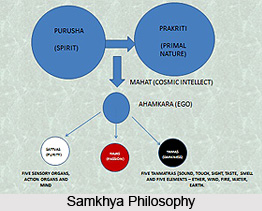
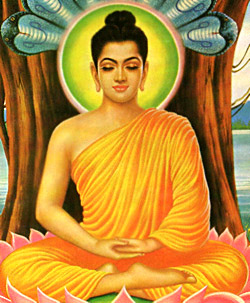
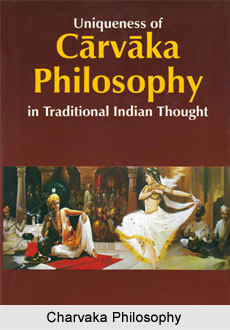
Indian Philosophy has been subdivided into different schools according to their beliefs, opinions, thoughts and way of action. Classical Indian philosophy can be approximately categorised into `orthodox` (astika) schools of Hindu philosophy which considers the Vedas as the supreme authority and the `heterodox` (Nastika) school which do not acknowledge the authorities of the Vedas. These astika and Nastika schools are further sub-divided into even more schools. The orthodox or Astika School incorporates the Nyaya, Vaiseshika, Samkhya, Yoga, Purva-mimamsa and Vedanta schools under its flank. On the other hand, the heterodox or Nastika School incorporates Jain philosophy, Buddhist philosophy and Charaka under its realm.
Religious Influence on Indian Philosophy
The development of Indian Philosophy has ample instances of being closely influenced by religion. Indian Philosophy has tried hard to amalgamate religion and philosophy in order to depict the true self. Hinduism being the most dominant religion in Indian subcontinent it has had major contribution on the Indian school of thought. The religious tolerance that has existed in India from time immemorial is the main reason as to why the Indian Philosophy has been enriched with different concepts and beliefs. All religions have influenced the Indian Philosophy to some extent.
 Characteristics of Indian Philosophy
The concepts of Dharma and the Almighty have been focused by all the philosophical trends that have originated in India. Philosophy is the theoretical aspect. The uniqueness of Indian philosophy lies in the unification of the Metaphysical God with the Personal God. The core of Indian philosophy is to realise the power of the Divinity within the inner self. All the schools emphasises that the ultimate goal of human life is to merge with the Lord and the only way to attain the goal is to lead a moral life. The ultimate goal of the Indian philosophy remains the same to search for this omnipotent and omniscient identity.
Indian Philosophical Texts
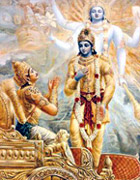
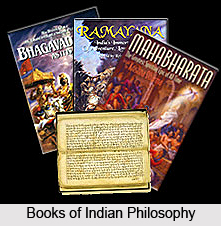
From the Sutra Period followed by the Scholastic Period documentation of Indian philosophical thoughts began. Gradually the Indian ideologies came to be documented so that people could use it for future reference. Philosophers like Adi Shankara or Madhava charya, Chanakya of the Mauryan period and more recent people like Swami Vivekananda and Raja Ram Mohan Roy have contributed largely to the treasure of Indian Philosophy. Sacred texts like Bhagavad Gita, Manu Smriti, Nyaya Sutra, Vaiseshika Sutra, Arthashastra, and Upanishads have continued to nurture Indian Philosophy since its inception and also have made people more and more aware about the vastness and richness of Indian Philosophy. Indian philosophy is all encompassing.
Indian Philosophy
Indian Philosophy is intense spirituality that emphasises on the attainment of salvation and eternal bliss through a righteous path.