


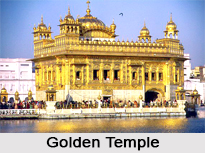
 Golden temple is one of the most fascinating sites in India. Founded by the fourth Sikh guru it is an important seat of the Sigh gurus. Wrapped in gold, the Golden Temple in Amritsar is the seat of the sacred Guru Granth Sahib. It is known as an epitome of brotherhood and equality. Irrespective of caste creed and community, it is open for one and all. It not only reflects the philosophy of the Sikhs but also their architecture and cultural heritage. Golden temple is one of the most fascinating sites in India. Founded by the fourth Sikh guru it is an important seat of the Sigh gurus. Wrapped in gold, the Golden Temple in Amritsar is the seat of the sacred Guru Granth Sahib. It is known as an epitome of brotherhood and equality. Irrespective of caste creed and community, it is open for one and all. It not only reflects the philosophy of the Sikhs but also their architecture and cultural heritage.
History of Golden Temple Golden temple is situated in the place where Guru Ram Das made his home. This place came to be called Guru-ka-Mahal. In 1577, Guru Ram Das purchased the pool and the surrounding land from its owners. Guru Ram Das got the tank excavated to construct a shrine at its centre. Later In 1588 AD, Hazrat Mian Mir laid the foundation stone of Golden temple. The followers built their homes in the neighbourhood creating the town of Ramdaspur. The town derived its name Amritsar from the pool of nectar - amrit. The project was chalked out by Guru Amar Das and the plan was executed by Ram Das under the counsel of Baba Buddhaji. The work was started by Guru Ram Das and was completed by his son and successor Guru Arjan Dev. It was in 1802 the town got incorporated in the dominion of Maharaja Ranjit Singhwho donated extensively for its gold exterior. Architecture of Golden temple The architectural shape of the temple was redesigned in 1808 AD with the help of skilled Muslim architects, masons and wood-carvers from Chaniot, now in Pakistan. The entire Naqqashi (floral decoration) and Jaratkari (stone inlay) work was done by these artisans under the supervision of Badaru-Mohiudin, the chief architect. After the death of Maharaja Ranjit Singh in 1839, the task of completing the work fell on three Sikhs. The courtyard of the Golden Temple has been extended and remodelled many times in the present age. The boundary line of the pool was laid in AD 1570. The tank was named Amritsar and the town also came to be called by the same name. The object of Guru Arjan Dev in planning the structure was to combine both spiritual and temporal aspects, the combination of Nirg un and Sargun. Commonly Golden temple is known for Guru Ka Langar. It is a community kitchen. There is Guru Ram Das Niwas, a free hostel. It has 228 rooms and 18 halls. It further includes some other places, like, Dukh Bhanjani Ber - Jujube tree, Thara Sahib, Ber Baba Budhaji, Gurudwara Ilachi Ber, Ath Sath Tirath and Gurudwara Shaheed Bunga Baba Deep Singh. |
| |||



Home > Reference > Indian Temples > North Indian Temples > Temples of Punjab > Golden Temple inAmritsar Punjab
Golden Temple inAmritsar Punjab
| Golden Temple is one of the well known shrines of the Sikhs of India. With its golden dome and small minarets it attracts the visitors. This considered as one of the most sacred shrines of India. |
| ||||||||||||||||||||||||||||

