 Kasuti embroidery is a typical traditional form of art mainly practiced in Karnataka. This form of embroidery is done mainly on handloom Ilkal sari. With its origin deep rooted with the Chalukyan civilisation, Kasuti embroidery is a famous form of embroidery in India.
Origin of Kasuti Embroidery
The origin of Kasuti embroidery can be traced back to the period of Chalukya Dynasty during 6th to 10th century. This craft was practiced by the ladies of Karnataka and Maharashtra especially in Dharwad and Bijapur. The name Kasuti has originated from two words kai (meaning hand) and suti (meaning cotton). According to kamasutra women have to be able in sixty four arts. Kasuti is one of them. During that period a great renaissance in the sphere of art and architecture took place. Kasuti embroidery is widespread in several districts of Karnataka such as Dharwad District, Belgaum District, Hubli and Mangalore. The undisclosed fact of this age old embroidery form is that it can be done only by counting the threads of the warp and weft and the designs can be traced or implanted, as outlines. Conventionally, it is done on llkal sarees and blouse pieces.
Kasuti Work
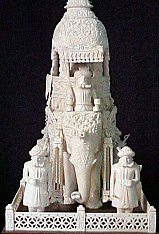
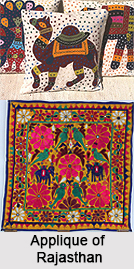
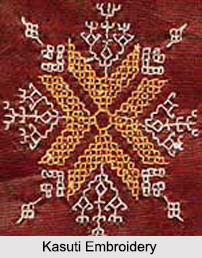
Kasuti embroidery is a fine piece of art. Kasuti shows up best on thick materials against dark Indian shades. The geometric designs of Kasuti are taken from the temple sculptures. The larger designs feature the elephant with howdah, the temple, the basil (Tulsi) plant platform, Nandi the sacred bull, gopuram, chariot palanquin, lamps and conch shells, etc all near the pallu. As they go down the length, the designs get smaller like flowers, birds, animals and a large variety of geometrical designs. Stitches in Kasuti embroidery have to be vertical, horizontal or diagonal and the lines or the motifs have to be completed on the return journey filling in the blank portions. The Kasuti work is laborious and requires so much concentration as it involves counting of each thread on the cloth. The motifs of Kasuti embroidery are stitched in such a pattern that the both sides look alike without knots and brighter shades of colours like red, orange, yellow and purple are used in this pattern. There is a similarity between Kasuti embroidery with rangoli.
Types of Kasuti Embroidery
Four types of Kasuti are done namely Neyge Kasuti, Murgi Kasuti, Menthya Kasuti and Gavanthi Kasutis. There are over 700 designs under categories like Gandle Kamala, Gopi Kamala Chittu Kamala, Gundala Gopura, Dagabaji Gopura, Gandolagida, Tulasi, Kalee, Peacock, Neuge Godambi, Elephant, Lions, Vankipatti, Kayapatti etc. The stitches commonly used are the negi, the gavanti, the menthi and the murgi. Gavanti is the most commonly used double running stitch and is worked in horizontal and vertical directions. Murgi is the zigzag done within the mending stitch, similar to gavanti. Negi is the ordinary running stitch. It is used for large designs and the overall effect is of the woven designed by extra weft threads. In fact negi is an off-shoot of the word `ney` which in Karnataka means weaving. Menthu is a cross-stitch which is closely done by counting of the warp and two weft threads, mainly used in architectural patterns.
Thus, Kasuti embroidery is essentially a decoration for a saree and blouse of the same material and loses its composure and beauty if done on any odd piece.