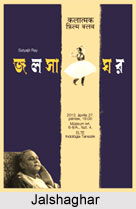
 Steeped in the milieu of feudalism in Bengal, Jalshaghar depicts a dramatic study of the final days of a zamindar-a semi feudal lord in rural Bengal. Jalshaghar presents the sophisticated zamindar, who is last in the line of the rich patriarch has nothing left of his wealth. Jalshaghar embodies those desolated feudal lords, who still retain the erstwhile sophistication out of their false vanity. Instilled with the ardent passion for music, the deserted zamindar refuses to change with the passing of times, hence meets his comeuppance.
Author:
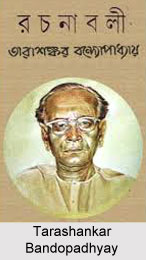
Tarashankar Bandopadhya, one of the leading novelist in the Bengali Literary world was born in 23rd July 1898. Born in the transition period of the 20th century, Tarashankar experienced the reality of the socio-political ethos, which finds expression in his novels. Diverted from extremely prosaic narrative instilled with idealistic romance, Tarashankar delineates the actuality of the socio-political arena, though the grace of romantic ardor is not always missing. In spite of depicting the abstract society as the chief force behind the social turmoil, he rather holds responsible the human behavior and their essential nature as the root of all evils. He ventures out to all walks of life and points out the essence of the human relationship in different situations. Close to the soil, Tarashankar, does not look back to the realism in rejection, but accepts it in a new way allowing the reader to breath the truth of human relationship restricted so far by the conservative and hypocrisy of the then society.
Synopsis:
Steeped in the background of the tumultuous political condition in all over India, when the zamindary or feudalism is on the verge of extinction, Jalshaghar represent the insistent obsession of a zamindar to retain the former glory and sophistication.Jalshaghar is the story about a zealous zamindar, Biswambhar Roy who passionately loves music. The final one surviving of the rich patriarchs, Biswambhar continues to cling to his polished tastes, even in his dying days.
 The story opens with desolated Biswambhar, having nothing but two loyal servants, a horse, an elephant, and the crumbling palace and asking his old servant about what month was it. But the servant was unsettled by the festive music played in the neighbor`s house on the occasion of "Upanayan". The festive ceremony of the neighbor`s house reminds Biswambhar of his son`s Upanayan, he observed with enough pomp and grandeur. Tarashankar at this point when the zamindar reminds of his erstwhile grandeur, brought the flashback technique, which cues the inward conflict of Biswambhar. The instrument of flashback technique prompts the tragic fallacy, which intensifies the novel Jalshaghar.
With an intention to spite his neighbor, Roy arranged a musical soiree to celebrate New Year, with his wife and son, who at that time were away from him. But in the stormy night in his utter dismay, Biswambhar Ray learned about the death if his family, getting drowned. Being thrown off his former prosperity, Roy now is projected into depression and he closed his dear Jalshaghar or "music-room". Unable to adapt himself with the changing situations, Roy was transformed into a recluse, striving hard to conform to the normal world at one side and to establish his own magnificence as a zamindar. To relish his previous magnificence, he opened the Jalshaghar again and in spite of cherishing the sweet melody of the neighbor`s house, he rather boasts of his own taste of music. Out of his trance he stares at the majestic portraits of his ancestors and proudly introduces them with their servants. But a spider on his own portraits deeply moved him. With the dawn, when the candles go out one by one, Roy is convinced that he too must depart with the extinguishing of the last candle. The tragedy epitomizes when in a majestic gesture he mounts his horse and rides at a terrible pace to be violently thrown off. Roy dies as two servants look on tearfully.
Jalshaghar is an authentic depiction of the shattering feudal lord of the contemporary era. The title "Jalshaghar" signifies the passionate zamindar, with enthusiastic fervent of music. Biswambhar`s Jalshaghar is the only place, which embodies the grandiose ancestral lineage of the deserted zamindar and it is his Jalshaghar, centering which the entire conflicts of the story is concerned. The novel is all about Jalshaghar, the precious music room of Biswambhar.