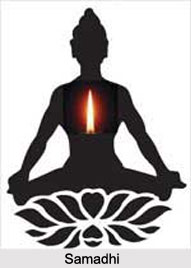
Basically, asamprajnata-samadhi as cognitive discipline is intended for overcoming barriers in realising one`s true self-taking one step at a time. In this Samadhi, one`s realisation is not that of any stratum of prakriti but as absolute subjectivity to the true Self and source of consciousness. This self is often referred to as atma or, purusha. Accordingly, the state in which this realisation is made is known as asamprajnata-samadhi. It can also be aptly called as Nirbija-samadhi, Nirbija means Seedlees in literal sense.
Bija means `seed` or `germ`. It can also mean as the `source` or `origin` of something. It is also occasionally be used as a synonym of bindu (point, dot), which denotes the essence of masculine sexual energy. This energy manifests itself on the gross physical plane as semen. Here, Bija as Samskaras are defined as the psychic `ruts` that incline the mind to perceive the world in certain habitual ways. This naturally predispose us towards identification with manifestations of prakriti as the external physical form of one`s body. The most refined form is the highest aspect of intellect, namely buddhi.
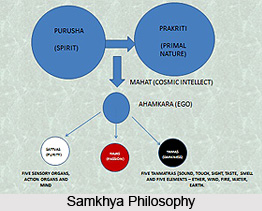
Vrittis are such modes of identification of prakriti with the self. This identification prevents the true Self from being truthfully and purely reflected in the mind. When a yogi progresses through the stages of samprajnata-samadhi, those sublate the vrittis systematically, which are less subject to the distorting influence of avidya (nescience). Vyasa comments that each of the modes of Samapatti is Sabija or seeded because each depends on a particular object of support. The object can in any manifestation, whether that be a gross or subtle, or the faculties of ego and perception themselves. According to Yogic philosophy, Identification with an object, subtle or refined, is still a misidentification. Therefore, it can be concluded that even the heights of asmita-samapatti harbour the seed of continued ignorance of one`s true nature.
To realize and sustain yogi`s true identity as Purusha, the exultant state of Nirbija-samadhi (`samadhi without seed`) must be attained repeatedly by means of intense meditation. The final effort is to grace oneself as personification of Ishvara. Afterall, The yogi ultimate goal is not to generate better Samskaras. His liberation consists on dissolving and burning the ones that are already present. To gain his basic true self.
The repeated attainment of Asamprajnata or Nirbija-samadhi establishes samskaras of nirodha. First the procedure acknowledges and then replaces the previous samskaras of misidentification and then it dissolves them immediately. The ordinary mental patterns, including subconscious motivating forces, are dissolved in this state that it is referred to in the hatha literature by such terms as "unmani". These expressions suggest a condition that is some-how `outside` the mind. As far as the effect of yoga practice on mental activity is concerned, the term `dissolution` is, much suitable than alternatives such as destruction, eradication and termination.
Since vrittis and their Samskara causes are the constructive components of the personality- matrix, they are therefore essential if one is to function on the psychophysical plane. Hence it is not appropriate to label them as "Killed" Or "dead" in the highest state of Samadhi. These are actually purified of all dogmatic, habitual and automatic modes of response, and the path is cleared for purposeful self-creation and willful control over vrittis. By achieving this "Supercognitive State" repeatedly that`s itself a form of Raja Yoga, one achieve the ultimate and permanent state of Moksha or Kaivalya.
Asamprajnata Samadhi
The rough translation of Asamprajnata Samadhi is the `supracognitive samadhi`.