 Nishkriti, entirely written for the common homespun people of 20th century represents a family drama. The pleasures and grieves centering disturbances in the joined family in the contemporary social backdrop is the essential theme, the novel concerns about. The novel, Nishkriti portraying a piercing analysis of human love and faith also concerns about the interrelationship between the members of a same family.
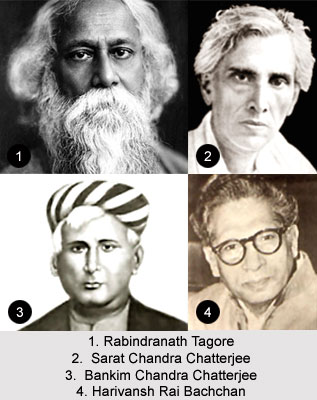
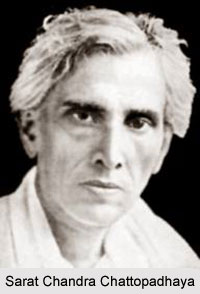
Author: - Sarat Chandra, the distinguished Bengali novelist emerged as a social reformer born in 15th September 1876 in Debanandapur in Hooghly. Born in a joined family, Sarat Chandra was familiar with the confusion and disturbances of a big family. As a social reformer, the rationale of Sarat Chandra was to point out the cause and consequences of the utter perplexity, which finds expression in the complete shattering of the family institution.
Synopsis: - Essentially a fictional representation of contemporary family life, Nishkriti is a story about two brothers with their cousin and the relationship between their families. The plot revolves round the household of two brothers, Girish and Harish practicing law and is well off. Ramesh the cousin, who had achieved nothing, was very dear to the eldest brother Girish. All the three were happily married and lead a normal family life till the time was pregnant with confusing squabble between Shailaja, the wife of Ramesh and Nayantara, the wife of Harish. The strong-wiled Shailaja, though youngest to all the women, was the nodal agency of the entire family. She presents a kind of women, to whom respect wells out automatically. But Nayantara, the second brother`s wife could not settle in the ancestral place, under the supremacy of Shailaja. A shrewd contriver Nayantara, manipulating Siddheswari, designed a plot to expel, the cousin family anyhow. However, by coincidence, eldest brother Girish came to know about the plight of Ramesh and his family. Finally he transferred all his property to Shailaja`s name, whom he called "Maa" in presence of Girish, the second brother.
"Nishkriti" reveals a real picture of the contemporary family, in the context of 20th century Bengal. Irrespective of the urban and rural culture, in the novel family stands as the actual protagonist, and the members stand as the mere motivator to control the so-called family institution. The family fiction "Nishkriti" has a universal appeal, because it is the anecdote applicable to all the ages. The title "Nishkriti", finds its true significance in the concluding section of the novel, where Girish finds solace or "Nishkriti" in transferring the property to Shailaja.
The novel Nishkriti was originally named as Ghar-Bhanga, which was published in Jamuna magazine as serials. Two years later, the novel was fully published in Bharatbarsha in 3 issues in alternate months of Bhadra, Kartik and Poush of [B] 1323. GCS published Nishkriti as a novel on 1 July 1917, which was the firs appearance of Nishkriti as a book. The novel, Nishkriti, highly acclaimed was also translated in other language. India Press published Hindi translation of Nishkriti named Chhutakara in 1932. Kishan Singh Savda translated it in Gujarati in 1934. Dilip Kumar Roy`s English translation was published in 1935. In 1937 V.S. Gurjar translated it to Marathi