


 Rajkot in Gujarat is a place which is one of the most visited places of India for its several religious places. This place is flocked by tourists throughout the year who visit this place to enjoy the iconic temples and the spirituality of them. Rajkot in Gujarat is a place which is one of the most visited places of India for its several religious places. This place is flocked by tourists throughout the year who visit this place to enjoy the iconic temples and the spirituality of them.
Temples in Rajkot The temples in Rajkot are bound with magnificent history and social belief of the local people of the place. The temples are: Shri Nageshwar Parswanath Jain Temple: A classic temple, built in honour of Lord Parswanath, is located on the Rajkot-Jamnagar Highway near Ghanteshwar. It is a stunning example of Panchtirth. Swaminarayan Temple: This temple is another specimen of Swaminarayan Sampradaya. It is situated on Bhupendra Road. This temple is popular for its astounding architecture and beautiful shrine. People visit this place to experience the architecture of the temple. BAPS Swaminarayan Temple: This particular temple from the Swaminarayan sect was built in 1998-99. It is situated on the rapid developing Kalavad Road near Mahila College. This temple has one of the largest auditoriums in the state having a capacity of 1000 people for the 'Ravi-Sabha' and 'Yuvak-Sabha'. Ramakrishna Ashram: Built on the Dr. Yagnik Road in 1934 on the land donated by Late Shri Dharmendrasinghji, Ramakrishna Ashram is the second most imperative place for the followers of Swami Vivekananda, after Kolkata. Nearby, there is a Jagat Mandir, a marvelously carved temple built in honour of Shri Ramakrishna Paramhansa, in red stone. 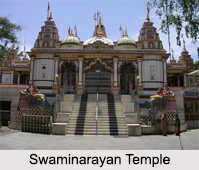 Jadeshwar Temple: Jadeshwar Temple is situated on the Jadeshwar town; the temple is dedicated to Lord Shiva. The town Jadeshwar is situated at a distance of 60 km from Rajkot. The temple was built by Baroda's Vithoba Diwan in the early years of 19th century. Jadeshwar Temple: Jadeshwar Temple is situated on the Jadeshwar town; the temple is dedicated to Lord Shiva. The town Jadeshwar is situated at a distance of 60 km from Rajkot. The temple was built by Baroda's Vithoba Diwan in the early years of 19th century.
Jalarambapa Temple: This temple is situated in Virpur, a small town located at a distance of 60 km from Rajkot. Virpur is believed to be the birthplace of Jalarambapa, a celebrated saint worshipped by the Lohana community of Gujarat. He is also revered by many other Gujarati communities. It is a tradition in Jalarambapa Temple to serve sumptuous food to the devotees and believers, who come here. And for such a reason, the temple trustees do not accept any donations. Chamunda Mataji Temple: The notable Chamunda Mataji Temple is situated at Chotila, which is a small town located exactly midway between Ahmedabad and Rajkot. Chamunda Mataji Temple is the 'kuldevi' (family goddess) of most of the Hindus in the Saurashtra region. Chamunda is also known as Ambaji, Mahakali, Bhuvaneshwari and Chamundma. The main temple is atop a hill, which is 1250 feet high. According to Hindu shastras, Mahakali Mataji had vanquished two demons, Chand and Mund here in Chotila hill and presented the heads to Ambamata. Ambaji was pleased to see these demons killed and said that Mahakali Ma shall be worshipped as Chamunda Mataji here forever. However, everybody is bound to return back to his or her respective places from this Chamunda temple site before night time, because it was the desire of Mataji that no one shall stay here overnight. The temple structure is very spacious, with the statue of Mataji standing resplendently. During the time of Navratri, festivals are organized which go on for nine days, with full mirth and fervour. Gayatri Mandir: Gayatri Mandir of Rajkot is made of stone and the temple is the replica of the twelve jyotirlingas. The temple is surrounded by beautiful decorative arts and vegetation. Panchnath Mandir: This temple is located in Limda Chowk in Rajkot. Panchnath Temple, dedicated to Lord Shiva, is made of white marble stone with beautiful architecture. Other Temples in Rajkot Apart from the temples mentioned above, there are some other temples in Rajkot which are equally beautiful and popular among tourists and those are Ashapura Temple, Ashapura Dham, Balaji Temple, Mahakaleshwar Temple, Sankirtan Temple, Iskcon Mandir, Ishwarya Mahadev Temple, Ramcharitmanas Mandir, prem Mandir etc. |
| |||



Temples in Rajkot
| Temples in Rajkot with their essence of religiosity and serenity enhance the spectral ardour of Rajkot. |
| ||||||||||||||||||||||||||||

