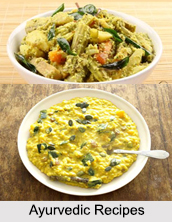
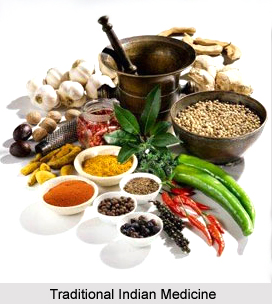
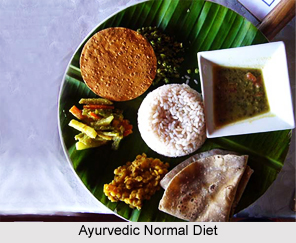
 A normal diet in Ayurveda consists of foods, which contain nutritive element and helps to provide balanced nutrition to the body. It should consist of whole grains, lentils and pulses, vegetables, fruits, dairy, nuts, spices, healthy oil or ghee and above all a sufficient quantity of water. Ayurvedic diet highlights that foods which are locally grown or produced, vegetables and fruits of the season and foods that are organic, natural and whole should be consumed.
Ayurveda recommends, that as seasons don`t remain same through out the year so the diet chart cannot remain the same all round the year. According to the season, the doshas in the body increases or decreases and therefore it recommends different sets of diets for different seasons.
The basic foods in Ayurveda are described by their virya (potency), vipak (end product) and guna (the capacity to modify bodily humors), which are also subjected to change with time. Ayurveda suggests a diet for every age, disease, mental status and so on. Foods should be eaten in proper quantity and in their best quality.
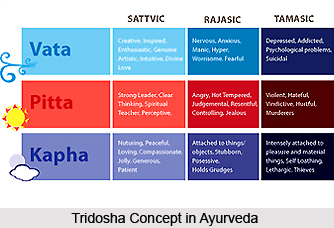
If less or more food is eaten disturbs the balance within the body and Ayurveda highlights that undigested food is the cause of all diseases. Food taken in wrong proportions can also affect the doshas like if Vata is elevated it can cause, fainting dryness of mouth and colicky pain. If Pitta is aggravated then it can lead to fever, giddiness and delirium. If Kapha is aggravated then it can result in vomiting, cold fever and heaviness in the body.
Ayurveda also believes that food can also affect the mental status of a person and personality traits of a person. Foods like milk, fruits, ghee is known for promoting the satvik quality of mind. Satvik foods help in enhancing the spiritual quality in a person. By consuming these foods, people will be righteous, well mannered and have a steady mind. Foods prepared with garlic and onion, red meat, foods, which are canned, alcohol are Rajasik foods. Consuming these foods people tend to become materialistic in nature, proud, ambitious and indulge in a selfish way of living. Stale, dry, unclean, unhygienic and left over foods are classified as Tamasik food which tend to make people lazy, greedy and self centred in nature.
Charaka recommends ten rules for food intake, which is known as aharavidhividhanam. Firstly, food should be warm when consumed as this helps in digestion. Secondly, there should be sufficient amount of oil in the food because it strengthens the sense faculties and physical strength and brightens the complexion. Thirdly, food should be taken in proper quantities as this gets digested easily and promote longevity. Fourthly, food should be consumed only after the previous intake is digested because this also enhances longevity. Fifthly, one should take food having no contradictories. Sixthly, food should be taken in proper places, because if the food is taken at improper places, then it can cause, passion, anger, confusion, and anxiety. Seventhly, food should not be taken in hurry, because it may cause indigestion. Eightly, food should not be taken slowly either because this will not give the real taste of the food. Ninthly, when food is consumed one should not talk or laugh. It should be taken with concentration as this will help to determine the taste of the food. Finally, food should be consumed keeping in mind various factors like age etc.