
 Manipuri Dance has its origins in the North-eastern states of India. It echoes the rhythm of life amidst its grace and charm. Manipuri as a dance form is old but is the youngest among the Indian classical dances. The current form of this dance is much more free and limited only to the literary word and the rigidity of the Tala.
Manipuri Dance
Manipuri Dance is one of the six famous classical dances of India which has a distinct aura of its own. This dance is especially noted for themes based on Vaishnavism.
Introduction
Manipuri Dance has its origins in the North-eastern states of India. It echoes the rhythm of life amidst its grace and charm. Manipuri as a dance form is old but is the youngest among the Indian classical dances. The current form of this dance is much more free and limited only to the literary word and the rigidity of the Tala.History of Manipuri Dance
 From the 18th Century onwards, the history of Manipuri dance style can be traced accurately. Manipuri dance originates in the north eastern state of Manipur. It is considered as the youngest among the classical Indian dances. Presently it is comparatively free in movements and limited to the literary word and the rigidity of the tala only. It is spontaneous and apparently flows with ease. Manipuri dance is the manifestation of a deep ritualistic tradition combined with vitality. Popular belief says that Lord Krishna and his consort Radha was the creator of Manipuri dance style. Again it was Uma and Lord Shiva who actually repeated this rasa dance style in Manipur. Whatever the myth is the history states that the original form of Manipuri dance is known as the "Lai Haroba".
Meities in Manipuri Dance
Manipur belongs largely to the valley people who call themselves Meities and trace their antiquity to the Vedic times. Many ritual practices were prevalent in the region earlier. These dances sustained the continuity of such ritual practices. The ritual dances were of sheer devotion and dedication to an unknown divinity. The Meities as a community knew innumerable ritual dances, the most exquisite being the dance of maibas and maibees. They invoke the deity through repetitive but disciplined movement. Couples dance to a theme of two local legends lai Haroba and Khamba Thoibi. They danced to an abstract design that symbolized the tangled serpent. The purpose of worship was to invoke a deity who was formless and is not identifiable with any religion as such.
Impact of Vaishnavism on Manipuri Dance
Though some form of Vaishnavism might have reached there earlier, it was only in the 17th Century Hinduism became the state religion of this valley. The evolution of this form was the result of a mutual interaction between the earlier ritual dances and the Vaishnava Bhakti cult. According to legends, in the 18th Century a king of Manipur named Garib Nivas officially embraced Vaishnavism the ground for it been prepared earlier by Vaishnava missionaries. Sant Dass of Bengal had visited Manipur and that King Kahagemba had built a small temple dedicated to Lord Vishnu. Sant Dass left an immense impact on the people. With the arrival of Vaishnavism appeared a new structure called mandapas, where the Vaishnava devotional songs were sung. Various cults of Vaishnavism like Vishnu swami, Madhavacharya and Rama nandi contributed to the future development of the state religion of Vaishnavism.
 Though the Meities absorbed traditions of Vaishnavism, the older forms and themes were kept intact. This resulted in a repertoire which was divided into two parts. The first consists of the Meities dances namely the Lai Haroba and the Khamba Thoibi, while the second includes the Vaishnavite dances which chiefly present the varieties of rasa dances and the bhangis.
Discovery of Present Form of Manipuri Dance
The present form and repertoire of the dance is attributed to King Bhagyachandra Maharaja. He saw in his dream Lord Krishna and the Gopis performing the divine dance. The rasa dances and the present costumes of Manipuri are attributed to the King`s dream.The manuscripts provide convincing evidence to the unparallel contribution of this King to the modern Manipuri dance. The king wrote a manual on dance called the Govinda Sangita Lila Vilas. It lays down clearly the scope of this dance style.
The Govinda Sangita Lila Vilas follows the tradition of Natyashastra though there are deviations. Tandava and Lasya are defined in this work. Tandava is divided into the chalanam and the gunthanam. Lasya is also divided into simitanga and sphuritanga. The classification of Natya differed from the classification of other texts. It is divided into Rasaka and Rupaka. The word rupaka is apparently a variant of the dasa Rupaka, natika and Prakarana forms of the Natyashastra tradition. The author has divided rasa into many types: the maharasa, malurasa, nityarasa, nirvesarasa or the kunjarasa. Therefore it can be said that Shastric tradition of the Natyashastra and the Puranic tradition of the Srimad Bhagvata have been blended in Manipuri dance. The challis, the bhangis, the Gati bhangsand various types of chalans and sthanakas can be traced to this text.
The theatrical approach, the class refinement that typically classifies Manipuri dance further was hued in the steep color of maturity and style by the eminent poet Rabindranath Tagore who was known as the "pioneer of Manipuri dance and culture".
However, this is not the only manuscript which we find in Manipur. Somewhat later, another king wrote a treatise called the Mridanga sangraha. This work is attributed to Chandrakirti and contains extremely valuable details of playing the particular variety of drum called the khol in Manipuri. The other treatise, Sri Krishna Rasa Sangita Sangraha, by Bhakti Siddhanta, was, perhaps, written earlier than the Mridanga Sangraha. It contains many of the lyrics to which the rasa dances are performed today.
Theme of Manipuri Dance
Grace, divinity and a seamless majesty that characterize Manipuri Dance. The Indian religious themes and the devotional aspects of Indian philosophy and religion shape the dance pattern. The Radha Krishna RasaLeela accompanied with the throbbing beat of the Manipuri Dholak enriches the devotional attribute of Manipuri Dance. Themes from Vishnu Purana and Geeta Govinda form the rhythm of the Manipuri Dance. The Vaishnava cult and the Bhagwat Purana also gain an articulate dimension amidst the vigorous masculinity and the gentle feminine touch of the Manipuri Dance.
Style and Technique of Manipuri Dance
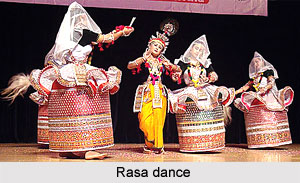 Style of Manipuri dance is inextricably woven into the life pattern of Manipuri people. The dancer starts with movements known as chali. This however need not be identified with the Chari of the Natyashastra, but is a movement which suggests basic ways of walking and covering space. The dancer first moves to the front and back with hands held horizontally at the chest level. Thereafter move these hands vertically in an up and down direction.
The dancer then covers space in walking side-ways and ending by weaving circles and spirals. Here various types of bhramaris are initiated. Uplai and Longlai are the two distinct varieties of these Bhramaris. Some scholars consider them as bhava bhramari and antara bhramari of the Natyashastra. This is the finale of the dance cadences and time and again executed in multiples of three. Occasionally in vertical space, a spiral movement is executed, where the dancer body is like a screw which weaves a spiral vertically from a higher level to lower level. The dancer also takes a circle or a spin. This movement is very difficult though being very graceful. The jumping movements are typical of the Tandava portions of the dance.
In order to form the parengs the basic movements of the chali are connected together. They are rhythms of movement in a given metrical cycle. Several metrical cycles are there which has complicated in-beats and the cross-beats that require high level of accuracy. All the layas and different types of talas like the rajmela, the Rupaka, pancham-savari and tintala are used in parengs. Three bhangis have been attributed to King Bhagya-chanda Maharaja and two to his descendant, King Chandrakirti. The first three bhangis are used in the rasa portions of dance. The three other bhangis are the gostha bhangi pareng, the gostha Vrindavan pareng, and the gostha khurumba pareng. They are used by actors while presenting the character of Lord Krishna in the rasa portions of dance. The gostha khurumba pareng is rarely performed and is apparently out of trend.
As the dance has an elaborate system, it has a highly complex technique of movement and tala. Manipuri is perhaps the only classical style in which the hallisaka, the charchari and other forms that have been mentioned in classical Sanskrit literature survives. Manipuri exhibits many types of pindibandhas described in the Natyashastra in a chiseled fashion. All the four types of pindis mentioned by Bharata are seen in the rasa dances. Many other group formations which have had a mention in later texts have been used in Manipuri dance.
Technique of Manipuri Dance
Technique of Manipuri involves a unique treatment of different body parts. The unusual treatment of the body gives an impression of ease and fluidity. The vertical line of the body is followed always. There are no deflections or shifts from particular horizontal sutras. In fact, the body is curved into a figure of eight. This results in a position which is relaxed and controlled. Two parts of the body is connected through beautiful curves. There are no sudden transitions as such.
 With the posture that looks like an intertwined serpent it is not possible to spread out the lower limbs. The knees are kept close together which may be identified as the nata position of the knees in the Natyashastra tradition. The body is held upright and the torso is divided into two distinct parts above the katisvtra, the chest and the waist. Though the chest and the waist move in opposition they are always connected. This results in the curve slowly taking the shape of alphabet "S". The neck and the head follow this principle and the head executes a figure eight in space. The arms and hands follow the pattern of the lower limbs and the torso. They are held in a relaxed manner away from the body in a semi-circular curve. The wrists play an extremely important part in the movement of the hands and the fingers as the wrists give the movements of the fingers a unique flexibility. Gradual closing in and opening out of the fingers is a basic movement, while the wrist executes a figure of eight. The face is calm without any excess facial expressions. This expression is sustained throughout the performance.
The movements are feminine and may be described in the language of the Govinda Sangita Lila Vilas as the simitanga. Here the space is also limited and movement is also restricted. In the Lasya portions the dancer does not lift her foot away from the ground above the knee level. It is a gliding movement almost touching the floor. The situation changes in the Tandava portion. Here one has to be very alert and energetic and involves high leaps, whether executed by women in the role of the child Krishna or by men in the numerous male dances of the region.
There is a four tala distance between the two feet and the knees are bent in front. In the Tandava portions the torso is occasionally treated as a separate unit and there are frequent side-bends. In Lasya various positions attempts to limit space and although women dancers change the level throughout a performance, there is hardly much space between the two feet. In the Tandava portions the sthanakas form into vrischika Karanas of the Natyashastra tradition. There are few leg extensions in the Lasya or the Tandava portions. Neither in the Tandava portions nor in the Lasya portions are hip movements allowed. There is an up and down movement with the shift of weight from one foot to the other which is achieved through knee dips and through a suggestion of a hop on the toe.
The grace and delicacy of this dance can be understood from the manner of covering space. The dancer covers floor space in figures of eight and when the foot is lifted to cover space it invariably touches the ground by a slight toe movement. The kunchita foot of the Natyashastra is seen repeatedly in this dance style.
Music in Manipuri Dance
Music in Manipuri dance is bound by sheer technicalities of this dance form. Short musical compositions like the swarmala, the chaturang, and the keertiprabhand form an important part of the dancer`s repertoire. The Pung, varieties of drums, wind instruments like the flute, conch shells and a trumpet-like horn provide music for this dance. Stringed instruments like the Esraj, tambura and Pena offer the main melody. The cymbals provide an additional rhythmic effect to the overall dance style. The lyrics used in Manipuri are from the poetry of Jayadeva, Chandidas, Vidyapati and many more. Sanskrit, Maithili, Braj bhasha are the languages used.
Costumes in Manipuri Dance
 Costumes of Manipuri Dance are very colourful, attractive and very richly bedecked. The costumes for Manipuri dancers, particularly for women are quite unique from other Indian classical dance forms. The Gopis usually wear a red dress while Radha stands out in green attire. The male dancer, who is Krishna, wears a saffron dress.
Costumes for Male Manipuri Dancer
In Manipuri Dance, the male dancer wears a bright colouredDhoti. It is also referred as "Dhora" or "Dhotra" that covers lower part of his body from waist. The unique style of wearing it gives the dancer the flexibility to perform his footwork. A crown decorated with peacock feather adorns the dancer"s head who portrays the character of Lord Krishna. The drummers who also dance while drumming are male artists. They wear white dhoti that covers the lower part of body from waist and a whiteturban on the head. A shawl neatly folded adorns their left shoulders while the drum strap falls on their right shoulders.
 Costumes for Female Manipuri Dancer
The costume of female Manipuri dancers resembles that of a Manipuri bride. The dress is referred as "Potlei". These costumes were introduced for dancers characterisingGopis in "Rasa Lila" dance by MeidinguBhagyachandraMaharaj. The most distinguished of these is the "Kumil" costume that is an exquisitely embellished long skirt in the shape of a barrel with a stiffened bottom. The skirt is embroidered with fine gold and silver works decorated with small mirror pieces and designs of lotus and other natural items as border prints. It is layered with a transparent silk or "Pasuan". A velvet choli or blouse adorns the upper part of the body and a translucent veil white in colour covers the head. The dancer wears round shapedjewellery or garlands of flowers to adorn her face, hand, neck, waist and legs that synchronize well with her costume.
Names of Costumes for Manipuri Dancer
Costumes and its terms related to the costumes and ornaments used in Manipuri Dance are as follows -
Potlei:Ras costume of Sri Radhika and the Gopis.
Koknam: A gauze at overhead, embossed with silver Jari.
Meikhumbi: A transparent and thin veil thrown over the head.
Kumin: An Embroidered brightly coloured silk skirt.
Pasuan: A short flair of silver gauze over the Kumin.
Khaon: Rectangular embroidered piece with belt.
Koktombi: Cap covering the head.
Thabret: A griddle round the waist.
Khangoi: Small rectangular belt over the Pasuan.
Leitreng: Golden ring round the head.
Chura: Made of peacock feathers, wired on top of head.
Feichom: Dhoti, a saffron dress.
Ghungur: Ornament for the foot.
Thus, the entire get up of the Manipuri dancers performing gracefully onstage complimented with devotional music gives the feel of watching floating apsaras.
Manipuri Dancers of India
Manipuri Dancers of India : Guru Bipin Singha is called the “Father of Manipuri Dance and styleâ€. The Jhaveri sisters – Nayana, Suverna, Darshana and Ranjana Jhaveri are well known Manipuri dancers in Mumbai. These artists have spread the beauty of Manipuri Dance all over the world and have been honoured both nationally and internationally on this subject. Other well known performers of Manipuri Dance are Sohini Ray and Poushali Chatterjee.
Forms of Manipuri Dance
 The term Manipuri actually covers a number of dance forms from the region, viz:
Rakhual: Also termed as the Gusthalila, this is basicallt a group dance performed by a group of boys, wearing colorful attires and ornaments. Lord Krishna dancing with his mates is the theme of this dance form. The legends from Mahabharata like the demons coming to kill Krishna and almost all the stories from the life of Krishna forms the theme of this Rakhual dance. Colorful dresses like, Churas, koknaams, leitrengs Feichooms or Dhutis and khobols coupled with the stylised form of Dancing ensures the sublimity, subtlety of this dance form.
Khubak Ishei: Khubak Ishei is a type of Clapping song, which is generally performed by the female singers with a male drummer. This form was initiated during the reign of King Churachand Singha. They sing the song of Radhas pang of separation after Krishna left her .
Pala Kirtana: Vaishnava Pala Kirtana using Dhak and Kartal has carved a niche in Manipuri fine arts. The dance is otherwise known as Kartal Cholom or Cymbal Dance. Although starts as a soft and graceful movement, the form, gradually gathers the momentum. It is a group performance of male partners, using cymbals and wearing snow-white ball-shaped large turbans.
Thabol Chongba: This is perhaps the most striking yet seductive dance form. Thabol Chongpa, which literally means the "moon light jump" echoes the serenity and sedulity of the tawny moon amidst the intricate footwork. As soon as the moon raises over the hills the flute, the drums and the cymbals starts pouring out music. The boys and girls joins hand with the beat of music. They wear no make-up and special costumes.
Other Devotional Forms: The diverse reflections of the song, dance, and martial arts culture that is the innate culture of the Manipuri people are as follows:
1. Udukhol: Krishnas Valya Lila and Vatsalya Ras is enacted through this dance and devotional music.
2. Basak: A kind of Sangkirtan for males and females alike, where the theme is derived from Basak Sajya, preparation of a seat for Sri Krishana and Sri Radhika and her maids with flowers.
3. Gouralila: Performed by boys of the age group of 8 and 10 years, representing Sri Chaitanyas lila such as meeting the Kesav Vharati, saving jogai - madhai, etc.
 4. Thang Ta: Martial arts by the Manipuri Meitheis, the dance with the use of spear and sword.
5. Nupa Pala: Also known as Kartal Cholom or Cymbal Dance, is a characteristic of the Manipuri style of dance and music.
6. Dhop Kirtan: A kind of kirtan style, which is devoid of movements, must be held in connection of Durga Puja, Jhulan Jatra, Mera and Kartika festival.
7. Ipom: A form of entertainment where two or three Jatra personalities take part and discuss something. Sumanglila is the most popular form.
8. Gostha Lila: Another dance that has stemmed from the Vishnu Cult is the Goshta Lila, also known as the Sanshenba. The performers are generally young boys in the age group of four to five years. Stories detailing Krishnas childhood pranks are performed in Goshta Lila. The rendering of these stories combines divine inspiration with a lively spirit of fun.
9. Ballet Or Drama: This is also a colorful part of Manipuri Culture. It is theatre and Jatra that have the honor of being the chief cultural and artistic forms during the past few decades. There are dance dramas like Nimai-Sonyas, Sita-Horon, Nouka-Bilash, Savitri-Styaban, Chandrajini, Harishchandra, Nal Domoyonti, Moirang Parva, Ramayana, Kurukhetra, Lankakanda, Kamsabadha, etc., which are wonderful and beautiful. The jatra is like an opera generally performed in the open in a circle surrounded by audiences, stage or screen. The famous ballet Numit speaks the story of two suns, having rhythm, expression and lyric.
Repertoire in Manipuri Dance
 Repertoire of Manipuri is difficult to be explicated. Many folk styles, community dances and ritualistic dances are practiced in Manipur even today. One cannot limit the repertoire in Manipuri only to the rasa dances. Some ritual dances have been absorbed into the repertoire. The Lai Haroba and the Khamba Thoibi are some of the dance forms which have been absorbed.
The historical and mythical theme used in these ritual dances makes them classical as any later Vaishnavite dances. An element of abhinaya besides pure Nritta is also used. There are various types of cholams and varieties of kartalis. Lasya and Tandava are the cholams. Lasya is the cholam of the small cymbals like the kanjirajrtulam and those of the Tandava type are the kartala cholams with large cymbals. The khol dance performed by men is believed to be the greatest achievement. The dance can be done by a single person or by a hundred men. The range of sound that is produced through the pung is awesome. Among drumming instruments there is no other Mridanga which can produce the same range of sound as the pung. Other cholam dances include duff cholam and the kanjira cholam. Amongst the kartali dances are the clapping items performed only by women known as the nupi khumbak ishai and the nupa khumbak ishai. Number of interesting group formations can be seen. The dance is built on clapping of hands at cross rhythms to the basic rhythm played by the pung. All the cholam and the kartali dances are pure dances. Another variety of Tandava dancing is common in the region namely, the thang haiba and the takhew saiba. These are vaguely reminiscent of the kalis of Kerala and are only martial dances.
All these dances are on the edge of classical and folk dances. They are performed in groups and at large known to the community. The success of the composition depends on group participation. It has a recurrent music and characteristic refrains which accompany it.
Performance of the Manipuri Dancers
 The traditional Manipuri style of dancing pre-eminently embodies delicate, lyrical and graceful movements, which enhance the audience in its beautiful and colourful costumes and presentation. The Manipuri dance whether folk, classical or modern, is devotional in nature. The folk dances of people captivate the beholders with their exotic costumes and simple but graceful rhythm. Their folklore is rich in quality. The dances are ritualistic and recreational, religious and temporal. The ritual dances are performed at a particular rite or ceremony or sacrifice and these dances naturally have a spiritual and religious basis. The dancers begins with the movements known as the chali. It is a movement, which suggests basic ways of walking and covering space. The dancers moves first to the front and back with hands held horizontally at the chest level and then moves these hands vertically in an up-and-down direction. She then covers space in side-ways walking, ending by weaving circles and spirals. A genuine Manipuri dance performance offers a glimpse of a rare and ancient civilization still extant.

The palpating beats of dhol laced with the magnificence of the body movements` envelope the viewers whilst the colorful costumes and that neat presentation bewitch them. With the typical folk elements subdued in it, the Manipuri dance has therefore a remarkable charm. The dancer begins with the movements known as the chali. Chali suggests the fundamental basics of walking and covering space. The dancer moves first to the front and back with hands held horizontally at the chest level and then moves these hands vertically in an up-and-down direction. She then covers space in side-ways walking, ending by weaving circles and spirals.
In this movements the diverse types of Brahmaris are also introduced. Uplai and the longlai are the two distinct varieties of the Brahmaris. Although jerks are avoided yet "Achingana of the jumping movements are introduced in the Tandava part of any Manipuri dance. The movements of challis again form the various types of parengs. All the Lais are employed in Parengs and also Talas are used. The rajmela, the seven beats (rupaka), 15 beats (panchamsvari) and the 16 beats (tintala) out limns the parengs. Bhangis like ostha bhangi pareng, the gostha Vrindavan pareng and the gostha Khurumba pareng are ideally imbibed into the dance pattern and is eloquently uttered in the Rasa Leela dance styles.
The compositions from the Classical Sanskrit literature are illustrated in this dance style. Quite evidently therefore in the rasa dances, we find that all the four types of pindis mentioned by Bharata. The mellisonant melody of the Meera and Krihna are also in vogue . Girls, colorfully dressed begin the dance and then the men join in the middle.
Recently updated articles in Indian Dances
Koli Dance
A folk-dance form of Maharashtra, the Koli dance is mainly performance by the Koli community of the region. Known for their primary profession of fish...
Folk Dances of Nagaland
Folk Dances of Nagaland reflects the naga tradition and culture of the local habitants. In most of the cases, naga dances are monopoly of men with som...
Goff Dance
Goff dance of Goa is performed during the Shigmo festival in the month of Phalgun in Hindu calendar. Goan peasants mainly practice this dance after th...
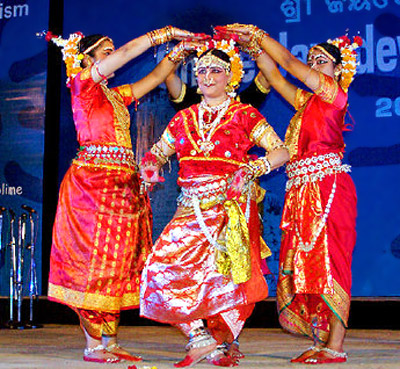
Abhinaya Chandrika
Abhinaya Chandrika is an ancient text on Odissi dance that explain every minute details of Odissi performance. The text explains about different mudra...
Santhali Dance
Santhali dance is a vibrant folk tradition of the Santhal tribe, reflecting the deep connection of the Santhal tribe with nature, community, and celeb...
Related articles in Indian Dances
Santhali Dance
Santhali dance is a vibrant folk tradition of the Santhal tribe, reflecting the deep connection of the Santhal tribe with nature, community, and celeb...
Dhamal Dance
A folk dance form of Haryana, the Dhamal Dance has its roots in the days of the Mahabharata. This dance form is primarily performed by men in the outd...
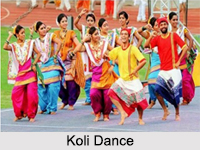
Koli Dance
A folk-dance form of Maharashtra, the Koli dance is mainly performance by the Koli community of the region. Known for their primary profession of fish...
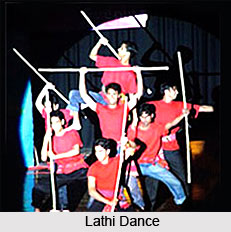
Lathi Dance
Lathi dance is a dance form of West Bengal performed on the occasion of Muharram.
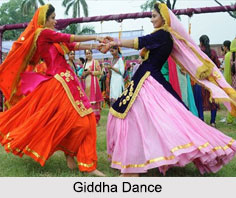
Giddha Dance
Giddha Dance of Punjab, performed only by the women, is a very popular folk art form in India. During Lohri, the Punjabi women reveal their joy throug...