


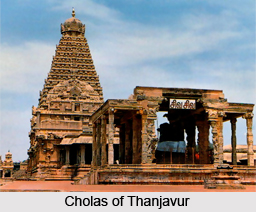
 In the fourth century AD Pondicherry area was part of the Pallava Kingdom of Kanchipuram. Following the next centuries Pondicherry was occupied by different dynasties of the South. In the 10th Century AD, Pondicherry was occupied by the Cholas of Thanjavur (Tamil Nadu). In the 13th century, the Cholas were replaced by the Pandyas. Later Pondicherry had to witness a series of Muslim invasions. In the fourth century AD Pondicherry area was part of the Pallava Kingdom of Kanchipuram. Following the next centuries Pondicherry was occupied by different dynasties of the South. In the 10th Century AD, Pondicherry was occupied by the Cholas of Thanjavur (Tamil Nadu). In the 13th century, the Cholas were replaced by the Pandyas. Later Pondicherry had to witness a series of Muslim invasions.
The credit for putting Puducherry into the framework of strategic importance definitely lies with the French. In 1673, the French East India Company established a trading centre at Puducherry and this outpost became the important chief French settlement in India. The Dutch and British trading companies also wanted to establish trade with India. As a result there was war between these countries and in 1693, the Dutch captured Pondicherry. In 1699, by the Treaty of Ryswick, the Dutch returned Pondicherry back to France. The French acquired Mahi, Yanam and Karaikal parts of Pondicherry in the years 1720, 1731 and 1798. During the years (1742-1763), Pondicherry came under the rule of different hands. On 16 Janauary 1761, the British captured Pondicherry from the French. But by the Treaty of Paris, Pondicherry was again returned back to the French but was again taken by the British in 1793 amid the Wars of the French Revolution. In 1814, Pondicherry was again returned back to France. In the late 1850's when the British gained control of the whole of India, they allowed the French to keep hold of their settlements in the country. Until 1954, Pondicherry, Mahe, Yanam, Karaikal and Chandernagar remained a part of French India. In 1947, the Independence of India gave momentum to the union of France's Indian possessions with former British India. In 1948, there was an agreement between France and India for an election in France's Indian possessions to choose their political future. It was on 1st November 1954 that the bureaucracy had been united with India's and in 1963 Puducherry was organized as a Union Territory. 
Cession of Pondicherry and Karaikal: From the time India gained independence from British rule the issue of the French settlements was raised with the Government of France. It took seven years for Puducherry to unite with India. There were agitations against French now and then. In 1787 and 1791, the farmers of Karaikal agitated against the heavy tax imposed by the French. People engaged in legal means to fight against the French. In 1873, the advocate, Ponnuthammbi Pillai won the case. In the years 1927 and 1930, students came to the forefront with agitations. Great leaders like Mahatma Gandhi, Jawaharlal Nehru and Balgangadhar Tilak visited Pondicherry and addressed meetings. There was police control arrest everywhere. This increased the anger of the people against their rulers. In the latter year of 1930, organizations known as mahajana sabhas were opened in Pondicherry and Karaikal. These groups, along with the trade unions, organized the Non-Cooperation Movement. During the Second World War, Pondicherry supported France with men and arms. The French India Congress was formed in 1946 with the target of incorporating the French possessions with India. In 1948, the French People's Convention passed a resolution expressing its determination to join the French possessions with India. The government under the leadership of Jawaharlal Nehru was apprehensive to combine the French Indian territories with the country. In June 1948, India signed an agreement with France, which gave power to the people for determining the political status of their land. As a result on October 1948, municipal elections were held in Pondicherry, Karaikal and Yanam. The French India Socialist Party, a pro-French group, captured all municipalities except one. The new councilors accepted the self-rule offered by the French Government. The Indian Government continued to press for alliance, pledging for a distinct status. On 18 March 1954, the members of the executive council and mayors of Pondicherry and seven adjoining communes proclaimed their decision to merge with India without a referendum. When the socialist party was preparing to move the merger resolution, the French governor scuttled it by postponing the session. This provoked the Socialists and they planned to capture the outlying communes one by one and move to Pondicherry. The Communist Party was also ready to launch a campaign of direct action to merge Pondicherry with India. 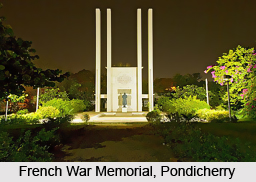
On 31 March 1954, the leaders of the Socialist Party hoisted the Indian national flag on top of the Nettapakkam police station. The National Youth Congress began a Satyagraha. The processions of the freedom fighters were lathi charged and the flags carried by the people were seized and torn by the French Indian Police. On 13 October 1954, India and France issued a joint statement on announcing a modus operandi for deciding the status of French settlements. On 18 October 1954, the elected members of the Representative Assembly and the municipal councilors of Pondicherry and Karaikkal took part in a referendum at Keeloor. Out of the 178 members, 170 members favored the merger of French Indian territories with the motherland. Three days later an agreement on the transfer of French territories to India was signed in New Delhi between the two countries. On 16 August 1962, India and France exchanged approval under which France gave up to India full sovereignty over the territories it held. From I July 1963, Pondicherry and the other enclaves of Karaikal, Mahe and Yanam came to be administered as the Union Territory of Pondicherry. Cession of Yanam: At Yanam, the conditions were intolerable after the mayor and other representatives of Yanam adopted the merger resolution. They and the other people took refuge in the adjacent areas of the Indian Union. Police from Yanam assaulted refugees on Indian soil. The refugees under the leader ship of Dadala Raphael Ramanayya marced into Yanam and took over the administration. 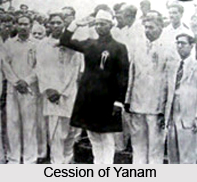 They hoisted with pride the Indian National Flag and they adopted a resolution declaring Yanam "liberated". They hoisted with pride the Indian National Flag and they adopted a resolution declaring Yanam "liberated".
Cession of Mahe: Hundreds of volunteers marched into Mahe and demonstrated an agitation in front of the residence of the administrator. 16 July 1954 marked the end of 224 years of French rule in Mahe. Cession of Chandernagore: On June 1948, at Chandernagore, the first municipal elections were held under the Indo- French Agreement. The new municipal assembly overwhelmingly voted for its merger with the Indian Union and the Government of India took control of Chandernagore on 9June 1952. Later, it became a part of the Hoogly district of West Bengal. |
| |||



History of Puducherry
| Puducherry was invaded by different invaders in different times. The invaders include Pallava Kingdom of Kanchipuram, dynasties of the South, Cholas of Thanjavur, Pandyas and Muslim invaders. |
| ||||||||||||||||||||||||||||

