
 Japa Meditation is regarded as one of the most effective ways of meditation as it helps the mind to be free from numerous problems and worries and fills it with soothing senses. Japa Meditation is practiced from ancient time in all religious groups. This type of meditation is also known as the "Mantra Yoga". An ancient science of the unification of concentration with knowledge is the fundamental idea of Japa Meditation. The Sanskrit word Japa is derived from the root "Jap", meaning "to utter in a low voice, repeat internally or mutter". People experience peace, calmness and tranquillity in their minds and lives when they perform Japa Meditation. This is an indispensable tool for concentration of mind, the technique of which is handed over from one generation to another.
Japa Meditation
Japa Meditation is the process of uttering repeated Mantra, for the serenity of mind.
Introduction
Japa Meditation is regarded as one of the most effective ways of meditation as it helps the mind to be free from numerous problems and worries and fills it with soothing senses. Japa Meditation is practiced from ancient time in all religious groups. This type of meditation is also known as the "Mantra Yoga". An ancient science of the unification of concentration with knowledge is the fundamental idea of Japa Meditation. The Sanskrit word Japa is derived from the root "Jap", meaning "to utter in a low voice, repeat internally or mutter". People experience peace, calmness and tranquillity in their minds and lives when they perform Japa Meditation. This is an indispensable tool for concentration of mind, the technique of which is handed over from one generation to another.Mantras in Japa Meditation
Japa Meditation involves chanting of Mantras, which is most commonly written in Sanskrit. The mantras produce a vibratory effect on the mind of the enchanter and the listener, which is extremely effective to create a significant change in attitude and mind set of individuals. Mantras in Japa help to focus one's energy to achieve a sense of calmness within oneself. Mantras can be even composed of one word, which is uttered in a repeated manner, such as the name of the God and so on. A Mantra is mystical energy encased in a sound structure. Every Mantra contains within its vibrations of a certain power. Upon concentration and repetition of a given Mantra, its energy is elicited and takes form. Japa meditation, or Mantra Yoga, is that practice by which the power contained within Mantras is applied for specific purposes.

A Mantra is mystical energy encased in a sound structure. Every Mantra contains within its vibrations of a certain power. Upon concentration and repetition of a given Mantra, its energy is elicited and takes form. Japa meditation, or Mantra Yoga, is that practice by which the power contained within Mantras is applied for specific purposes.There are different types of Mantras in Japa meditation. Beej or seed Mantras have no exact meaning. They act directly on the nadis, or nerve tubes of the astral body. They vibrate in the chakras along the spine, acting as a subtle massage. There are also Mantras that have meaning, which can be translated. However more common is the Deity Mantra, in which a specific form is visualized with attributes. It is often accompanied with the repetition of the sound.
For example, a reclusive person bent on destroying his negative qualities would repeat a Shiva Mantra. A family person, whose idea was to be a loving and responsible husband or wife, might meditate on the name of Rama. An individual who sees God as infinite, all-loving, and even a little playful would build these qualities in him by repeating a Krishna Mantra as well.
Sanskrit Mantra: Sanskrit is considered as the most closely approaching telepathic language of all the other languages. This is because of its affinity to the fifty primeval sounds. It is the most direct way to approach the transcendental state.
Mantras cannot be concocted or customized for the individual, despite some current claims. They have always existed in a latent state as sound energies. Mantras have also been codified in the scriptures and handed down from guru to disciple. Guru, deity and mantra once chosen, should never be changed.
Benefits of Mantra: Every Mantra has got tremendous force. A Mantra is a mass fleas or radiant energy. It transforms the mental substance by producing a particular thought movement. The rhythmical vibrations produced by repeating the Mantra, regulate the unsteady vibrations of the five sheaths. It checks the natural tendencies of objective thoughts of the mind. It helps the spiritual power and reinforces it.
Types of Japa Meditation
 There are usually two ways for Japa meditation. One is "Vaikhari Japa" that includes audible Japa meditation. It might include uttering mantras in whisper or even audible pitch. The other is the silent or mental Japa Meditation, which is called "Manasika Japa". Manasika Japa is considered to be extremely powerful as it involves complete focusing of the mind. It always protects the mind from getting disturbed by the external influences.
Japa Meditation with Mala Beads
Japa meditation is also practiced accompanied with a mala beads. This meditation technique can be seen among the people of Dharmic religions. They usually wear wooden beads around there neck or wrist. Traditionally, the string consists of 108 small beads and one larger meru bead to mark the beginning or end. At the time of doing a Japa meditation, they use the beads like a counter and twist them between their thumb and third finger, one time for each mantra repetition. The beads help in maintaining concentration, and when they feel the large bead they begin back along the string in reverse without touching the meru.
Steps of Japa Meditation
The best way to practice Japa meditation is to sit cross-legged on a sheet or cloth on the ground. The mantra is chanted with whirling a rosary of 108 beads that is called a "Japa Mala". In Hindu traditions, Vaishnava devotees use beads made from the Tulsi plant or holy basil while Shaivites do it with Rudraksha beads. Some people wear Japa beads around their neck and some other practitioner prefer to carry them in a small bag in order to keep them clean. When practiced properly, Japa Meditation makes ones life peaceful by easing stress and tension. Further, it makes life calm and evokes happiness of mind and soul as well.
Varieties of Japa
 Japa, which comes hand in hand with meditation or Dhyana, can become monotonous after a prolonged practice. For this reason there are a variety of Japa in which the Mantra can be repeated verbally for sometime, in a whisper for sometime and mentally for some time.
The mental repetition is very powerful and it is termed as Manasika Japa. The verbal or loud repetition is called Vaikhari Japa. Humming of Mantra or repeating it softly as if whispering is called Upamshu Japa. When one is starting the Upamshu Japa one should perform it aloud for a period of time so that the ears will hear the mantra and the brains will record it. Gradually one should decrease the volume and ultimately do it silently. This japa method is effective because the cerebral cortex will keep on reciting the mantras for a period of time even after the audible japa has stopped. However, the japa should be carried on uniformly and in sustained tones. Even the repetition of Japa without any feeling or Bhava has a purifying effect on the mind and body.
Another form of Japa is called Tantric Japa where the aspirant repeats the mantra for a prescribed number of times. After nine or ten repetitions or rather after completing the prescribed number of times, offerings of ghee or herbs are made to the fire. If the japa is done without any desire, it needs no such fire worship or Homa.
Religious philosophers advise to write down the Ishta Mantra or Guru Mantra for half an hour daily in the notebook. While writing the Mantra one should observe Mouna or silence. On Sundays and holidays it is advised that one should write this for one hour. This is called Likhita Japa and this helps in developing the concentration level in an individual.
The benefits of Likhita Japa cannot be sufficiently described. It purifies the heart and concentration of mind and also helps one to control Asana, Indriyas, particularly the sense of sight and taste. It fills one with the power of endurance and helps one to attain peace of mind. Mantra can be written in any language and by regularly practicing Japa the inherent power of Mantra (Mantra- Shakti) will stir up which will make one conscious of the Divinity in the Mantra.
Mantras for Japa Meditation
 Mantra practice is a central aspect of traditional Yoga. There are different mantras that help in japa meditation. Some of them can be mentioned as follows.
OM Sri Mahan Ganapataye Namah
Prostrations to the great Lord Gnash : OM is the original, most powerful Mantra sound. It is a part of almost every other Mantra, and serves to invoke pure supreme vibrations. Sri is a title of reverent respect. Mahan means great. Ganapati is another name for Ganesh who is symbolized as the elephant-headed god, representing strength and fortitude. He is the remover of obstacles and bestowed of success.
OM Namah Siva
Prostrations to Lord Siva : Siva is the lord of ascetics and recluses. He is part of the Hindu Trinity. Brahma and Vishnu, who are the other two parts, are associated with creation and preservation, respectively. Siva, the Cosmic Dancer, presides over the destructive energies, which break up the universe at the end of each age. This is the process of the old making way for the new. In a more personal sense, it is Siva`s energy by which one`s lower nature is destroyed, making way for positive growth as well.
OM Namah Narayanaya
Prostrations to Lord Vishnu : Narayana is a name of Vishnu. He is the preserver of the world. After the Creation, it is the energy of Vishnu, which maintains order to the universe. It is Vishnu who regularly takes on a human form and incarnates on earth to benefit mankind. People who are closely involved in the running of the world and maintaining the harmony of life are drawn to this aspect of God.
OM Bhagavate Vasudevaya
Prostrations to the Lord God, Vasudevaya : Bhagavate means Lord, referring to Vishnu. Vasudevaya, meaning `He Who abides in all things and in whom all things abide,` is a name of Krishna. Krishna is one of the most loved of all deities. He is considered to be a world teacher for he is the source of the Bhagavad-Gita Gait, one of the most popular of all Eastern religious texts. People are drawn to Krishna because of his playfulness and joyful nature.
Hari OM
OM Vishnu
Hari is another name for Vishnu. It is that aspect which forgives the past actions of those who take refuge in Him and destroys their negative deeds. Thus Hari is a redeemer and a guide to personal salvation as well as the World Preserver.
OM Sri Ramada Namah
Prostrations to Lord Rama
Rama is an incarnation of Lord Vishnu. He took life on earth for the purpose of upholding righteousness and rewarding virtue. His life is the subject of the Ramayana. Rama lived the life of perfection and responsibility. Rama and Sita epitomized the devotional relationship between husband and wife. They are the models for all householders and people with family duties.
OM Sri Durgaya Namah

Prostrations to Mother Durga
Supreme Divinity is without qualities or attributes, and as such it contains all qualities and attributes. The masculine principles are important yet, they must be balanced with the feminine principles. Masculine and feminine are but obverse and reverse of the same coin. Durga represents the motherhood aspect of God. She is the force, or slate, through which Divinity manifests. Durga is power. She is the protector and benefactor. According to Hindu mythology, the claytonia, or pure consciousnesses, of Brahma, Vishnu and Siva were united to form the being of Mother Durga. She is commonly pictured riding a tiger and having eight arms with which she carries flowers and weapons of protection and gives the gesture of blessing.
OM Sri Maha Lakshmyai Namah
Prostrations to the great Mother Lakshmi
Lakshmi is the bountiful provider. As Vishnu`s consort, she aids in the preservation of the three worlds by bestowing wealth and abundance of a material and spiritual nature. She is pictured as a beautiful woman standing on a lotus blossom with her arms open and giving.
OM Saraswatyai Namah
Prostrations to Mother Saraswati
Aim is the Baja of Saraswati. The goddess is the source of all learning and knowledge of the arts and music. She is Brahma`s consort and is involved with the creation of new ideas and things. She is responsible for bestowing wisdom and knowledge. She is often worshipped by people in the creative arts.
OM Sri Mahan Kalikaya Namah
Prostrations to Mother Kali
Kali is that divine aspect which is responsible for the destruction and eradication of negative qualities in this world. She is the transformative power of Divinity which dissolves the individual into cosmic union. Mother Kali is one of the most fearsome of all the expressions of Divinity. Because of the intensity of her purgative nature, very few people are initiated into this Mantra.
OM Sri Hanuman Namah
Prostrations to Blessed Hanuman
Hanuman is the perfection of devotion. He is the greatest and the most selfless devotee of Lord Rama. In the Hindu tradition, he is considered to be a semi-deity, for he is the son of the wind-god. He possesses great strength and courage.
Hare Rama Hare Rama, Rama Rama Hare Hare;
Hare Krishna Hare Krishna, Krishna Krishna Hare Hare
My Lord, Rama! My Lord, Krishna!
Hare is a glorified form of address for calling upon God. Rama and Krishna were two of the best-known and most beloved incarnations of Vishnu. They took human birth on this earth to lead mankind to eternal salvation. This is the Maha Mantra, the easiest and surest way for attaining God-Realization in this present age.
OM Sri Rama Jay Rama Jay Rama
Victory to Rama
Jay means `victory` or `hail.`
OM Tryambakam Yajamahe Sugandhim Pushtivardhanam
Urvarukamiva Bandhanam Mrityor Mukshiya Mamritat
We worship the three-eyed Lord i.e. Siva who is full of sieved fragrance and nourishes human beings. May he liberate me from bondage, even as the cucumber is severed from the vine.
This is the Maha Mrityunjaya Mantra. It removes diseases, Prevents accidents and bestows liberation. It should be repeated daily.
OM Namo `stute Mahayogin Prapannamanusadhi Mam Yatha Twachcharanam Bhoje Ratih Syadanapayini
Salutation to thee, O great Yogi! Pray direct me that have fallen at Thy feet, so that may find unfailing delight at Thy lotus feet.
This is the Mantra for self-surrender. It should be repeated with a pure heart free of personal desires.
Recently updated articles in Meditation
Meditation for Stress Relief and Well-Being
Meditation is a powerful practice for reducing stress, improving overall health, and finding happiness. By calming the mind, unveiling unconscious con...

Meditation for Women
Meditation offers women a gentle way to nurture calm, focus, and emotionally balance themselves. By spending a few quiet minutes each day breathing de...

Meditation Equipments
A variety of meditation equipment like candles, incense, clothing, cushions or audio tapes helps to soothe mind during meditation.
Meditation
Meditation is a simple yet powerful practice that encourages calm, clarity, and self-awareness. By focusing the mind and breathing deeply, individuals...

Advantages of Self Hypnosis
Advantages of self hypnosis are innumerable and the process greatly helps an individual to achieve a positive outlook and healthy lifestyle. In the pr...
Related articles in Meditation
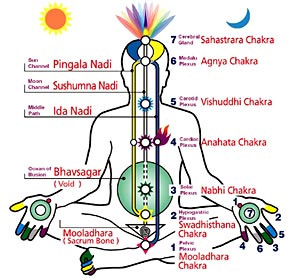
Nadis and Chakras
Nadis and Chakras are particular elements that rule one`s mind and body.
Buddhist Meditation
Buddhist meditation includes different forms of meditation that enables the human mind to reach the ultimate destination
Transcendental Meditation
Transcendental Meditation involves the repetition of a sound or a particular mantra which enables the mind to settle down and relax. It bestows immens...
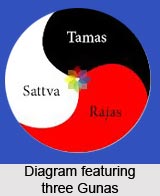
Three Gunas
Three Gunas, namely the Sattva, Rajas and Tamas are subdued, yet strong elements of a physical body. According to Kundalini meditation theories, an in...