Types of Meditation are numerous which assert to keep the mind calm and composed. The breath tends to become slow, deep and regular. The mind revolves about the continuous rhythm of inhalation and exhalation which provides a natural object of meditation. Meditation can be initiated with the simple process of breath watching. Yoga and meditation is associated with a direct correlation between one"s breath and one"s state of the mind.
Meditation is a method which is considered to be an ancient approach for achieving a peaceful mind and attaining concentrated mind. It is practised to achieve a mind-body connection and to realize specific developmental goals. This very method is considered to be about 4,000 years old and is present since the beginning of Yoga. There are many different types of meditation that are practiced at present. Thus, the benefits from number of different types of meditation are also felt. All meditation types are found to be effective in reducing stress. These methods eliminate stress by creating detachment. Meditation compliments the physical world as the final step in spirituality, and honours the problems of life as the stimuli of growth.
There are various types of meditation and they can be categorized into broader approaches.
Concentrative Meditation: Concentrative meditation is the form that mainly focuses the attention on the breath, on an image, or a sound (mantra), which can be a soothing music. Concentrative meditation is practised by sitting quietly and focusing the attention on the breath. It concentrates on opening up the mind, to sense the five given sagacity and allows the mind to achieve greater awareness and clarity.
Mindfulness Meditation: Mindfulness meditation involves in opening the attention to become aware of the continuously passing parade of sensations, feelings, images, thoughts, sounds, smells, touch and so on, without becoming involved with each of them. It is the process of watching the mind and simply witnessing whatever goes through the mind. Thus a non-reactive state of mind can be achieved.
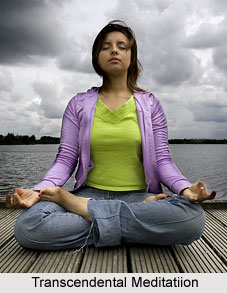
 Transcendental Meditation: Transcendental meditation is a diverse type of meditation which is related to repetition of a specific sound or a mantra. This mantra or sound has to be repeated or practiced according to specific procedure. The mind is engrossed in settling down or is “transcended†and a state of restful alertness is experienced.
Zen Meditation: Zen meditation involves Zazen, which is the centre of Zen meditation. It is a study of self and is believed to be a form of attaining enlightenment. It evokes a thought- free wakefulness so that the mind can reach its own Buddha nature.
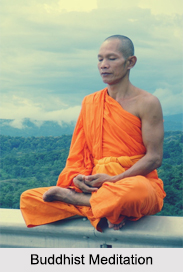
Buddhist Meditation: Buddhist Meditation is divided into Samatha and Vipassana meditation. Samatha calms the mind and develops one-pointed concentration and positive emotions. Vipassana builds on this calmness and positivity and develops an awareness of the inner self.
Yoga Meditation: Yoga meditation is described as the unbroken flow of realization of the object in the light of self-consciousness after the object has been fixed, forming the central activity of this stage. In yoga meditation (dhyana), the senses, instead of analyzing objects independently and thereby consuming the energy of the mind, unite to create a powerful focus and, led by the mind, enter into the reality of the object.
Raja Yoga Meditation: This is the kind of meditation which is considered to be the king of all yogas. It gives the power to control one"s own mind. The mental connection between the soul and the Supreme soul or the remembrance of the supreme psyche by the soul is Raja yoga meditation. Through Raja yoga the soul achieves its peaceful and natural state very easily.
Kundalini Meditation: Kundalini meditation is known for generating positive energy that supports an individual’s efforts guided by free will. This form of yoga has gained popularity for encouraging positive attitudes throughout the practice. The process of this meditation is simple, yet highly effective.
Mantra Meditation: Mantra meditation is a formula with spiritual significance that can help one relax very deeply. It involves thinking of a mantra and concentrating on it that helps one to focus one"s attention on the inside and eventually reach a state of very deep rest.
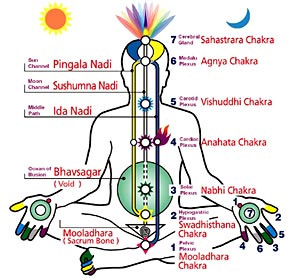
Chakra Meditation: Chakra meditation is also among the varied types of meditation. This engages "Chakra Anusadhna" which means "discovery or search of chakras". It is a simple way of meditation for beginners and helps awakening them gently, in a balanced and integrated way. Thus all the meditation kinds differ from one another.
Jhana Meditation: In the Theravada tradition, as described in the Pali Canon, Gautama Buddha outlined four states of meditation known as Jhana (dhyana). Buddhists regard the Jhanas as states that enhance endurance and help liberate individuals from worldly suffering. Jhana refers to a meditative state in which the mind is free from five defilements—sloth, craving, doubt, agitation, and aversion. At this stage, the mind does not wander, allowing an individual to concentrate for extended periods on the principles of Buddhism and gradually empower oneself with truth. A deep state of Jhana can last for many hours.
Music meditation: Music meditation is a soothing yet effective concept for improving both physical and mental fitness. Since the dawn of civilization, music has been used as a component of meditation, as its rhythmic patterns of tones help balance the mind and body while creating a unique harmonic connection between human beings and their surroundings. In ancient India, saints commonly composed music for devotion and meditation. Kings often acted as patrons, seeking peace amid the challenges of administration, and music served as a means of providing them with a sense of relief and well-being. The tradition of incorporating music into meditation has continued even in the contemporary, commercialized world.
Advanced Meditation
While meditating, various experiences manifests from time to time. An aspirant may notice a light appearing in the center of the forehead, or small fiery balls moving about before the mind`s eye. Sometimes various animate sounds may be heard more clearly. Occasionally beings or objects from the astral world manifest. There may even be brief sensations of bliss. When these extraordinary experiences of meditation occur, one should not be frightened. These experiences should not mean that Samadhi has been attained simply because some lights and a little rising above body consciousness have been seen. During deep meditation, the aspirant forgets the external world first. Afterwards he or she forgets the body. The idea of time disappears. He hears no sounds and is unaware of his surroundings. The feeling of rising up is a sign of going above body consciousness. In the beginning this feeling will last for only a minute. It is accompanied by a peculiar sensation of bliss. As the meditation deepens, body consciousness is lost. The loss of sensation usually occurs first in the legs, then the spinal column, back, trunk and hands. When this happens, the head feels suspended in air, and mental consciousness reigns supreme.

If there is a disinclination for work and a desire for meditation only, in that case one should lead a life of complete seclusion. One can live on a diet of milk and fruits. There will be rapid spiritual progress. When the meditative mood vanishes, work should be taken up again. Thus by gradual practice, the mind will be molded. In time the awareness of ego gradually vanishes, and reasoning and reflection cease. A higher type of indescribable peace descends. However, it takes a long time to transcend the body completely. It is also difficult to merge with the object of meditation or to receive a true spiritual experience. Samadhi, which is known as the super conscious state, is the highest goal to be attained through meditation. This cannot be achieved merely through a little practice. To attain the ultimate state of merging with the Divine, one must also observe celibacy and strict dietary restrictions. The person should have purity of heart and be completely devoted to God.
After prolonged and steady meditation, Cosmic Consciousness is first experienced as a glimpse, and then becomes natural and permanent in realized souls. Therefore, when there is a flash of illumination, one should not be frightened. It will be a new experience of intense joy. It is a glimpse of Truth, a new platform but not the whole experience. One should keep ascending until the final goal is reached. Similarly, different minds are comfortable with different kinds of meditation. As the various techniques and approaches work differently for each person, one should experiment with a variety of methods, and then stay with the one that seems most comfortable. It cannot be stated too strongly that all of the systems arrive at the same destination. It can also be difficult to say that which method is the easiest among Raja, Mantra, Kindling, Janna or Bhatia Yoga. Each has its own problems and temptations.
In Raja Yoga there is the danger of identifying with one`s purity, and building up egoism because of pride in one`s mental control. In Hath Yoga one may spend years awakening the Kundalini. By the time it happens, a few spiritual powers will have manifested, and one may be sidetracked. Despite asserting and identify with Brahman, Janna Yogis tend to be attached to the intellectual sheath. When a Bhatia Yogi surrenders to the Lord, he will encounter severe tests to see if his surrender is complete. Whatever the means, terminology and techniques employed, the basic concepts are the same. But the methods often overlap with each other. There are no sharp lines of definition or fundamentally distinct concepts. All Yogis culminate in the merging with the Absolute. The state of Cosmic Consciousness is sublime beyond description. The mind is most inadequate to grasp and describe if it inspires awe, joy, and freedom from pain, sorrow and fear. It bestows enlightenment, and places the experiences on a new plane of existence. One experiences a sense of universality, and bareness of eternal life. This is not merely conviction. It is an actual experience of knowledge. Although this knowledge is an inherent natural faculty, training and discipline are necessary to awaken it. Because of ignorance, it is non-functioning in the Majority of people.
The Absolute can be experienced by all through regular practice of meditation with a pure heart. Abstract reasoning and study of books do not suffice. Direct experience is the source for this higher intuitional knowledge, or divine wisdom. The experience is super conscious and transcendental. Senses, mind, emotions and intellect are at perfect rest. It is not the imaginary reverie of a visionary dreamer, nor is it a hypnotic trance. It is absolute truth, cognized through the spiritual intuitional eye. In this phase the little ego melts, and the differentiating mind vanishes. All barriers, sense of duality, differences, separateness and distinctions disappear. There is no time or space, only eternity is there. The experience has the feeling that he has obtained all his desires and that there is nothing more to be known. He feels perfect awareness of the super conscious plane of knowledge and intuition and also knows the whole secret of creation.
There is neither darkness nor void. Dualities eventually vanish. There is neither subject nor object. There is neither meditation nor Samadhi. Neither pleasure nor pain can be experienced. There is only perfect peace and absolute bliss and that is advanced meditation.
Although, prayer and postures of each of the meditation technique are dissimilar, yet, a few meditation types have analogous course of action. Zen and Vipassana meditations are such that require the human body to be held in an immobile position and the attention of the mind is controlled. While in other meditation types like the Siddha yoga, the body and mind is left free, they are set open without any kind of control over them. However, all these meditation practices have one thing in common; they all attempt to bring the wandering and busy mind to a peaceful and calm state. Each of these meditation types makes a person aware of his/ her five sense organs and also help in developing a sixth sense, to some extent. Meditation helps to relax the muscles and brain and endow with the positive energy.