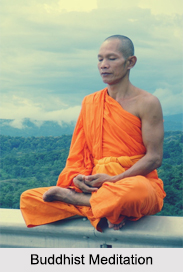
Transcendental Meditation is the most common and widely used form of meditation. This is a natural, effortless and simple meditative technique famed for its profound effectiveness. Transcendental Meditation involves the repetition of a sound or a particular mantra whose repetition, practiced with guidelines, enables the mind to settle down and relax. Transcendental Meditation allows one to experience the energy and creativity that is found almost everywhere. It also helps to settle the mind whilst turning it inward. During the practice of Transcendental Meditation the brain functions with significantly greater coherence.
History of Transcendental Meditation
Transcendental Meditation technique comes from the ancient Vedic tradition of India. Maharishi Mahesh Yogi introduced Transcendental Meditation in the year 1958 and was also the leader of the Transcendental Meditation Movement. The teachings and ideologies of Maharishi were based on the preaching of Swami Brahmananda.
It all started in 1957, at the end of the festival of "spiritual luminaries", which was held in remembrance of the previous Shankracharya of the North. This movement was started by Swami Brahmananda and Maharishi with the sole intention to regenerate the world. And from that point of time the Transcendental Meditation has been spreading throughout the world. It was during the 1960`s and the 1970`s that the Transcendental Meditation Movement began to be seen as part of the then current "counter-culture" phenomenon.
 Theory of Transcendental Meditation
Transcendental Meditation focuses on concentrating on a particular sound or a mantra. It is through Transcendental Meditation technique, the mind unfolds its potential for unlimited awareness which is the state of transcendental awareness - a lively field of all potentials, where every possibility is naturally available to the conscious mind. The conscious mind becomes aware of its own unbounded essence, its infinite potential. Transcendental Meditation provides a way for the conscious mind to fathom the whole range of its existence – active and silent, point and infinity.
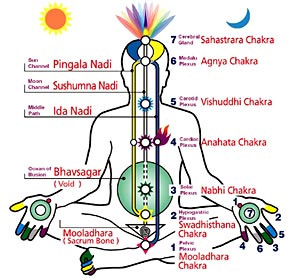
Transcendental Meditation is an experience, a mental technique that one can practice every day. According to Maharishi"s Theory of Consciousness or Enlightenment, there are seven stages of consciousness, of which the first three are very common to all. And the rest fulfil the definition of enlightenment, which is the ultimate goal of long term practice of Transcendental Meditation. This "Pure Consciousness" is experienced only through Dhyana.
Technique of Transcendental Meditation
Technique of Transcendental Meditation is easy to learn and enjoyable to practice and is immensely beneficial for all areas of life. It is a simple, natural and effortless procedure which needs to be practiced for 20 minutes twice a day, sitting comfortably with closed eyes. This practical method requires no effort or concentration, no special skills and neither any change in one`s lifestyle. Technique of Transcendental Meditation must be learned personally from a certified teacher of the TM program. This technique cannot be learned from a book, video or an audiotape.
Theory of Transcendental Meditation: Transcendental Meditation opens one`s mind and makes one aware of the infinite reservoir of energy, creativity, and intelligence that lies hidden, deep within everyone. As the body becomes deeply relaxed, the mind transcends all mental activity to experience the simplest form of awareness, Transcendental Consciousness, where consciousness is open to itself. The experience of Transcendental Consciousness develops the individual`s dormant creative potential while dissolving the accumulated stress and fatigue through the deep rest gained during the practice. This experience enlivens the individual`s creativity, dynamism, orderliness, and organizing power, which result in increasing effectiveness and success in daily life.
Mantras in the Technique of Transcendental Meditation: Chanting of mantras plays a vital role in the Technique of Transcendental Meditation. TM teacher assigns an appropriate set of mantras to each student, suiting to his or her nature. The mantras however should be used as per exact instructions. Vibrations of the mantras should resonate and harmonize with the nature of the individual and pulse of his thoughts.
Practicing the Technique of Transcendental Meditation: Technique of Transcendental Meditation is practiced in the mornings and evenings, while sitting comfortably with closed eyes and chanting mantras. However it is not advisable to practice it immediately after eating. Technique of Transcendental Meditation is scientific. It requires neither specific beliefs nor adoption of a particular lifestyle. The practice does not involve any effort or concentration. It is easy to learn and does not require any special ability. People of all ages, educational backgrounds, cultures, and religions in countries throughout the world practice this technique and enjoy its wide range of benefits.

Benefits of Transcendental Meditation
Over 500 scientific research studies conducted during the past 25 years at more than 200 independent universities and research institutes in 30 countries have shown that the TM program benefits all areas of an individual`s life: mind, body, behavior, and his or her surrounding environment. All together, it also changes the perception of an individual towards life itself, making the individual more optimistic and a better human being. The various benefits of Transcendental Meditation includes increased happiness, reduced stress, increased intelligence, increased creativity, improved memory, improved health, reduced high blood pressure, improved relationships, increased energy, reduced insomnia, reversal of biological aging, reduced crime and improved quality of life in society.
Researches indicate that TM practitioners, on average, are biologically 5 to 12 years younger than non practitioners. Instances of significant reduction in illness and risks of heart diseases have also been found. Studies also show that TM practitioners have warmer interpersonal relationships, less anxiety, increased self-esteem and self-confidence, increased problem solving ability and greater creativity.
Technique of Transcendental Meditation contrasts with other techniques of relaxation or meditation. Rather than keeping the mind active, Transcendental Meditation allows the mind to settle down completely and transcend thoughts attaining a state of silence and inner peace. Rather than forcing the mind to be quiet through concentration, which takes constant effort and actually keeps the mind active, it allows the mind to settle down spontaneously on its own accord. Once the process of transcending has begun, the mind moves naturally inward. It gets motivated by its natural tendency to seek experiences in a more charming and fulfilling way because no other experience is so completely satisfying.
Center of Transcendental Meditation
The Transcendental Meditation Center or Maharishi Shiksha Sansthan is located at Maharishi Nagar in Noida, UttarPradesh. The center is located at the lush green backdrop of capital Delhi. This serene environment provides enormous peace to the visitors who suffer from stress.

Maharishi Mahesh yogi - Founder of the Maharishi Veda MissionThe Transcendental Meditation (TM) is a natural procedure and effortless technique by which the mind naturally arrives at the source of thought and the settled state of mind. The Transcendental consciousness is the pure consciousness or self-referral consciousness that is the source of all creative processes. The Transcendental meditation is practiced regularly for fifteen to twenty minutes in every morning and evening with sitting comfortably with the closed eyes. During the transcendental meditation, the individual`s personal awareness settles down and the person experiences a unique state of restful alertness. The body is deeply relaxed in this method and the mind transcends all mental awareness to experience a total relaxation and calmness.
Maharishi Mahesh yogi was the founder of the Maharishi Veda Mission, who introduced Transcendental Meditation to the world about forty years back. He introduced millions of people of India and abroad with a new method of enlightenment.
There are many courses in the major programs of the ashram. The TM Sidhi program is the primary course of the Transcendental Meditation Center that offers the peace of heaven in earth as it trains the mind to function with consciousness and trains a self-referrel state of pure consciousness. It teaches the awareness to work in the self-interacting style as the intelligence of nature. Working at this level an individual becomes master over the law of nature.