Introduction
Folk Dances of Maharashtra have evolved mainly from the rural areas of Maharashtra. Several folk dances in this state are performed during the time of festivals or other occasions, representing the merrymaking and culture of Maharashtra. The state has been famous for its vibrant music and the folk forms are the true reflection of the society.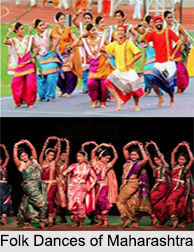
Various Folk Dances of Maharashtra
Kala and Dindi are the religious folk dances of this state which are performed with a lot of enthusiasm. Apart from the religious folk dances, there are various other folk dances which are performed in the state of Maharashtra. The folk dances of Maharashtra are detailed below:
Kala
Kala is a form of folk dance which describes the jovial mood of Lord Krishna. This folk dance of Maharashtra includes in its performance a pot which symbolizes fertility. A man breaks the pot and splashes curds over the dancers. The dancers twirl sticks and swords in a feverish battle dance after this ceremonial opening. The most prominent attraction of this dance form is the rhythm and the beat.
Dindi
Another religious folk dance of Maharashtra is Dindi. This dance is performed mainly during the day of Ekadashi in the Kartik month of the Hindu calendar. This dance portrays Lord Krishna performing naughty deeds and having a playful nature. The dancers dance with the rhythm of the drum beat known as Dindi by encircling the musicians, and thus creating a fantastic musical background.
Koli
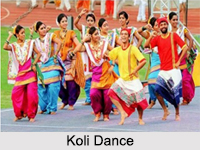
Koli Folk Dance is another folk dance of Maharashtra which got its name from fisher folk of the state called `Kolis`. The Kolis are known for their lively dances and a separate identity. The dances of these fishermen possess elements taken from their occupation, which is fishing. Koli is performed in this state by women and men, who divide themselves in two groups. They depict the boat rowing movement in the Koli dance. The Koli dancers also present the wave movements and the net casting movement as if catching fish.
Lavani
Lavani is a mixture of traditional dance and song, which is performed mainly to the beats of `Dholak`; an instrument like a drum. This folk dance is executed by beautiful women wearing sarees of 9 yards called Nauvari Saree. The women whirl on the quivering beats of conventional music. The word "Lavani" has been originated from "Lavanya", which means beauty. Previously, this folk dance dealt with various subjects like religion, politics, society, romance, etc. Lavani dance served as a morale booster and entertainment to the exhausted soldiers in the 18th and the 19th century battle of the Marathas. A number of renowned Marathi poets including Ramjoshi, Prabhakar, Honaji Bala, etc. added to the fame and reputation of Lavani folk dance.
Dhangari Gaja
Dhangari Gaja is one of the most famous folk dances of Maharashtra. It is performed by the shepherds of the Solapur District who are also known as Dhangar. The Dhangari Gaja folk dance is executed in order to please the Shepherd`s God and to get his blessings. The Dhangar dancers wear traditional Marathi dresses like Pheta, Angarkha, Dhoti and a colourful handkerchief. The groups of Dhangar dancers surround the players of drums and move with the rhythm.
Povadas
Povadas forms a part of Marathi ballads, depicting the life of Maratha leader Shri Chatrapati Shivaji. Shivaji holds a respectable position in each and every Maharashtrian"s heart. Through the Povadas, people remember Shivaji, who was a famous hero of his period.
Tamasha
Tamasha is a traditional folk dance form of Maharashtra, believed to have originated from the Sanskrit dramas “Prahsana” and “Bhana.” It comprises two main segments: Folk Drama and Song Dance. Communities such as Kolhati and Mahar are historically associated with this art form. The poetry for Tamasha is composed by “Shahirs.” A typical performance begins with a dramatic song, followed by the “Gaulan” sequence. Lavani, a popular dance style, forms the core of Tamasha presentations. The thematic content often draws from Indian epics such as the Ramayana and the Mahabharata, reflecting the cultural and religious heritage of the region.
Lezim Dance
Lezim is a popular folk dance form of Maharashtra, especially prevalent in rural areas. It is commonly performed during the festival of Ganesh Chaturthi. In educational institutions, Lezim is also integrated into fitness routines due to its rhythmic and physically engaging movements. The dance involves the use of a small musical instrument called the “lezim,” which produces rhythmic sounds. There are three main types of Lezim dance: Military Lezim, Talathekya, and Samanyajananna. Each type varies slightly in formation and execution but shares the common objective of promoting coordination, physical strength, and cultural expression through structured group performance.
Gondhal Dance
Gondhal is a traditional Marathi folk dance form from Maharashtra that combines singing and dancing. It is performed as a ritual offering to various Hindu deities. The practice holds religious significance and is usually part of devotional ceremonies. The performers, known as Gondhalis, have a history rooted in mythology, though their exact origins remain unclear. It is commonly believed that the concept of Gondhal originated during the time of Parshuram, following his victory over the demon Betasur. This belief forms the basis for the dance’s spiritual and cultural importance in many regions of Maharashtra, particularly during religious events.
Folk dances of Maharashtra depict the lives of people from different societies of the respected state. The culture and tradition of Maharashtra are well revealed through these dance forms when they are presented in the festivals or any other occasions.