Introduction
 Anardana is a spice used in Indian cooking to give a sour-sweet taste to dishes. It is made from the dried seeds of pomegranate fruit (Punica granatum). The seeds are dried along with the pulp, either by sun-drying or other means of dehydration. They are then ground or sold in whole form. They are an alternative to mango powder or amchur, which does not have the advantage of also giving some sweetness. They separate the seeds from the flesh, dry them for 10-15 days and then use them as an acidic agent for chutney and curry production.
Origin of Anardana
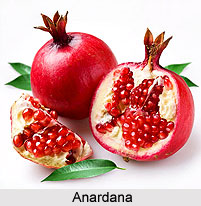 Anardana or Pomegranate is an attractive shrub that has several useful features, including medicinal values. The origin of Anardana was in Iran, however, it has later been cultivated and naturalised in India, and other countries, quite extensively. Anardana first came to the central and southern India from Iran around the first century AD and has been cultivated since then. Though cultivated extensively throughout India, Anardana is mostly found in the Himalayas in northern India, between altitudes of 900-1800 m.
Anardana need a certain climatic condition to grow properly. The climatic condition of India is considered suitable for the growth of Anardana. The Anardana species grows in abundance in mild-temperate to subtropical regions and is naturally adapted to the regions, having cool winters and hot summers. However, certain types of Anardana are also grown in home dooryards in tropical areas. The soil of India provides all the necessary components for the growth of Anardana. Anardana mostly thrives on calcareous, alkaline soil and also on deep, acidic loam and a wide range of soils. It is spontaneous on rock strewn gravel in the northern India.
Anardana or Pomegranate is called in different names in different parts of India. The Hindi and Punjabi speaking people know the tree as Anardana. Its Sanskrit name is Dadima. It is known as Dalim in Bengali and Assamese, and Dalam or Dadam in Gujarati. The Kannada speaking people call Anardana as Dalimbari, the Kashmiri people know it as Daan and in Malayalam and Tamil; it is called as Mathalam Pazham. The Marathi name of Anardana is Dalimb, the Oriya name is Dalimba and its name in Telugu is Dannima Pandu. The tree is called as Anardana in Urdu, as well.
Many cultivars of Anardana are found in India. The types of Anardana that has relatively soft seeds are often classified as "seedless" Anardana. However, the best types of Anardana found in India are Bedana and Kandhari. Bedana is a medium to large sized fruit, having brownish or whitish rind, and a pinkish-white pulp. The pulp of Bedana is sweet in taste and its seeds are quite soft. On the other hand, the size of Kandhari is large and this deep-red, deep-pink or blood-red fruit has sub-acid pulp and hard seeds.
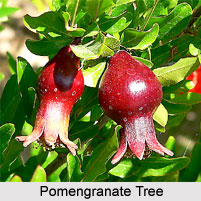 The other cultivars of Anardana found in India include the Alandi or Vadki. This medium-sized fruit is of fleshy red or pink colour, and contains sub-acid pulp and very hard seeds. Dholka is another type of Anardana. This fruit is large and yellow-red in colour, with patches of dark-pink and purple at base. Sometimes, it is also found in greenish-white colour. The thick rind of the fruit is fleshy and purplish-white or white in colour. The pulp of Dholka is sweet in taste and its seeds are quite hard. Dholka is an evergreen, non-suckering plant and is highly desirable for commercial purposes in Delhi. A large-sized variety of Anardana plant is Kabul. The fruit of this tree has dark-red and pale-yellow rind and its dark-red pulp is fleshy, and sweet or slightly bitter in taste. The other cultivars of Anardana include Muscat Red, Paper Shell, Poona, Spanish Ruby, Vellodu, Muscat White, etc.
Anardana or Pomegranate has different pollination habits. It can be self-pollinated or can also be cross-pollinated by insects. The size and fertility of the pollen vary with the cultivar and season. The Anardana seeds can germinate readily even when they are merely thrown onto the surface of loose soil. Selected cultivars of Anardana are sometimes reproduced by means of hardwood cuttings 10 to 20 in (25-50 cm) long, to avoid seedling variation. However, though grafting between different cultivars of Anardana has never been successful, the plant`s branches can be air-layered and the suckers from a parent plant can be taken up and transplanted.
Anardana is widely distributed throughout India. The fruit ships well, and is generally transported after being cushioned with paper or straw, in wooden crates. They are also transported in baskets for nearby markets, in India. The fruit is also transported in different sizes, packed in layers, unwrapped but topped with shredded plastic, in covered wood boxes.
Properties of Anardana
Anardana contains Energy, Carbohydrates, Sugars, Dietary fibre, Fat, Protein, Thiamine, Riboflavin, Niacin, Pantothenic acid, Vitamin, Folate, Vitamin C, Calcium, Iron, Magnesium, Phosphorus, Potassium and Zinc.
Use of Anardana in Cuisine
The Anardana is used as an ingredient in preparing various Indian foods. The fruit is used in India to sour chutneys and also in preparing pastries and breads. The entire seed of the fruit is consumed raw, though the watery, tasty aril is the desired part. Indian people use the spice made from the Anardana fruit to sprinkle over salads or vegetable dishes or over fruit salad. Anardana adds a delicate but rustic sour taste to food. The Anardana seeds are extensively used as a souring agent in Indian cooking, as well.
Use of Anardana in Medicine
 The Anardana fruit juice has a number of health benefits. It is also thought to be medicinal and soothing to the stomach, as well as good for the heart. The polyphenols of the juice remove free radicals from cells, which helps in maintaining the human cell function intact. The polyphenols also aid in wound repair and in strengthening the immune system. They have an anti-inflammatory effect, as well. However, the most famous benefit of the Anardana juice is that, the juice can help to slow skin wrinkling. For this, the pomegranates have been a popular ingredient in anti-aging remedies, both traditional and modern, for several centuries.
Another benefit of the Anardana juice is that, it helps in getting relief from osteoarthritis, by slowing the deterioration of cartilage. The pomegranate juice is found to be effective in increasing blood flow to the heart, and hence, it is helpful for patients with ischemic heart disease, as well. The juice can also reduce arterial plaque. The Pomegranate aril juice provides about 16% of an adult"s daily vitamin C requirement per 100 ml serving. The juice is helpful in preventing the diseases like Rhinovirus Infection, Common Cold, Coronary Artery Disease, etc. As a whole, the Anardana or pomegranate juice has a number of nutritious products and it benefits human organ in a great way.
Benefits of Anardana
Anardana or Pomegranate is a pretty useful large to medium-sized fruit, having several beneficial properties. The fruit is consumed as food, juices, spices, etc. and is used frequently in the preparation of different recipes. Anardana has rich health benefits and helps in curing several diseases.
Anardana is full of nutrients and phytochemicals and the juice or its aril provides a large portion of an adult`s daily vitamin C requirement. The fruit is also a good source of vitamin B5 (pantothenic acid), potassium and antioxidant polyphenols. The richest polyphenols found in Anardana juice are the hydrolysable tannins, also known as punicalagins. The punicalagins have free-radical scavenging properties. They remove free radicals from cells, which helps in maintaining the human cell function intact. The punicalagins are absorbed into the human body and have dietary value as antioxidants. The other important phytochemicals found in Anardana include the beta-carotene. The other nutrients found in Anardana include the polyphenols like catechins, gallocatechins. The anthocyanins like prodelphinidins, delphinidin, cyanidin, and pelargonidin, are also found in Anardana.
The seeds and the pulp of Anardana, named aril is edible and contains the nutrients like energy, carbohydrates, sugars, dietary fibre, fat, protein, thiamine, riboflavin, niacin, pantothenic acid, vitamin, folate, vitamin c, calcium, iron, magnesium, phosphorus, potassium, and zinc. All these nutrients are pretty helpful for human and help in maintaining good health. The pomegranate phenolic extracts are used in many food and dietary supplement products. One of the extracts of Anardana is ellagic acid that may become useable only after the parent molecule, punicalagins are metabolised.
Anardana contains many health benefits, which are useful for treating various diseases. Different parts of Anardana or Pomegranate are used in different treatment methods. Mainly the fruit and seed are used in modern medicinal preparations. The rind and root or bark, are also used in some traditional remedies. Anardana is mainly used for curing the diseases like prostate cancer, prostates hyperplasia, diabetes, lymphoma, rhinovirus infection, common cold, oxidative stress in hemodialysis, atherosclerosis, coronary artery disease, etc. The polyphenols of the Anardana juice aid in repairing wound and in strengthening the immune system. They have an anti-inflammatory effect, as well. Another important benefit of the Anardana juice is that, it can help to slow skin wrinkling. For this property, the fruit has been used as a popular ingredient in anti-aging remedies in both traditional and modern treatment methods. The Anardana juice helps in treating osteoarthritis, by slowing the deterioration of cartilage. It can be effective in increasing blood flow to the heart, and hence, is helpful for patients suffering from ischemic heart disease. It can also reduce arterial plaque.
Another benefit of Anardana juice is that, it can reduce systolic blood pressure by inhibiting serum angiotensin-converting enzyme. The juice can inhibit viral infections and may have antibacterial effects against dental plaque, as well. The polyphenols found in Anardana juice inhibit estrogen synthesis. The pomegranate seed oil can be effective against proliferation of breast cancer cells in vitro. Consuming eight ounces of pomegranate juice daily for three months, can improve the amount of oxygen getting to the heart muscle of patients suffering from coronary heart disease. Long-term consumption of pomegranate juice can help in combating erectile dysfunction, as well. The Anardana juice can be consumed as a liquid and its extracts can be taken as pill, capsule, or powder form.
Anardana has many benefits as a food item. The fruit is fairly difficult and fiddly to peel and eat, and its juicy red `arils` or seed cases need to be separated from the pith by hand. The fruit is usually eaten raw. The entire seed of the plant is consumed raw; however, the fleshy outer portion of the seed is the most desired part. The taste of Anardana juice varies depending on different cultivars of the plant, and also in its ripeness. The taste can be very sweet or sour; however, most types of Anardana are moderate in taste. The wild pomegranate seeds are sometimes used as spice, most commonly in Indian cuisine. The seeds are generally separated from the flesh, dried for 10-15 days and then used as an acidic agent for chutney and curry production. While eating dishes containing them, the Anardana seeds are also crunched to avoid becoming stuck in teeth. The pomegranate seeds are used in salads and sometimes as garnish for desserts, as well.
Anardana is full of nutrients and phytochemicals and the juice or its aril provides a large portion of an adult`s daily vitamin C requirement. The fruit is also a good source of vitamin B5 (pantothenic acid), potassium and antioxidant polyphenols. The richest polyphenols found in Anardana juice are the hydrolysable tannins, also known as punicalagins. The punicalagins have free-radical scavenging properties. They remove free radicals from cells, which helps in maintaining the human cell function intact. The punicalagins are absorbed into the human body and have dietary value as antioxidants. The other important phytochemicals found in Anardana include the beta-carotene. The other nutrients found in Anardana include the polyphenols like catechins, gallocatechins. The anthocyanins like prodelphinidins, delphinidin, cyanidin, and pelargonidin, are also found in Anardana.
The seeds and the pulp of Anardana, named aril is edible and contains the nutrients like energy, carbohydrates, sugars, dietary fibre, fat, protein, thiamine, riboflavin, niacin, pantothenic acid, vitamin, folate, vitamin c, calcium, iron, magnesium, phosphorus, potassium, and zinc. All these nutrients are pretty helpful for human and help in maintaining good health. The pomegranate phenolic extracts are used in many food and dietary supplement products. One of the extracts of Anardana is ellagic acid that may become useable only after the parent molecule, punicalagins are metabolised.
Anardana contains many health benefits, which are useful for treating various diseases. Different parts of Anardana or Pomegranate are used in different treatment methods. Mainly the fruit and seed are used in modern medicinal preparations. The rind and root or bark, are also used in some traditional remedies. Anardana is mainly used for curing the diseases like prostate cancer, prostates hyperplasia, diabetes, lymphoma, rhinovirus infection, common cold, oxidative stress in hemodialysis, atherosclerosis, coronary artery disease, etc. The polyphenols of the Anardana juice aid in repairing wound and in strengthening the immune system. They have an anti-inflammatory effect, as well. Another important benefit of the Anardana juice is that, it can help to slow skin wrinkling. For this property, the fruit has been used as a popular ingredient in anti-aging remedies in both traditional and modern treatment methods. The Anardana juice helps in treating osteoarthritis, by slowing the deterioration of cartilage. It can be effective in increasing blood flow to the heart, and hence, is helpful for patients suffering from ischemic heart disease. It can also reduce arterial plaque.
Another benefit of Anardana juice is that, it can reduce systolic blood pressure by inhibiting serum angiotensin-converting enzyme. The juice can inhibit viral infections and may have antibacterial effects against dental plaque, as well. The polyphenols found in Anardana juice inhibit estrogen synthesis. The pomegranate seed oil can be effective against proliferation of breast cancer cells in vitro. Consuming eight ounces of pomegranate juice daily for three months, can improve the amount of oxygen getting to the heart muscle of patients suffering from coronary heart disease. Long-term consumption of pomegranate juice can help in combating erectile dysfunction, as well. The Anardana juice can be consumed as a liquid and its extracts can be taken as pill, capsule, or powder form.
Anardana has many benefits as a food item. The fruit is fairly difficult and fiddly to peel and eat, and its juicy red `arils` or seed cases need to be separated from the pith by hand. The fruit is usually eaten raw. The entire seed of the plant is consumed raw; however, the fleshy outer portion of the seed is the most desired part. The taste of Anardana juice varies depending on different cultivars of the plant, and also in its ripeness. The taste can be very sweet or sour; however, most types of Anardana are moderate in taste. The wild pomegranate seeds are sometimes used as spice, most commonly in Indian cuisine. The seeds are generally separated from the flesh, dried for 10-15 days and then used as an acidic agent for chutney and curry production. While eating dishes containing them, the Anardana seeds are also crunched to avoid becoming stuck in teeth. The pomegranate seeds are used in salads and sometimes as garnish for desserts, as well.