
Betel Leaves
Finding proud mention in old volumes, betel leaves are beneficiary in various kinds of sores, aches and inflammation.
Introduction
Healing Power and Medicinal Properties in betel leaves
Scanty or Obstructed Urination : Betel leaf juice is attributed with diuretic characteristics. Its juice, when blended with diluted milk and sugared slightly, immensely helps in relieving urination.
Weakness of Nerves : Betel leaves are advantageous in the cure of nervous pains, nervous exhaustion and frailness. The juice of a few betel leaves, with a teaspoon of honey, will function as a refreshing energy-gainer. A teaspoon of this can be taken twice daily.
Headaches : The betel leaf has analgesic and soothing properties. It can be massaged with favourable results over the aching area to alleviate acute headache.
Respiratory Disorders : Betel leaves are helpful in pulmonary ailments in childhood and old age. The leaves, dowsed in mustard oil and warmed, can be massaged on the chest to alleviate cough and obstruction in breathing.
Constipation : In instances of constipation in children, a suppository made from the stalk of betel leaf doused in castor oil can be inserted in the rectum. This alleviates constipation right away.
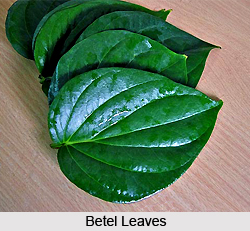 Sore Throat : Localised massage of the leaves is effective in healing aching throat. The mashed fruit or berry should be blended with honey and taken to lessen painful cough.
Inflammation : Massaged locally, betel leaves are advantageous in the treatment of swelling, such as arthritis and orchitis, i.e. redness of the testes.
Wounds : Betel leaves can be used to mend injuries. The juice of a few leaves should be distilled and massaged on the wound. Then a betel leaf should be draped over and bandaged. The wound will heal up with a single coating, within 2 days.
Boils : The herb is also an effective remedial for boils. A leaf is tenderly warmed till it gets dampened, and is then encrusted with a layer of castor oil. The oiled leaf is spread over the reddened part. This leaf has to be changed, every few hours. After a few massages the boil will burst, draining all the pussy matter. The application can be massaged at night and removed in the morning.
Lumbago : A hot poultice of the leaves or their juice blended with some flavourless oil such as refined coconut oil can be massaged on the loins with favourable results in lumbago.
Problem of Breast Milk Secretion : The application of leaves smudged with oil is believed to encourage secretion of milk when implemented on the breasts during lactation.
Precautions - Cancer of the mouth and lips has been evidenced to be more regular in areas where betel chewing habit is extensively predominant. Other ill-effects of pan-chewing like dyspepsia, pyorrhoea, cancer of the tongue and cheeks have also been detected among exuberant chewers.
Other Uses of betel leaves
Betel leaves are chewed together with betel nut as a masticator. In its barest form, shredded betel nut is draped in a betel leaf, smudged with lime and chewed. Often though, clove and other spices such as cinnamon and cardamom are used as garnishings. When chewed after meals, it sweetens the breath and acts as a stimulant.
Composition
An analysis of the betel leaf illustrates that it consists of 85.4% moisture, 3.1% protein, 0.8% fat, 2.3% minerals, 2.3% fibre and 6.1% carbohydrates per 100 grams. Its minerals and vitamin contents include calcium, carotene, thiamine, riboflavin, niacin and vitamin C. Its vital energy value is 44.
Fresh analyses have proved that betel leaves contain tannins, sugar and diastases and a volatile oil. The volatile oil is a light yellow liquid of fragrant odour and sharp smouldering in flavour. It comprises a phenol called chavicol which has dominant antiseptic properties. The alkaloid arakene in it has properties similar to cocaine in some regards.
Use of Betel Nut as Medicines
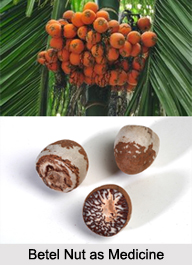 The chief consumption of Areca Catechu or betel-nuts is as a masticatory, alone or in conjunction with betel leaf. The unripe nuts are said to be laxative and carminative. The fresh nuts when not yet dry in their interior, have intoxicating properties and produce giddiness. The dried nuts are masticated. They are said to sweeten the breath, strengthen the gums, remove bad tastes from the mouth, and produce a stimulant or exhilarant effect the system. The burnt nuts are used as a tooth powder.
Dose of Betel Nut in Medicine : Medicinally betel-nuts are used in urinary disorders and as an aphrodisiac. The Bhavaprakasa gives a preparation called "Rativallava Pugapaka". It is a confection made of betel-nuts boiled in milk, with the addition of a number of aromatic and stimulant substances supposed to have aphrodisiac properties. Sometimes datura seeds and the leaves of Cannabis sativa are added to this confection when it is called "Kamesvara Modaka".
Betel-nuts are also used as vermifuge. Their dose should be one-fourth tola rubbed into a paste with tolas of fresh lemon juice.
Recently updated articles in Flora & Fauna
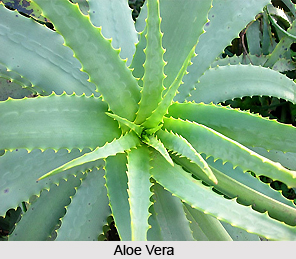
Indian Aloe Vera
Indian Aloe, growing to moderate heights, appears glossy, with pulpy leaves, essential in making drugs.
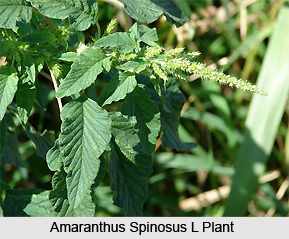
Amaranthus spinosus
Amaranthus spinosus is a medicinal herb found in India and is commonly known for its medicinal value.
Shilli Wildlife Sanctuary
Shilli Wildlife Sanctuary in Himachal Pradesh was established in 1963 in order to preserve the Himalayan Black Bear which is an endangered creature. D...
Flora and fauna of Karnataka
Karnataka boasts a remarkable diversity of flora and fauna, nurtured by its varied landscapes ranging from the Western Ghats to dry plains. The state’...

Vedanthangal Bird Sanctuary
Known to be the oldest water bird sanctuary in the country, Vedanthangal Bird Sanctuary is home to myriad types of migratory birds including 26 rare s...
Related articles in Flora & Fauna
Flora and Fauna of Ladakh
Flora and Fauna is typical to t he kind of mountainous terrain which dominate the entire landscape of the region. Though some varieties of fauna are t...

Flora and Fauna in Meghalaya
70 percent of Meghalaya is forested. Meghalayan forests are considered to be among the richest botanical habitats of Asia. These forests receive abund...
Flora and Fauna of Jammu & Kashmir
Jammu and Kashmir is rich in flora and fauna. Flora includes thorn bush type of the arid plain to the temperate and alpine flora of the higher altitud...
Flora and fauna in Andaman and Nicobar Islands
Economy of this region is primly based on agriculture. In Andaman island, paddy is the main food crop, while in Nicoabar island coconut and areca nut...
Flora and Fauna of Manipur
Flora and fauna of Manipur are known to be the assemblage of a huge variety including the endangered ones. The place is especially famed for orchid sp...