
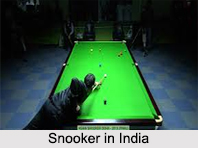
 Snooker in modern India is not a popular sport for every one. This game is concentrated among the rich people of India. Snooker is a game played on a table covered with baize. The snooker has its origin back to the later half of 19th century. The exact origin is not written anywhere clearly but it is recorded that Colonel Sir Neville Chamberlain visualized the game in the British army officer`s mess in Jubbulpore, India, in 1875.
The First World Snooker Championship was held in 1927, which was organized by Joe Davis, a professional English billiard and snooker player. Due to his initiative, the game got a professional status from just a pastime activity.
Snooker in modern India is not a popular sport for every one. This game is concentrated among the rich people of India. Snooker is a game played on a table covered with baize. The snooker has its origin back to the later half of 19th century. The exact origin is not written anywhere clearly but it is recorded that Colonel Sir Neville Chamberlain visualized the game in the British army officer`s mess in Jubbulpore, India, in 1875.
The First World Snooker Championship was held in 1927, which was organized by Joe Davis, a professional English billiard and snooker player. Due to his initiative, the game got a professional status from just a pastime activity.Snooker in India
Snooker in India is held without any promotions. This game is concentrated among the posh families. The snooker players have over the years represented India at various national and international events.
Introduction
Snooker in modern India is not a popular sport for every one. This game is concentrated among the rich people of India. Snooker is a game played on a table covered with baize. The snooker has its origin back to the later half of 19th century. The exact origin is not written anywhere clearly but it is recorded that Colonel Sir Neville Chamberlain visualized the game in the British army officer`s mess in Jubbulpore, India, in 1875.
The First World Snooker Championship was held in 1927, which was organized by Joe Davis, a professional English billiard and snooker player. Due to his initiative, the game got a professional status from just a pastime activity.Introduction of Snooker in India
Snooker is a blend of pyramid pool and life pool games. The restricted rules of the game were first published in 1882 in a meeting of the British officers at Udhagamandalam and Ootakamund which is now called as Ooty in the Nilgiri District of modern Tamil Nadu. But it was not accepted by the governing body of that period, "The Billiard Association" until 11th December 1900. The snooker in India got spread all over by Chamberlain through his postings in different parts of the country.
Cloth of Snooker Table<
The cloth of the snooker table in India is made of 100% wool and specifically made for this purpose only. The pockets of the table are also made according to the governing body tables.
Objective of Snooker
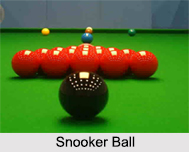 The aim of the game is to score maximum points to beat the opponent by potting balls in a predefined order. The 15 red pyramid balls are racked up in a triangle together with the balls from Life pool that are placed separately and the black is placed below the reds at the foot of the table. Then the players hit the shots one by one. They intend to pot one of the red balls to score a point. If the player succeeds to pot a red ball then another chance is given to pot the other coloured balls. The points earned on potting the yellow ball are 2, 3 for the green, 4 for the brown, 5 for the blue, 6 for the pink and 7 for the black. The process is repeated until the player fails to pot the desired ball and then the opponent comes to take his turn. When on the board only the 6 coloured balls are left and all the red balls are potted the coloured balls are then placed at 2, 3, 4, 5, 6, 7 order. The balls remain of the table while potted in this phase. The game ends with the potting of the final ball and the player with higher points is declared as the winner.
Points in Snooker in India
A snooker player in India can also earn points while an opponent fouls by hitting any other colour balls when trying to hit a red or by potting a colour which was not being attempted. The opponent`s foul may award 4 to 7 points to the player.
Use of Accessories
Indian snooker players use various accessories which include chalk for the tip of the cue, a triangle to rack the reds and a scoreboard. The huge size of the snooker table prevents it to be played anywhere. Snooker in India is generally played either in private surroundings or in public snooker halls. Now the snooker tables used in India have an internal playing size of 11ft 8.5 inches and 5ft 10 inches with two unequal halves if cut across the middle pockets. In 1970s and 1980s, a new "matric" size snooker table was introduced which was an exact square measuring 1.75m and 1.75m. But it could not continue and the earlier unequal form was accepted again.
World Championship is the most significant event in the snooker game which is being held since 1927.
World Championship is the most significant event in the snooker game which is being held since 1927.
Rules of Snooker
1. Initial Stroke: The initial stroke of each turn must strike the cube ball against a red, so long as any red remains on the table.
2. Red Ball: If the striker pockets a red ball, he scores it and continues by pocketing any non-red ball which he nominates. If he pockets it, the value is added to his score.
3. Pocketing the Balls: Red balls that are pocketed are not replaced on the table. But coloured balls are. The play continues with potting of one red followed by potting of non-red ball, till such time all red balls are potted.
4. Striking the colour ball: Thereafter, the coloured balls must be struck by the cube ball and pocketed in strict ascending order of value. Now if they are pocketed they are not put back on the table.
5. End of Frame: When only the black is left the first potting of black or foul ends the frame.
6. Equal Score: If the scores are equal, then
(a) Black is spotted.
(b) Players toss a coin to play.
(c) Next players play from in-hand "D"
(d) Next score or foul ends the frame.
7. Cube Ball: If the cube ball is pocketed the turn ends and it is next played from the "D".
8. On ball: The ball that is next to being struck is referred to as "on".
9. Snookered: A player is snookered when a bail he must not play obstructs a straight line between the cube bail and the ball that is "on". The player is penalised for missing the "on" ball or for first hitting any other ball. If he is snookered by an opportunity`s foul stroke, he may play any ball that he nominates. If he pockets it, it is treated as red unless all reds are off the table; in that case it is treated as the "on" ball from which he is snookered.
10. Ball Touching: If the cube ball comes to rest against another ball, it must be played away from that ball without moving it or it counts ball, if shot. If it is touching the "on" ball the striker incurs no penalty for missing the "on" ball or for striking another ball.
11. Winner: A winner is the one whose aggregate score is more.
12. Re-spotting of Balls
(a) Red Balls are not re-spotted even if illegally pocketed.
(b) Any colour ball pocketed when there is a red on the table is re- spotted.
(c) If the appropriate spot is covered, the ball is replaced on the first available spot in descending order of value beginning with black spot.
(d) If all spots are covered any ball except the black or pink is replaced as close as possible to its own spot on the top cushion side away from "D" and touching any other ball.
(e) The pink or black is spotted as close as possible to its spot on the side towards "D" and on the centre line of the table.
13. Penalties: The following are fouls and incur penalty of four points or more as prescribed:
(a) Penalty equivalent to value of the "on" ball when striking:
(i) Balls are not at rest.
(ii) Cube ball more than once.
(iii) Out of turn.
(iv) With both feet off the floor.
(v) Improperly from in-hand.
(b) Penalty equivalent to value of the "on" ball by causing:
(i) The cube ball to miss all object balls.
(ii) The cube ball to enter a pocket.
(iii) A snooker with free ball.
(iv) A jump shot
(c) Penalty equivalent to the value of the ball "on" or ball concerned by causing:
(i) A ball not "on" to enter a pocket.
(ii) The cube ball to first hit a ball not "on".
(iii) A push stroke
(iv) By striking a ball incorrectly spotted
(v) By touching a ball with other than the tip of the cube.
(vi) By forcing a ball off the table
(d) Penalty equivalent to value of the "on" ball or higher value of the two balls other than two reds or a free ball and a ball "on".
(e) A penalty of seven points is imposed if a player:
1. After potting a red commits a foul before nominating a colour.
2. Uses a ball off the table for any purpose.
3. Plays at reds in successive strokes.
4. Uses any ball other than white as cube ball.
14. Fouls: When a foul is committed, the referee shall immediately state foul and on completion of the stroke announce the penalty. If a foul is not announced or claimed by the non-striker, it is condoned. All points scored, before the foul is awarded or claimed, are permitted. If more than one foul is committed in one stroke, maximum penalty will be imposed. The player who has committed a foul:
(a) Incurs the penalty which is added to the opponent`s score.
(b) He has to play again if requested by the next player. Once such request is made it cannot be withdrawn.
15. Free Ball: The referee shall declare a free ball when after a foul the cue ball is snookered. In that case if the non-offending player takes the strike he may nominate any ball as "on". For this strike, this ball will be regarded as and acquire the value of the ball "on". Rules regarding free ball are:
(a) If the free ball is potted it is spotted.
(b) The value of the ball "on" is scored.
(c) If the ball "on" is potted it is scored.
(d) If both free ball and the ball "on" are potted only the value of the ball "on" is scored.
2. Red Ball: If the striker pockets a red ball, he scores it and continues by pocketing any non-red ball which he nominates. If he pockets it, the value is added to his score.
3. Pocketing the Balls: Red balls that are pocketed are not replaced on the table. But coloured balls are. The play continues with potting of one red followed by potting of non-red ball, till such time all red balls are potted.
4. Striking the colour ball: Thereafter, the coloured balls must be struck by the cube ball and pocketed in strict ascending order of value. Now if they are pocketed they are not put back on the table.
5. End of Frame: When only the black is left the first potting of black or foul ends the frame.
6. Equal Score: If the scores are equal, then
(a) Black is spotted.
(b) Players toss a coin to play.
(c) Next players play from in-hand "D"
(d) Next score or foul ends the frame.
7. Cube Ball: If the cube ball is pocketed the turn ends and it is next played from the "D".
8. On ball: The ball that is next to being struck is referred to as "on".
9. Snookered: A player is snookered when a bail he must not play obstructs a straight line between the cube bail and the ball that is "on". The player is penalised for missing the "on" ball or for first hitting any other ball. If he is snookered by an opportunity`s foul stroke, he may play any ball that he nominates. If he pockets it, it is treated as red unless all reds are off the table; in that case it is treated as the "on" ball from which he is snookered.
10. Ball Touching: If the cube ball comes to rest against another ball, it must be played away from that ball without moving it or it counts ball, if shot. If it is touching the "on" ball the striker incurs no penalty for missing the "on" ball or for striking another ball.
11. Winner: A winner is the one whose aggregate score is more.
12. Re-spotting of Balls
(a) Red Balls are not re-spotted even if illegally pocketed.
(b) Any colour ball pocketed when there is a red on the table is re- spotted.
(c) If the appropriate spot is covered, the ball is replaced on the first available spot in descending order of value beginning with black spot.
(d) If all spots are covered any ball except the black or pink is replaced as close as possible to its own spot on the top cushion side away from "D" and touching any other ball.
(e) The pink or black is spotted as close as possible to its spot on the side towards "D" and on the centre line of the table.
13. Penalties: The following are fouls and incur penalty of four points or more as prescribed:
(a) Penalty equivalent to value of the "on" ball when striking:
(i) Balls are not at rest.
(ii) Cube ball more than once.
(iii) Out of turn.
(iv) With both feet off the floor.
(v) Improperly from in-hand.
(b) Penalty equivalent to value of the "on" ball by causing:
(i) The cube ball to miss all object balls.
(ii) The cube ball to enter a pocket.
(iii) A snooker with free ball.
(iv) A jump shot
(c) Penalty equivalent to the value of the ball "on" or ball concerned by causing:
(i) A ball not "on" to enter a pocket.
(ii) The cube ball to first hit a ball not "on".
(iii) A push stroke
(iv) By striking a ball incorrectly spotted
(v) By touching a ball with other than the tip of the cube.
(vi) By forcing a ball off the table
(d) Penalty equivalent to value of the "on" ball or higher value of the two balls other than two reds or a free ball and a ball "on".
(e) A penalty of seven points is imposed if a player:
1. After potting a red commits a foul before nominating a colour.
2. Uses a ball off the table for any purpose.
3. Plays at reds in successive strokes.
4. Uses any ball other than white as cube ball.
14. Fouls: When a foul is committed, the referee shall immediately state foul and on completion of the stroke announce the penalty. If a foul is not announced or claimed by the non-striker, it is condoned. All points scored, before the foul is awarded or claimed, are permitted. If more than one foul is committed in one stroke, maximum penalty will be imposed. The player who has committed a foul:
(a) Incurs the penalty which is added to the opponent`s score.
(b) He has to play again if requested by the next player. Once such request is made it cannot be withdrawn.
15. Free Ball: The referee shall declare a free ball when after a foul the cue ball is snookered. In that case if the non-offending player takes the strike he may nominate any ball as "on". For this strike, this ball will be regarded as and acquire the value of the ball "on". Rules regarding free ball are:
(a) If the free ball is potted it is spotted.
(b) The value of the ball "on" is scored.
(c) If the ball "on" is potted it is scored.
(d) If both free ball and the ball "on" are potted only the value of the ball "on" is scored.
Indian Snooker Players
 Indian Snooker players after its advent from the time of British government in India are marking in global snooker tournaments. Here are the famous snooker players from India.
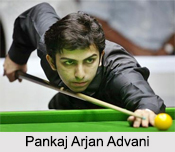
Pankaj Arjan Advani : Pankaj Arjan Advani was born on 24th July in the year 1985 in Pune. He is an Indian professional player of English billiards and former professional snooker player. In recognition of his achievements, the Government of India has bestowed several awards to him like Arjuna Award in 2004, Rajiv Gandhi Khel Ratna in 2006, and Padma Shri in 2009. He has achieved a hat-trick of hat-tricks in English billiards, holding the World, Asian, and Indian National Championship titles simultaneously, in three different years: 2005, 2008 and 2012.
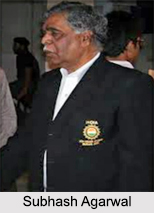
Subhash Agarwal : Subhash Agarwal is an Indian professional player and coach of English billiards and snooker. A National Snooker Champion of India, he was the runner-up in the 1983 amateur IBSF World Billiards Championship, losing to Michael Ferreira 2744-3933, and later won the event.
Om B. Agrawal : Om B. Agrawal was an Indian professional snooker player who won the 1984 amateur IBSF World Billiards Championship in Dublin, Ireland, the first Indian to win the event. He received the prestigious Arjuna Award that year, in recognition of this victory for India. He died in 1994 at the age of 37.
Omprakesh Agrawal : Omprakesh Agrawal was an Indian professional snooker player.
Manan Chandra : Manan Chandra was born on 28th February 1981 in New Delhi. He is an internationally notable Indian amateur snooker.
Brijesh Damani :
 Brijesh Damani is hailing from Kolkata, West Bengal. He is India`s professional snooker player. He won the 2008 Indian National Snooker Championship. He also won silver medal in 2010 Asian Games in China. Brijesh Damani did his school from Shri Daulatram Nopany Vidyalaya, Kolkata
Chandrasinh Hirjee Jewraj : Chandrasinh Hirjee Jewraj was an Indian amateur billiards and snooker player. He represented Bengal and India in domestic and world championships.
Manish Jain : Manish Jain is an Indian Billiards and Snooker player. Manish started his career in 2004 after being Ranked 2nd at the West Bengal State Junior Billiards Championship and Ranked 3rd in the Snooker Championship.
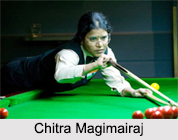
Chitra Magimairaj : Chitra Magimairaj is an Indian professional player of snooker, English billiards, and pool. She is a two-time World Ladies Billiards and Snooker Association World Champion (2006, 2007), a two-time national pool champion, and more recently the World Women`s Senior Snooker Championship (2014).
 Aditya Mehta : Aditya Mehta was born on 31st October 1985 in Maharashtra. He is an Indian professional snooker player. He practices with Alfie Burden and Anthony Hamilton in London
Yasin Merchant : Yasin Merchant was born on 17th December 1966. He is India`s first professional snooker player. He won the National Snooker championships on three occasions, in 2001, 2000 and 1991
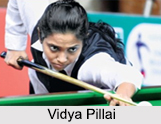
Vidya Pillai : Vidya Pillai was born on 26th November 1977 in Chennai, Tamil Nadu. She is a well-known snooker player. She obtained her B.Sc. degree in Visual Communication from Loyola College, Chennai, and later went on to complete a Post-Graduate Diploma in Communication and Management at the National Institute of Sales.
Arantxa Sanchis :
 Arantxa Sanchis is a female billiards and snooker player from India. She won the Gold medal in the Women`s Team event at the inaugural IBSF World 6-Red Snooker and Team Snooker Championship in Carlow, Ireland on 6th Oct, 2013. It was a historic first Gold Medal for Indian Women`s Snooker at a World Championship. On 27th Sep 2015, she won the inaugural IBSF World Billiards Championship in Adelaide, Australia. This feat made her the only woman in the world to hold IBSF World titles in both Billiards and Snooker.
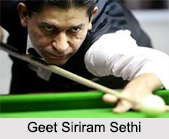
Geet Siriram Sethi : Geet Siriram Sethi is a professional player of English billiards who dominated the sport throughout much of the 1990s, and a notable amateur (ex-pro) snooker player. He is a six-time winner of the professional-level and a three-time winner of the amateur World Championships, and holder of two world records, in English billiards. He, along with Prakash Padukone, has co-founded Olympic Gold Quest, a Foundation for the Promotion of Sports in India.
Anuja Thakur :
 Anuja Thakur is an Indian amateur player of snooker and English billiards.
She won the WLBSA Ladies World Billiards Championship title in April 2005, and reached the semi-final at the 2006 IBSF World Snooker Championship in Amman, Jordan, where she was eliminated by in Wan-IP 4-2. Thakur is a native of Mumbai, Maharashtra. She has won several state and national championships in both snooker and billiards.
Anuja Thakur is an Indian amateur player of snooker and English billiards.
She won the WLBSA Ladies World Billiards Championship title in April 2005, and reached the semi-final at the 2006 IBSF World Snooker Championship in Amman, Jordan, where she was eliminated by in Wan-IP 4-2. Thakur is a native of Mumbai, Maharashtra. She has won several state and national championships in both snooker and billiards.
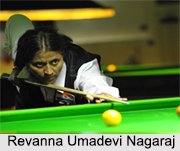
Revanna Umadevi Nagaraj : Revanna Umadevi Nagaraj is an Indian professional player of billiards. She is a World Women`s Billiard champion (2012) and a three time Indian national Billiards champion. She had defeated World No 13 Eva Palmius during the London 2012 Championship to become the World Champion.
Lucky Vatnani : Lucky Vatnani was born on 23rd December in the year 1985. He is an Indian former professional snooker player. He is from Hyderabad, Telangana but was based in Sheffield, England during his snooker career.
 The Billiards and Snooker Federation of India (BSFI) is the central administrative body supervising all billiards related activities in India. The BSFI was instituted in1926 in Kolkata (Calcutta) with the objective of overseeing the growth and development of cue sports in India. Since its inception, the BSFI has been operating from Calcutta except for a brief period of four years, when it was housed in Bombay. Visionaries like billiards veteran M. M. Begg were instrumental in the foundation of the Federation. Currently Captain P.V.K. Mohan is the President of the Federation and the Vice Presidents are Bholu Mehta, Kosaraju Ranjan, Kush Bhargava and Rajan H. Khinvasara.
The Billiards and Snooker Federation of India (BSFI) has taken a lot of initiatives for spreading the game in all parts of India, undertaking several promotional activities like holding training camps and organising national championships at the sub-junior level. It has also roped in great Indian Billiards players like Michael Ferreira, Geet Sethi, Ashok Shandilya, Yasin Merchant, as advisors on the present format of the National Championships. The BSFI has been instrumental in the formation of a large number of state Billiards associations in India that are working in collaboration with BSFI, for the total well being of Billiards in India.
Apart from billiards, the Billiards and Snooker Federation of India (BSFI) is also in charge of looking after the growth and development of other cue sports like Snooker, Pool and Carom in India.
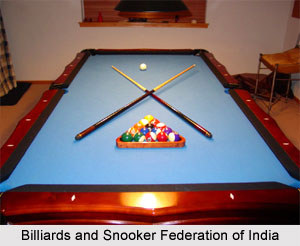 The BSFI has been identifying budding talent and sponsoring them for various regional, state, national and international events since its inception. The efforts of the BSFI have been paying off in recent times, and the game of billiards, long considered elitist, has attracted the attention of a far wider audience in India. Excellent performances by eminent Indian billiards players like Geet Sethi, Pankaj Advani etc in the recent years have also helped in increasing the popularity of the game in India.
The Billiards and Snooker Federation of India (BSFI) has also earned recognition and accreditation from several international bodies. The Federation is currently accredited to national and international governing bodies like the Indian Olympic Association, the Asian Confederation of Billiards Sports, the International Billiards and Snooker Federation, the World Confederation of Billiards Sports, the Asian Pocket Billiards Union, the Asian Carom Billiards Confederation and many others.
Recently updated articles in Athletics in India
Arjuna Awardees in Lawn Tennis
Arjuna Award is given by the Ministry of Youth Affairs and Sports of Government of India to recognize outstanding achievements in sports. Between 1961...
Ram Kumar, Basketball Player
Ram Kumar is a former basketball player who is known for his impeccable 3 point shooting. He is the recipient of various prestigious Arjuna award.
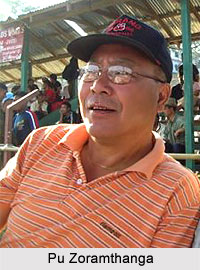
Pu Zoramthanga, Burmese Indian Boxer
Pu Zoramthanga made his state and country proud by winning several national and international awards.
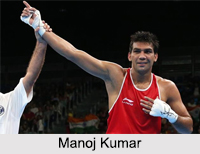
Manoj Kumar, Indian Boxer
Manoj Kumar is a popular Indian boxer who won Bronze at the 2018 Commonwealth Games held at Gold Coast in Queensland, Australia.
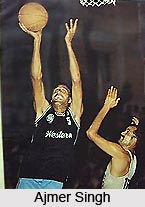
Ajmer Singh Chopra, Indian Basketball Player
Ajmer Singh is Indian basketball player earned fame after competing Asian Basketball Championships. Later, he was awarded Arjuna Awards in the year 19...
Related articles in Athletics in India
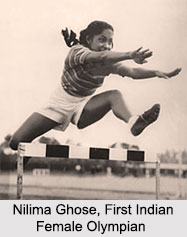
History of Indian Athletics
India enjoys a long history of athletic sportsmanship from the Vedic era to the modern period, and is now actively involved in contemporary forms of a...
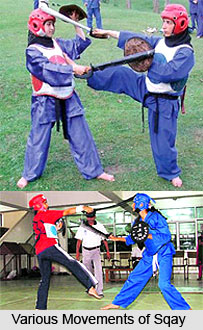
Sqay Martial Arts
Sqay is a martial art form from Kashmir. Sqay is a Persian word which means `knowledge of war`.
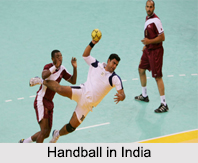
Handball in India
Handball in India with its entire verve has earned the status of one of the most sought after sports in the country. Handball is concentrated in Andhr...
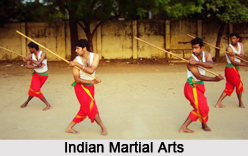
Indian Martial Arts
Indian Martial Arts exhibit great variety in their form and style. In modern India, martial arts have become one of the necessities especially for gir...
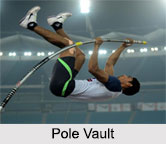
Pole Vault
Pole Vault is a part of Olympic event since 1896. Pole Vault is in recent times gaining popularity for the best performances of V. S. Surekha, Karamji...