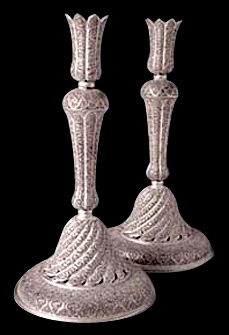
 Silver filigree work in India is created with twisted threads usually of gold and silver and the motifs are stitched on the base. The created articles have a trellis-like appearance which involves crimping thin strips of silver into zigzag patterns and loops and filling up the designs that are made by thicker silver strips. The styles of silver filigree work are categorised in three different patterns that are named as "meenakari", "khulla jaal" and "flowers and leaves". The silver used for creating silver filigree work is very high in quality. The designs of silver filigree work are predominantly based on leaves, flowers, trees, animals, and birds.
The silver filigree work in India encompasses various steps that are required to give the items a perfect grandeur. In the ancient times the wandering workmen were given gold which after some processes of heating, were beaten into the shape of a wire. They used to make designs that came to their mind without following any particular pattern for the filigree work. They used some very finely created grains or beads and spines of gold that were as thick as hair to create the items.
Karimnagar in Andhra Pradesh has been praised for the artistry of the craftsmen in the field of silver filigree work in India. According to history, the Nizam kings used to present the items created with silver filigree work to the notable people who used to visit Hyderabad. The articles that exhibit this splendid art form include Charminar, jewellery boxes, cigar boxes and other intricately designed items that were created with pure silver. In recent times, the artisans of this area create an array of articles that suit the utility purpose and are used as embellishments and ornaments as well. Among the motley of articles `paandans`, trinket boxes, tea trays and Jewellery like necklaces, earrings and bracelets and key chains can be named.
Even Cuttack, in the eastern India state of Orissa, is another center for silver filigree work though the lack of patronage and ideas of modern trendy designs have made it a dying art in the state. The silver filigree artifacts of Cuttack vary from the images of Gods and Goddesses, the most appraised anklets and some fine hemraj filigree that are still being created by the artisans to give a minimum effort to keep the exclusive form of art alive.
The silver filigree work in India has been practiced in some parts of India where the art is considered as the source of livelihood to the artisans. The work needs much effort and concentration in combination with the present demand of the market.
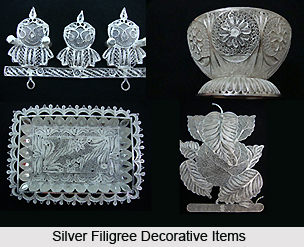 The space within the frame is filled with the main ribs of the pattern, which is usually a creeper or flower, forming itself into small frames of circles, flower petals, and the like. The silver jewellery made in Odisha twists silver wire as the base material; the articles have a lacy, trellis-like appearance which gives them a rare charm.