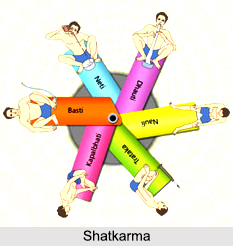
 Shatkarma constitutes the six kinds of actions that cleanse the body. Shatkarma is known by another name `Shatkriya`. `Shat` means six and `Karma` or `Kriya` means a method or technique. Without regular cleansing of the system one cannot gain maximum benefit from yoga practices. Without purification of the body one will not be ready for the higher practices of yoga. Shatkarma are considered preparatory steps towards higher practices of Pranayama and Meditation.
Types of Shatkarma
Body cleansing is brought about by the practice of the Shatkarma techniques. These simple techniques are highly valuable in healing internal disorders. The six types of Shatkarma are as follows:
1. Neti: nasal cleaning, including jala neti and sutra neti.
2. Dhauti: cleansing of the digestive tract.
3. Nauli: abdominal massage.
4. Basti: colon cleaning.
5. Kapalabhati: purification and vitalisation of the frontal lobes.
6. Trataka: blinkless gazing.
Each of these groups contains more than one practice, such as Jala Neti, Vaman Dhauti, Moola Shodhana, etc. They are all excellent practices designed to purify the whole body and bring about supreme health. They also bring clarity and harmony to the mind.
Benefits of Shatkarma
Shatkarma affect and activate almost all of the vital systems in the body, especially the digestive, respiratory, circulatory and nervous systems. These purification processes are both preventive and curative. Shatkarma can only be taught by a Guru. Purification is the major effect of Shatkarma. When the different systems of the body have been purified and the energy can flow through the body. One`s capacity to work, think, digest, taste, feel, etc increases and greater awareness develops.
This article is a stub. You can enrich by adding more information to it. Send your Write Up to content@indianetzone.com