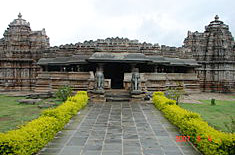
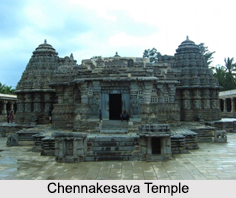
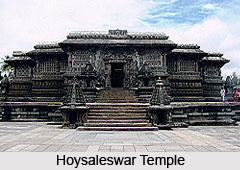
 Sculpture of Hoysaleswara temple Hoysaleswara temple, Halebidu is one of the largest and finest temples in South India. The sculpture of Hoysaleswara Temple to a certain extent follows the school of Hoysala temple architecture.
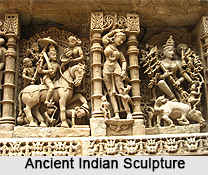
The outer wall of the Hoysaleswara Temple is unique due to the height of the temple. A variety of relief sculptures are to be found on the temple walls. The wall is divided into three sections. The lower base has been designed with eight rows of reliefs. These are accompanied by a variety of animals, such as, elephants, lions, horses, crocodiles and others.
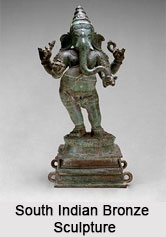
As far as the sculpture of Hoysaleswara Temple is concerned it is mostly popular for its wall sculptures. These wall sculptures start with an image of Lord Ganesh on the on the left hand side of the south entrance and ends with another image of Ganesha on the right hand side of the same entrance.
In between the two eaves there are carved miniature towers. Below the second eave one will come across eight friezes and wall sculptures. This type of relief work is called horizontal treatment. It is here that one comes across the several kinds of animals: from charging elephants to swift horses. Floral sculptures are also part of the outer walls.
In the northern section a Lingam was installed, while in the southern section his queen Shantaladevi commissioned the consecration of the Lingam. Visiting the site from the North, there are two symmetrical constructions and two shrines, with a Lingam in each. In the southern section there is (again) daily worship.
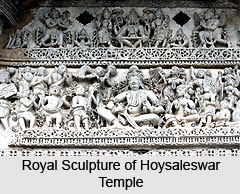 The friezes below, on the outer walls, have different `storeys`, with elephants below, lions and horses, and above episodes from the Mahabharata and Ramayana and from Bhagavata Purana. The northern side starts with King Vishnuvardhan and his court.
Thereafter Lord Vishnu is depicted in his Kurma, Tortoise avatar; the gods churn the ocean to obtain amrita. The other sculptures include: Guru Shukracarya, Shiva and Parvati, and the gods of the Directions, Vishnu as Vamana, Shiva and his court, fight between Indra and Vishnu as Krishna for the Parijat flower, Episodes from the life of Krishna. Above the door there is an image of dancing Shiva. To the left of the entrance to the second shrine in the east there are episodes from Mahabharata that have been depicted.
The friezes below, on the outer walls, have different `storeys`, with elephants below, lions and horses, and above episodes from the Mahabharata and Ramayana and from Bhagavata Purana. The northern side starts with King Vishnuvardhan and his court.
Thereafter Lord Vishnu is depicted in his Kurma, Tortoise avatar; the gods churn the ocean to obtain amrita. The other sculptures include: Guru Shukracarya, Shiva and Parvati, and the gods of the Directions, Vishnu as Vamana, Shiva and his court, fight between Indra and Vishnu as Krishna for the Parijat flower, Episodes from the life of Krishna. Above the door there is an image of dancing Shiva. To the left of the entrance to the second shrine in the east there are episodes from Mahabharata that have been depicted.
The left section on the southern door has the following images: the panel in the door depicts Shiva on the demon Andhakasur. On the sides stand images of Brahma and Vishnu. On the monster are seated Lord Varun and his consort. The fight between an elephant and a lion is also depicted. A little to the south stands an image of Lord Ganesh and on the pillar to the southwest is depicted the self-immolation of two faithful knights at the death of their king. Further to the left of the southern entrance: dancing Ganesh, Karna, Kunti`s son in the Mahabharata; Shiva as terrifying Bhairav and Mohini, Arjuna shooting a fish, Krishna with a flute, Saraswati, consort of Lord Brahma and Sachi on their elephant, Krishna lifting Mount Govardhan, Shiva and Bhairavi after the death of the elephant-`demon` Gaj, Vishnu as Varaha saving the Earth from the underworld, and the Lord Himalay giving his daughter in marriage to Shiva, Mahishasuramardini Durga, Prahlada, Battle between Ravan and Rama, Draupadi`s vengeance, Vishnu as Vamana, liberation of the elephant Gajendra from the mouth of a crocodile by Lord Vishnu, battle for the Parijat flower, Vishnu as Keshav and Lakshmi dancing, Shiva fighting Arjun, Vishnu as Rama meeting the monkeys and defeating Vali; Sugriva crowned; Hanuman given a ring by which Sita would recognize him, Mohini, Abhimanyu, the son of Arjun attacking the Kauravas, Ravan shaking Mount Kailash, a dancing Ganesh and Goddess Earth.